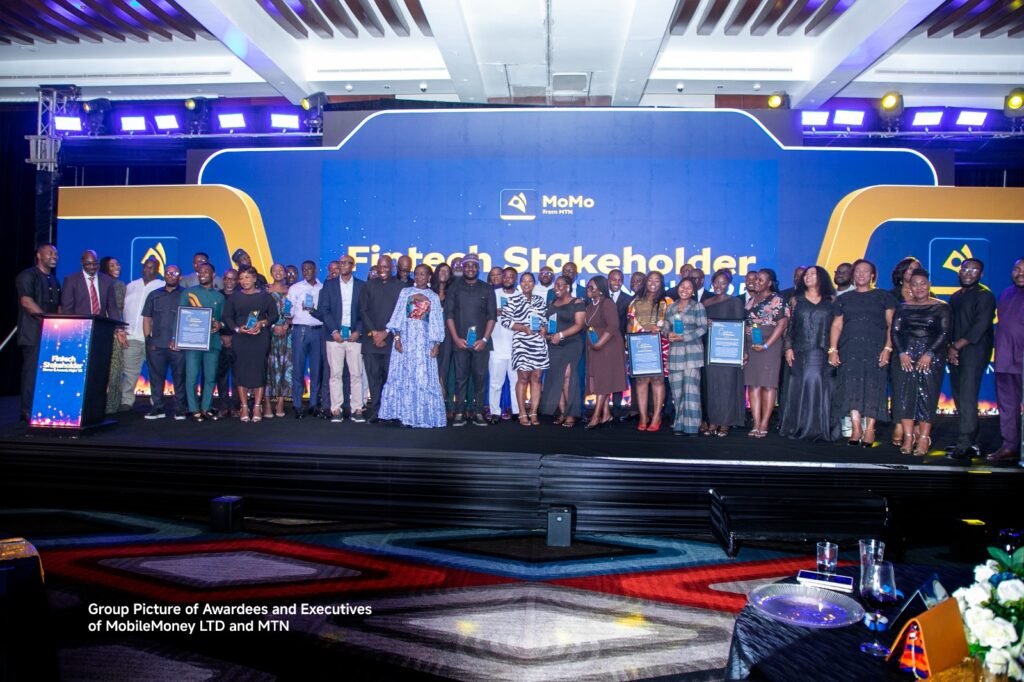


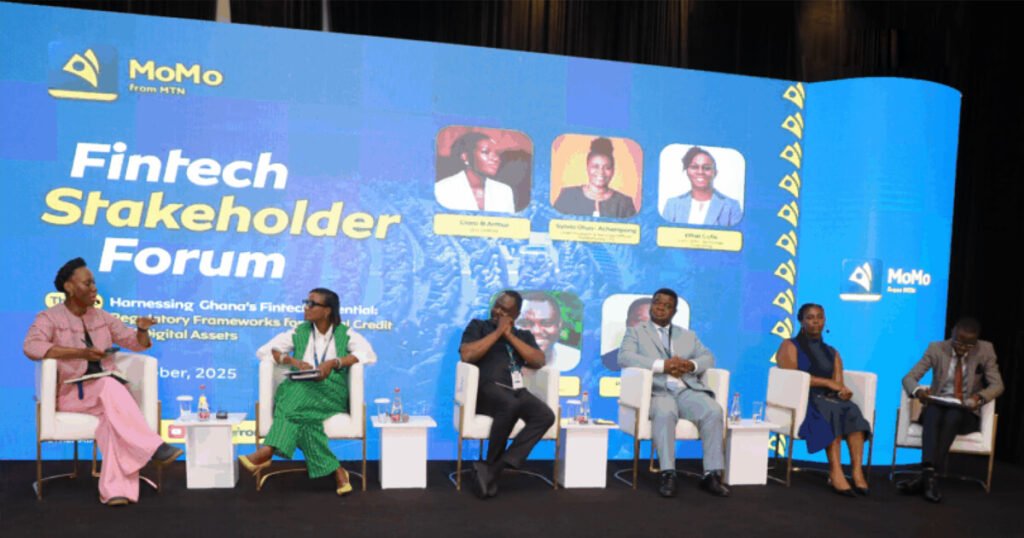
Ghana’s vibrant financial technology (FinTech) ecosystem took centre stage as Mobile Money Ltd. convened the 2025 FinTech Stakeholder Forum, bringing together regulators, innovators, investors, and industry leaders under one roof. Held under the theme “Harnessing Ghana’s FinTech Potential: Regulatory Framework for Digital Credit and Digital Assets,” the forum highlighted the nation’s commitment to building a resilient and inclusive digital financial sector.
The event, which featured prominent policymakers leading discussions, served as a strategic platform to discuss evolving regulatory frameworks, promote collaboration among stakeholders and explore the next frontier of digital innovation driving Ghana’s cash-lite agenda. Beyond industry experts, the forum included contributions from think tanks such as IMANI Africa and Institute of Statistical Social and Economic Research (ISSER) to enrich the dialogue with diverse perspectives.
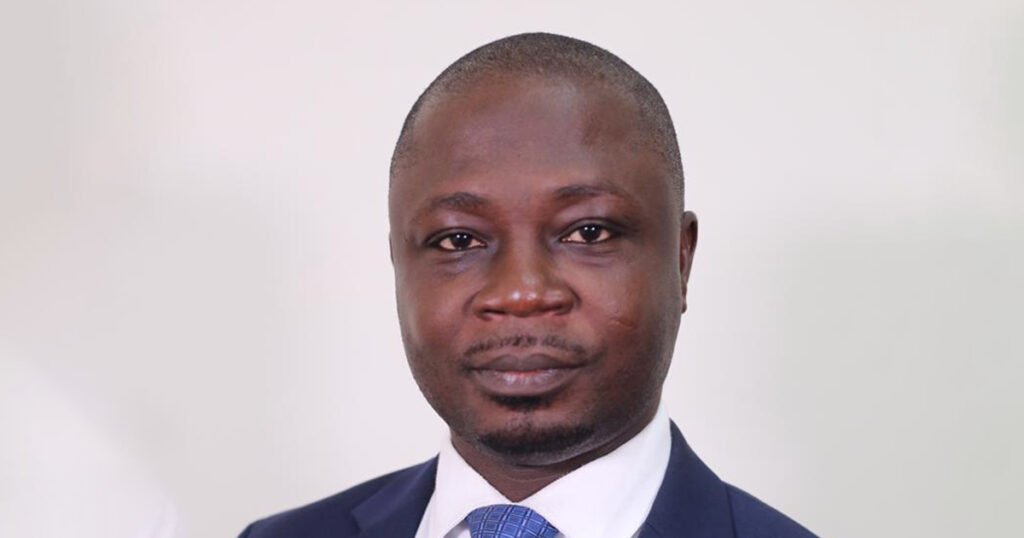
In his opening remarks, the Chief Executive Officer of MobileMoney Ltd., Mr. Haruna Shaibu, emphasized that the essence of the 2025 FinTech Stakeholder Forum is to create a collaborative platform that bridges innovation, regulation and policy. He noted that as Ghana’s FinTech ecosystem continues to evolve, it is crucial for policymakers, regulators, and industry leaders to work together to shape the future of the sector. The forum, he explained, offers a unique opportunity to reflect on the industry’s progress while exploring policies and frameworks that ensure innovation, drive inclusivity and promote sustainability in the country’s digital financial landscape.
Mr. Shaibu in his submission highlighted the potential of digital credit and digital assets to deepen financial inclusion, empower small businesses and support national development, all within a robust regulatory framework that safeguards consumers and maintains financial integrity.
According to him, MobileMoney Ltd. believes that true progress is achieved through engagement, listening and collective action, reinforcing the company’s commitment to shaping a more inclusive digital financial future for Ghana.
This gathering is therefore not just one of dialog, but most importantly about partnership and shared commitment to shaping the future of digital finance in Ghana, and perhaps, I’ll argue, beyond Ghana, across into Africa. We look forward to hosting many more of these sessions going into the future. As our evolution in the digital ecosystem exists, we are privileged to host a mirror of collaborations.”
Defining the New Rules of Trust in Ghana’s FinTech Space
The Second Deputy Governor of the Bank of Ghana (BoG), Mrs. Matilda Asante Asiedu, took turn to deliver a thought-provoking address on the evolution of Ghana’s digital finance sector and the role of regulatory oversight in shaping its future. She began by acknowledging the significance of the forum and commended the organizers for promoting dialogue and collaboration in the FinTech ecosystem.
It is a great pleasure for me to be here. Let me start by commending MobileMoney Limited for conveying this very important platform for dialogue and thought leadership in Ghana’s FinTech space.”
Mrs. Asiedu emphasized that this year’s theme, “Harnessing FinTech Potential: Regulatory Frameworks for Digital Credit and Digital Assets,” could not be more fitting. According to her, the FinTech revolution has now become central to economic development, not just in Ghana but across the continent.
Across Africa, digital finance is no longer an experiment. It is the new infrastructure opportunity. Just three years ago, a paltry 12% of adults on the continent used mobile money. Today, it is over $850 billion annually. This transformation, built on African ingenuity, has rewritten how people save, how they borrow, how they trade, and how they invest across Africa.”
While highlighting the remarkable progress of digital finance, she also cautioned against the emerging risks that come with it. She pointed to challenges such as cyberattacks, predatory lending and unlicensed virtual asset schemes, as pressing concerns that require immediate attention.
While these innovations have opened new doors of inclusion, they have also exposed our markets to emerging risks such as cyberattacks, predatory lending practices, and unlicensed virtual assets schemes. That is why today’s forum is very, very important. We are not here merely discussing innovation; we’re defining the new rules of trust.”
Mrs. Asiedu reaffirmed the Bank of Ghana’s twofold mandate– protecting the integrity of the financial system while promoting innovation that advances inclusion and efficiency. She revealed that mobile money transactions continue to grow exponentially, with between two and five million Ghanaians now accessing short-term digital loans. She also observed that cryptocurrency adoption, once marginal, is now being driven largely by young people exploring borderless finance opportunities. Globally, she said, the FinTech market is projected to reach $400 billion by 2028, with digital lending expected to surpass $1.3 trillion.
Building a Responsible and Inclusive Digital Financial Future
Mrs. Asiedu illustrated the transformative power of digital finance with a personal anecdote about her mother’s digital adaptation.
My mother, who is 78 years old, who until recently only dealt in cash, is now a mobile money champion. When I wake up, one of the first things I see is a message from her — she’s also a champion of voice messaging on WhatsApp. That’s how digitally we’ve become inclusive and more aware.”

She noted that through the Central Bank’s FinTech and Innovation Office, the BoG has collaborated closely with industry players to design frameworks “fit for evolving and supporting the sector.”
Our research on digital credit service provision, which came into effect just last month, enforces clear disclosure and ethical lending practices. It also establishes governance and consumer protection.”
Mrs. Asiedu further revealed that the Virtual Assets Service Providers Bill, developed in partnership with the Securities and Exchange Commission and the Financial Intelligence Centre, has reached its final drafting stage. She described the bill as a historic step toward building a transparent, risk-aware digital assets market.
In the past, finance was something different, technology was thought of as different, and policy was on its own. But that is no longer the case. Our responsibility is to ensure that this integration is secure, inclusive, and transparent.”
Meanwhile, the Second Deputy Governor announced the Bank’s plans to “operationalize the digital credit directive and roll out our virtual assets licensing regime and expand financial literacy as well as redress mechanisms across the country.”
She added that the Central Bank will modernize supervision using SupTech and RegTech tools powered by AI and data analytics to monitor activities in real time.

Mrs. Asiedu also encouraged “private sector colleagues…to innovate boldly but guided by integrity. As transactions move online, exposures widen.” She disclosed that the Bank of Ghana’s joint operations with the local cybersecurity authority has helped to uncover over 400 illegal lending operators in recent months.
In her concluding remarks, Mrs. Asiedu reminded participants that “Digital finance is not an end in itself. It is a bridge— a bridge between opportunity and access, between innovation and inclusion, between today and a more resilient tomorrow. At the Bank of Ghana, we remain committed to building a financial system that is modern yet moral, dynamic yet disciplined— one that truly serves the people it was intended for.”
Bridging the Gaps in Financial Inclusion and Digital Trust
Delivering his remarks, Professor Peter Quartey, the immediate past Director of the Institute of Statistical, Social and Economic Research (ISSER), shared valuable insights on Ghana’s progress toward financial inclusion and the future of digital finance. He emphasized that Ghana’s digital ecosystem has grown significantly, noting that “user adoption is quite high, and then infrastructure is also well established.” According to him, this growth reflects strong market readiness in areas such as consumer awareness, technological infrastructure, and competition.
Despite the remarkable progress, Prof. Quartey cautioned that trust in digital financial services remains a challenge. “Trust in digital financial services is one area. Forty-two percent of users of mobile services noted trust issues these days,” he revealed. He, therefore, called for greater efforts to build consumer confidence through education and improved cybersecurity systems, stressing that “we need to work more to educate consumers, educate customers, and also strengthen security systems.”
On digital credit usage, Prof. Quartey observed that while access has improved, loan defaults remain an issue, particularly among younger users.
Prof. Quartey, thus, underscored the importance of inclusive product design and financial literacy. “If we are able to provide products that attract a lot of people from the informal sector, that indeed will help deepen financial inclusion,” he said, adding that empowering consumers with financial education is key to sustaining Ghana’s digital finance revolution.
Standardize Interest Rate Benchmark for Digital Lenders
Ghana’s digital lending ecosystem— now worth billions of cedis monthly— faces a growing risk of instability, prompting calls for the Bank of Ghana (BoG) to step in with standardized guidelines for determining interest rates across fintech platforms. Professor Peter Quartey emphasized that “the current absence of a standardized formula for setting digital loan rates has led to inconsistency, unfair pricing, and rising borrower defaults,” trends he warns could undermine confidence in the sector.
Prof. Quartey proposed that BoG develops a digital lending framework modeled on the Ghana Reference Rate (GRR) used by traditional banks. He noted that linking digital loan rates to the GRR, with a small risk-based margin, would “help bring fairness and predictability to an increasingly chaotic digital lending environment.”
We need a clear benchmark for determining interest rates. Just as banks use the Ghana Reference Rate plus a margin, digital lenders should operate within a similar guideline. I didn’t find any structured framework for interest rate determination in the fintech space, and we need to look at this carefully. When rates are too high, default increases; when they are too low, lenders lose profitability. A regulator-backed formula ensures balance and protects both sides.”
Prof. Quartey’s proposals are grounded in new research on Ghana’s fintech market, which revealed stark disparities in loan pricing, repayment behavior, and credit risk management. The findings showed that Accra and Kumasi dominate loan volumes due to higher digital penetration, while men typically borrow larger amounts. Younger borrowers, particularly those in their twenties and thirties, had higher default tendencies.
According to the ISSER research, “about 40.2% of borrowers repaid their MTN loans in full, over 50% partially defaulted but paid in full, while just about 5% failed to pay back entirely.” The study attributed defaults to unrealistic interest rates, poor borrower assessment, economic hardship and lack of financial literacy.
We observed that as borrowers’ age, their repayment discipline improves. The younger generation is more likely to default, possibly because of impulsive borrowing behavior or unstable incomes. This behavioral pattern points to the need for better credit scoring systems and stronger financial education.”
The research further assessed Ghana’s digital finance readiness, finding strong agent network coverage but weak credit-scoring systems— rated “low to medium.” While fintech firms increasingly use AI for credit assessment, the absence of standardized datasets and regulatory oversight leaves room for bias and inaccuracy.
Prof. Quartey warned that without regulatory intervention, “default rates could rise, leading to a loss of confidence and potential systemic risk.” He, therefore, urged BoG to establish not just benchmarks for rates but a “broader national digital credit policy that includes transparent risk pricing, data-sharing standards, and stronger consumer protection.”
He also emphasized the need to protect lenders, arguing that fairness should extend to both borrowers and digital credit providers. “A formula-based benchmark ensures balance, fairness, and sustainability,” he stressed. “It is the foundation for a transparent and inclusive digital finance ecosystem.”

Ghana’s Digital Finance Boom: 3.4 Million Ghanaians Now Engaged in Crypto Trading
Ghana’s digital finance ecosystem is expanding rapidly, with cryptocurrency and mobile-based financial services reshaping how Ghanaians interact with money. According to Mr. Selorm Branttie, Vice President for Innovation and Technology at IMANI Africa, this transformation represents both immense opportunity and serious regulatory challenges.
Mr. Branttie revealed that an estimated “3.4 million Ghanaians… are doing crypto. We’re talking about 17% of adults running crypto or trading in crypto, or doing crypto transactions. 17% of adults now is just the beginning, because we’re talking about a population pyramid, where most young people are being introduced to run this system.”
Mr. Branttie observed that young people dominate this digital financial revolution, particularly through mobile money, rather than traditional banks. He noted that this trend underscores a generational shift toward technology-driven finance, adding that, Ghana’s youthful population would likely accelerate adoption in the coming years. “Most of these young people from the get-go are already embedded in the Mobile Money ecosystem and would not usually use the traditional banking platforms as we know them,” he remarked.
However, he cautioned that the unregulated crypto market— estimated at about GH¢3 billion annually— poses both risks and missed opportunities for Ghana’s economy. “What that means is that you have an annual GHC3 billion market opportunity that is being lost to that crypto sector or that sector because it’s unregulated,” he warned.
That means that the amount of revenue that could have gone towards some of the new innovations the Fintech could have had is being lost or is not being tracked well. As the years go by, these numbers will increase.”
Mr. Branttie emphasized that stronger regulatory frameworks and clearer policies could help Ghana capture potential revenue to support fintech innovation and strengthen the broader financial system.
MobileMoney Ltd. To Deploy Blockchain To Tackle MoMo Fraud
MobileMoney Ltd. is set to revolutionize the country’s digital finance space with the deployment of blockchain technology to curb mobile money fraud, enhance transparency and rebuild public trust. Mrs. Sylvia Otuo-Acheampong, Chief Product and Services Officer at MobileMoney Ltd., announced that the company is integrating blockchain into its mobile money operations to strengthen transaction traceability, digital identity verification and KYC management.
Blockchain will help us embed trust in the system. It is not about cryptocurrency; it’s about leveraging technology to make transactions transparent, verifiable, and tamper-proof.”
She clarified that blockchain goes beyond cryptocurrency, explaining that it provides a secure and auditable framework for digital finance.
When we talk about blockchain, many people immediately think of crypto, which is not licensed. But blockchain as technology does much more. It allows us to design systems where transparency and traceability are built in from the start.”
Fraud has long plagued Ghana’s mobile money sector, but MobileMoney believes blockchain will change that. “Every transaction can be traced. Currently, when fraud occurs, tracing that transaction in real time can be extremely difficult. Blockchain will change that by enabling full traceability— even down to the agent level,” Mrs. Otuo-Acheampong said.
She added that MobileMoney Ltd. is already working with global technology partners to ensure a robust, scalable, and compliant blockchain framework, stressing that the initiative is part of MobileMoney’s broader digital transformation agenda aimed at rebuilding public confidence and strengthening Ghana’s FinTech ecosystem.
From policymakers to regulators to industry players, the discussions at the forum reflected a unified vision: leveraging technology to expand financial inclusion, strengthen consumer protection, and position Ghana as a FinTech powerhouse in Africa.