

South Africa has entered a new phase of political and economic confrontation. President Cyril Ramaphosa’s declaration of an “economic emergency” signals a departure from measured policy rhetoric and reflects a deep national anxiety about a country struggling to remain stable. From ailing state institutions and internal party turmoil to stubborn unemployment and a power sector under constant stress, the presidency has admitted that South Africa is in a crisis that requires wartime levels of coordination. The creation of the so-called Economic War Room has brought this reality into sharp focus.
The announcement is not simply administrative. It is an attempt to reposition the state as an active command center for economic recovery, a role that previous administrations hesitated to embrace. The stakes are high. South Africa stands on the brink of fiscal exhaustion, political fragmentation, and social volatility. Ramaphosa’s economic initiative is therefore both a political gamble and a strategic necessity. As the African National Congress faces internal collapse, as Eskom prepares for a new confrontation with labour, and as global markets watch with cautious eyes, the presidency is attempting to reorder the national economic machinery before public trust evaporates completely.
This is the story of a government fighting on multiple fronts at the same time. It is a fight for economic credibility, for political survival, and for the restoration of a broken social contract. In many ways, the Economic War Room represents a last-ditch attempt to impose coherence on a crisis that has been allowed to deepen for far too long.
A Presidency Under Siege
Ramaphosa’s announcement did not arrive in a vacuum. For years, South Africa has been navigating economic stagnation, rising poverty, collapsing infrastructure, and eroding investor confidence. The unemployment rate sits among the highest in the world. Public hospitals, water systems, and municipal administrations are in various states of collapse. The energy crisis has crippled household budgets and industrial output. Businesses have adapted to cycles of load shedding, but the scars of a decade of power instability remain visible.
Under these conditions, Ramaphosa’s declaration of an “economic emergency” acknowledges what analysts and citizens have long understood. The country is not experiencing a temporary downturn. It is stuck in structural decline.
Speaking at the launch of the ten-point recovery plan, the President said the state must now behave with urgency. “We are treating this as an emergency because it is one. The Economic War Room will ensure that government departments are held accountable; that delivery is tracked; and that South Africans see the impact of our actions.” This was both a reassurance and an admission of failure. It was an acknowledgement that South Africans have heard promises before but have rarely seen results.
The War Room will sit within the Presidency, a choice designed to centralise oversight of job creation, state efficiency, industrial growth, and the performance of line ministries. In theory, this is an attempt to cut through bureaucratic inertia that has slowed economic reforms for years. In practice, it is a tacit admission that conventional governance mechanisms have collapsed.
Economic Fragility Behind the Curtain of Stability
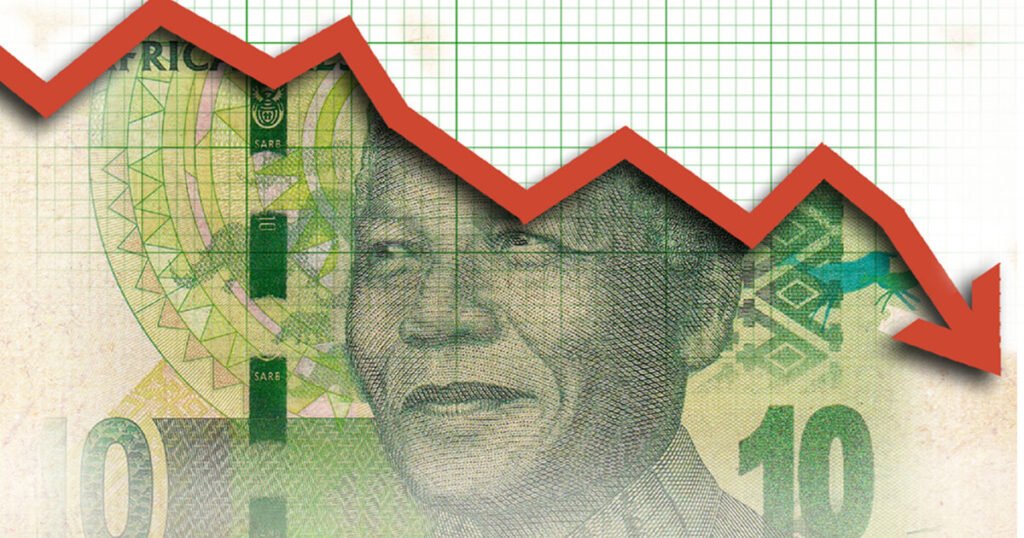
Markets reacted with cautious calm. The Rand traded at around R17.21 to the dollar, supported by a rise in foreign reserves to $67.9 billion, slightly above analysts’ expectations. This stability, however, conceals the deeper fragility of the South African economy.
The stability of the currency is partly the result of global market dynamics rather than robust domestic fundamentals. While foreign reserves provide some buffer against external shocks, South Africa remains vulnerable to shifts in commodity prices and global risk appetite. The country’s fiscal position has deteriorated, debt service costs have ballooned, and public institutions have been weakened by years of corruption, mismanagement, and austerity.
Investor patience, although surprising, is not limitless. Analysts warn that without concrete action to address structural weaknesses, even the current semblance of stability could evaporate. The War Room therefore carries the burden of turning symbolic urgency into measurable progress.
Eskom’s Labour Time Bomb
If the presidency hoped to consolidate national energy stability as a signal of economic progress, Eskom quickly reminded the country that the energy sector remains highly volatile.
The utility’s largest union has demanded a 15 percent wage increase, over four times the inflation rate. Negotiations have not yet formally begun, but the prospect of another labour confrontation has already set off alarm bells across the economy. Analysts warn that any escalation could disrupt the fragile recovery in electricity generation that followed years of rolling blackouts.
Daphne Mokwena, speaking for Eskom, refused to comment on the specifics of the union’s demands. The silence reflects both the sensitivity of the negotiations and Eskom’s precarious financial position. The company cannot afford such an increase, yet it cannot risk a prolonged labour dispute either.
From an analytical perspective, the wage standoff illustrates a deeper tension. Workers argue that wages have stagnated in real terms for years while the cost of living continues to rise. Eskom argues that its financial distress, combined with years of operational crisis, makes significant wage hikes impossible. Both sides are correct, which is precisely why the confrontation is so dangerous.
South Africa’s energy recovery is fragile and can easily be derailed. A labour strike could plunge the country back into severe load shedding, undermining business confidence and weakening Ramaphosa’s claim that stability is returning.

The ANC Faces Its Own Collapse
As if the national economy were not under enough pressure, the African National Congress, the party that has governed South Africa since the end of apartheid, is now entangled in its own financial meltdown. Reports indicate that the party’s bank accounts have been attached by creditors seeking to recover debts amounting to $4.5 million. This situation threatens the party’s access to over $55 million in state and private funding ahead of next year’s critical local elections.
The implications are profound. A financially incapacitated ruling party could struggle to run an organised national campaign, leaving it vulnerable to opposition gains. Internal divisions could deepen, as factions compete for shrinking financial resources. The symbolism is even more damaging. A party that cannot manage its own finances cannot credibly promise economic stability for the country.
For Ramaphosa, the crisis within the ANC is not only a political threat but also a governance threat. A weakened party leadership undermines policy coherence, legislative coordination, and national reform capacity. As the financial pressure mounts, internal conflict could spill into government structures, further complicating economic recovery.
Legal Landmines and Policy Delays
The country’s economic crisis is not solely the result of institutional collapse. Legal and regulatory challenges have added another layer of instability.
AfriForum’s successful court application to temporarily halt Eskom’s $2.8 billion settlement with the National Energy Regulator of South Africa has been celebrated by transparency advocates but has created uncertainty over Eskom’s financial restructuring. Analysts argue that although oversight is essential, prolonged legal battles may hinder the utility’s ability to stabilise its finances.
Meanwhile, the Government Employees Pension Fund announced a temporary freeze on new withdrawal applications to allow for a system upgrade. Although routine in technical terms, the freeze has caused anxiety among contributors who fear that administrative delays could signal deeper financial problems. The fund has reassured the public that regular benefit payments will continue, but mistrust within the public sector remains high.
These legal and administrative disruptions speak to a broader issue. South Africa’s institutional environment is becoming increasingly unpredictable. Policy reforms are often entangled in court battles. Administrative systems are stretched. Public trust is low. These dynamics collectively weaken the state’s ability to deliver the economic transformation that the War Room intends to drive.
The Bigger Picture: A Nation in Social Crisis
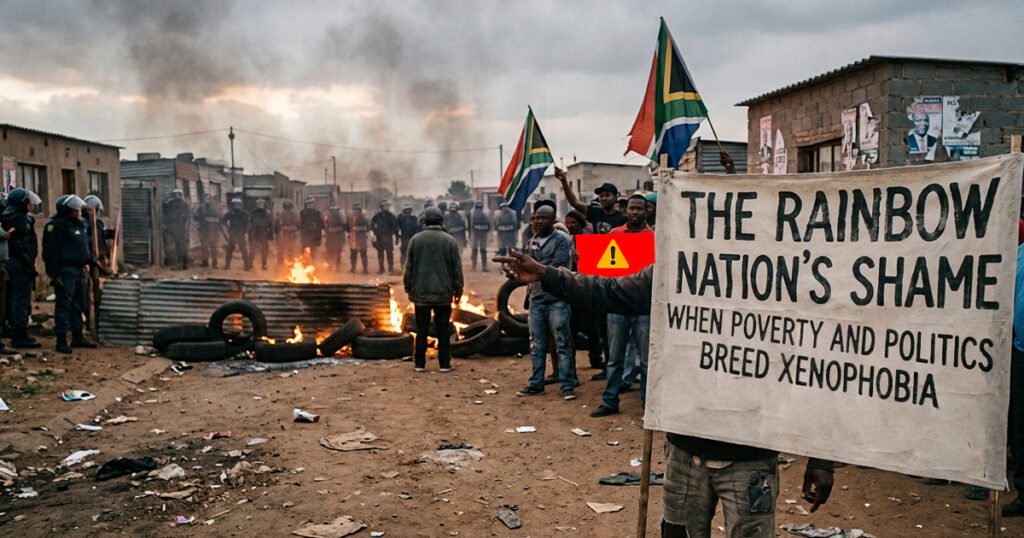
Economic crises rarely exist in isolation. They manifest in hospitals without medicine, schools without resources, declining municipal services, and communities plagued by hunger and crime. South Africa’s social crisis is profound. The rate of expanded unemployment sits above 41 percent. Youth unemployment exceeds 58 percent. Poverty affects more than 62 percent of the population. Inequality remains among the highest in the world.
In its recent Article IV report, the International Monetary Fund described South Africa’s economy as stuck in structural stagnation. Public services have deteriorated due to years of underinvestment and austerity. Infrastructure failures in water, electricity, and transport have undermined productivity and competitiveness. The IMF warned that unemployment has become structural rather than cyclical. Without major public investment, the country cannot break out of its stagnation.
These warnings, echoed by local labour federations such as SAFTU, underscore the magnitude of the crisis. SAFTU criticised the central bank’s recent 25 basis point interest rate cut as “a cup of water thrown at a burning house.” The federation argues that the country requires a fundamental transformation of its macroeconomic framework, including an employment-focused mandate for the central bank and a large-scale public investment programme.
The criticism highlights a core tension in South Africa’s economic policy. The state seeks fiscal discipline to maintain creditworthiness, yet the country requires massive investment to revive growth. Inflation targeting seeks price stability, yet the economy suffers from deep unemployment rather than overheating demand. This tension has resulted in a policy environment that is both cautious and ineffective.
Can the War Room Deliver?
The Economic War Room represents the presidency’s attempt to cut through political, bureaucratic, and institutional paralysis. Its success will depend on several factors.
First, the presidency must secure cooperation across ministries, agencies, and state enterprises. South Africa’s state apparatus operates in silos, with many departments competing rather than collaborating. The War Room must impose discipline without being undermined by political factions.
Second, the state must stabilise Eskom. Energy reliability is the foundation of any economic recovery. Without predictable electricity, manufacturing cannot recover, investment cannot grow, and job creation cannot scale.
Third, the presidency must confront the financial crisis within the ANC. Without a stable ruling party, policy direction will be inconsistent and government coordination will falter.
Fourth, the state must shift from symbolic policy gestures to bold structural reforms. These include industrial policy upgrades, regulatory simplification, public sector reform, and targeted infrastructure investment.
Fifth, the War Room must communicate progress clearly. South Africans are deeply sceptical of government promises. Without transparency, the initiative risks being dismissed as another political slogan.
South Africa has battled crises before, but the current moment is uniquely perilous. The country is facing a convergence of political, economic, and social emergencies. The War Room is an attempt to construct a unified response.
Ramaphosa is stepping onto a battlefield where every front demands immediate attention. He faces an ANC that is financially distressed, an energy sector that remains unstable, unions preparing for confrontation, a central bank accused of conservatism, and a public growing weary of stagnation.
South Africa is indeed a nation on the brink. Whether the War Room becomes the engine of national recovery or another chapter in a long saga of unfulfilled promises will depend on the choices made in the coming months. For now, the country watches as its leadership attempts to wage an economic war on multiple fronts at the same time.
The battle has begun. The outcomes remain uncertain.