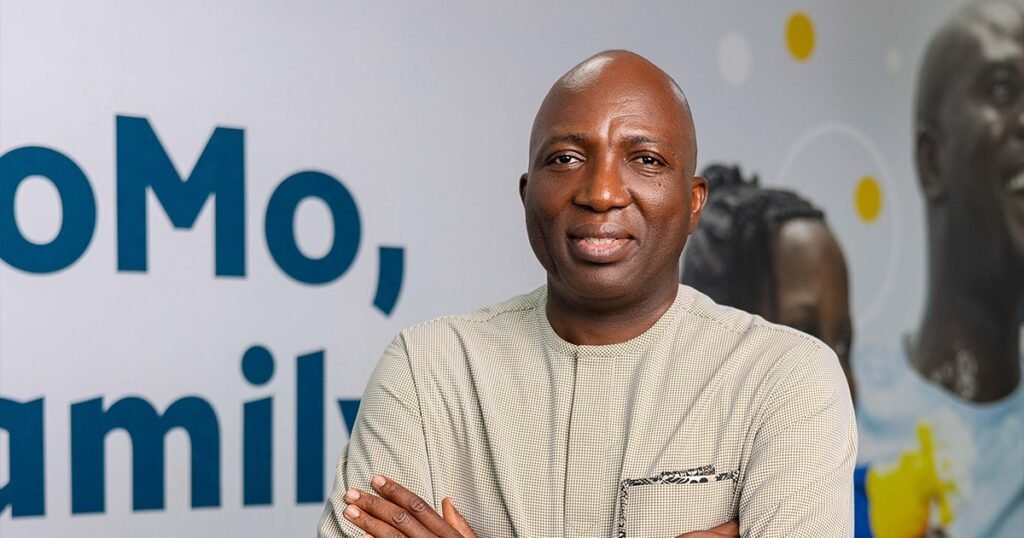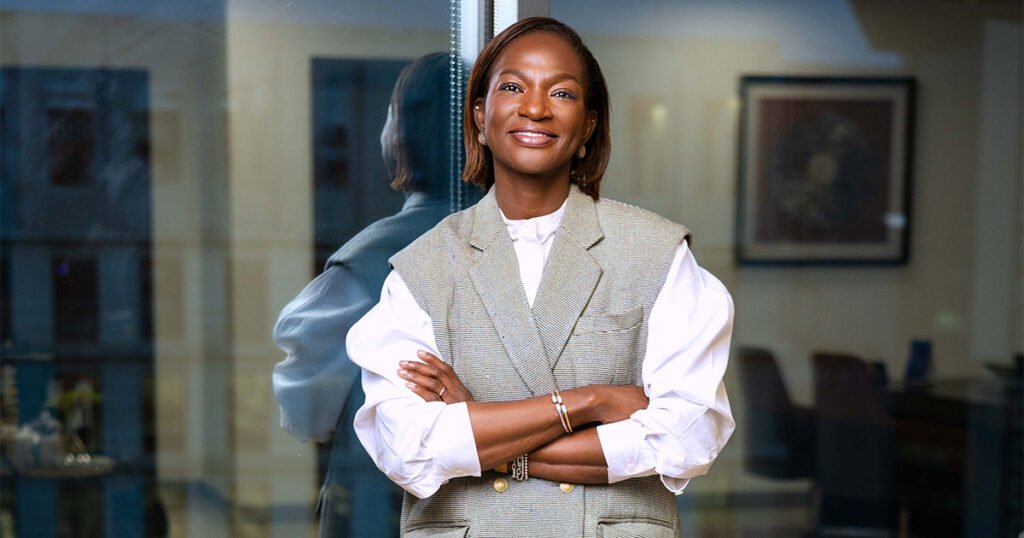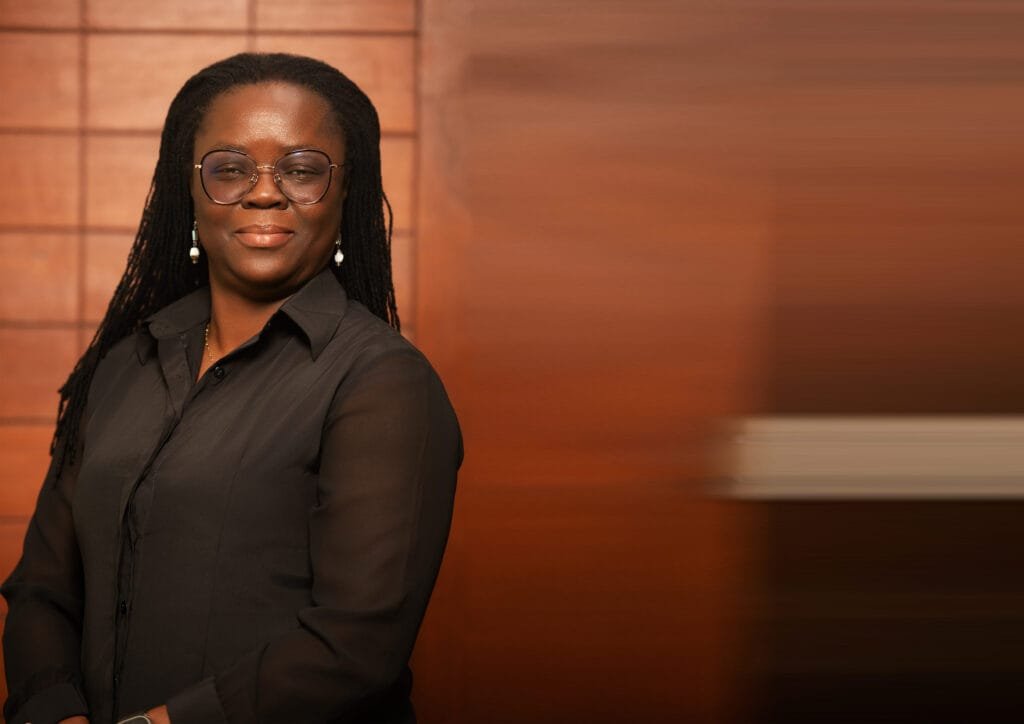



In the evolving corridors of corporate leadership, few stories embody the fusion of purpose, empathy, and excellence as powerfully as that of Sylvia Inkoom, Executive Director at First National Bank (FNB) Ghana, whose two decades career in banking reflects a journey of ambition, resilience, and reinvention,
With over two decades of banking experience spanning Corporate Banking, Relationship Management, and Global Markets, Sylvia has navigated some of the
most demanding frontiers of finance, earning her place among the new generation of women redefining executive leadership in Ghana’s banking industry. She has not only earned her seat at the table but has helped redesign what leadership looks like in modern finance. Beyond the spreadsheets and boardroom meetings lies a woman deeply committed to building people as much as she builds portfolios. Known for her results-driven mindset and her deep sense of empathy, Sylvia represents a C-suite leader
who balances performance with purpose. She has led high performing teams, negotiated complex transactions, and built relationships, all while keeping integrity, collaboration, and excellence at the core of her leadership.
Sylvia’s rise through the ranks has not been without its tests, but her response to every challenge speaks of faith, grit, and a conviction that leadership exists to make impact. She is the kind of leader who measures success not just by outcomes, but by the growth she inspires in others. She has turned obstacles into lessons and ambition into impact, constantly refining her craft while inspiring others to reach their potential.
In an industry historically dominated by men, Sylvia Inkoom’s story stands as a powerful evidence that women are not just participating in Ghana’s financial evolution; they are shaping it. Her approach to leadership, marked by strategy, empathy, and faith, reflects the new face of executive power -bold yet grounded, visionary yet human.
INTERVIEW QUESTIONS
TVA: You’ve had a stellar career in the banking and finance industry and are currently an Executive Director at First National Bank (Ghana) Ltd., how would you describe yourself beyond the name and the portfolio you occupy?
SI: I would describe myself as someone passionate about growth, both my own and that of the people I work with. I’m a solutionist, and I’m passionate about building meaningful relationships that incrementally refine service to clients. Over the years, I have learned to balance strategy with empathy, and I value integrity, collaboration and impact.
TVA: What influenced your journey into the financial industry that is seen to be mind-racking and mostly dominated by men?
SI: At the time I entered the field, there were a few women leaders whom I looked up to for inspiration. Speaks volumes about role models and mentors you know.
TVA: When you began your career many years ago, did you ever foresee yourself attaining a seat at the table of decision-making?
SI: I have always been an ambitious person, so yes, I knew with God and hard work I was heading somewhere but couldn’t say where. It is a journey, and I am still on it. A testament to the power of perseverance and purpose.
TVA: You come across as a calm, focused and intentional leader, judging by your profound achievements so far. What core values or philosophies define who you are as a person and a leader?

SI: I have maintained that one must be purpose-driven and ambitious. I am obsessed with high performance. I believe in building and working in strong and high-performing teams that deliver consistent results.
You must foster a culture of trust, accountability and collaboration, invest in team development, mentorship and celebrate diversity of thought.
Lead with empathy, humility and integrity. You must understand the human side of leadership, as a famous quote from Ken Blanchard goes, “People are inspired, not managed”.
I like to put myself in the place of my clients, client-centric philosophy, if you may. For that, you would have to view client relationships as long-term partnerships built on mutual value, practice active listening to anticipate and exceed client needs, and seek to understand not just what the clients ask for but what gives them true value and will move their businesses forward.
In a world of constant change, you must remain resilient and proactive, embracing complexity, navigating uncertainty with confidence and turning challenges into opportunities. Balance short-term execution with long-term impact, think both globally and locally, tailoring strategies to fit the context of medium and large enterprises in growth markets.
Be guided by ethical principles and commitment to sustainable, inclusive progress that benefits both the business and society. That is what we in the FirstRand Group call Shared Prosperity.
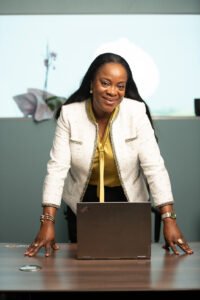
TVA: What defining moments or principles shaped your journey to becoming a high-level C-suite Executive?
SI: My first role in the financial services sector was with a small debt collection firm. It didn’t pay much at the time, but it gave me the opportunity to work with major Banks in the country. I thought to myself to give it my best until a bigger door opened. I was so successful to the point where the banks questioned how I collected so much from customers whom they classified as delinquent portfolio. My performance in that job eventually led to being headhunted by one of the officials in one of the banks, a couple of years after, giving me the break I looked forward to. Always give the best on the current job because it is the surest way to get a bigger and better one.
TVA: With over 20 years of experience across various segments of banking, your journey reflects resilience and ambition. How would you describe your journey to the corner office that is seen to be male biased?
SI: My career journey has been a perfect example of what life’s journey is. Some beautiful ups and some unexpected downs. I say this with a smile on my face because, in totality, it’s been fulfilling. I enjoy the ups, which I must admit have been more than the downs, and I endure the downs. In most cases, with God’s help and resilience, the downs have eventually led to some very beautiful outcomes.
TVA: What is the impact of women in leadership positions?
SI: Women in leadership drive meaningful change across organizations and society. They bring fresh perspectives, emotional intelligence and a collaborative approach that strengthens team performance and workplace culture. Their leadership is often grounded in empathy, ethics and a long-term vision, helping businesses innovate, build trust and adapt in a changing world.
Beyond the boardroom, women leaders serve as role models, empowering others, challenging stereotypes, and expanding opportunities for future generations. Their presence improves outcomes and redefines what effective leadership look like. Ruth Bader Ginsburg said, “Women belong in all places where decisions are being made”. Regardless of the perspective, women bring valuable balance to the table.
TVA: How differently do female executives lead compared to their male counterparts in the C-suite?
SI: On a professional level, women executives operate at the same level, and that is the expectation. However, by the sheer physiological makeup of women, some soft skills and competencies may be prominent with women in leadership.
I must firstly admit that there are exceptions; however, in decision-making, most women leaders tend to be very consultative and thorough.
Women are more resilient and can endure uncertainty. Childbearing, nurturing and caring for the family make a woman leader generally more caring and empathetic. Women Executives are great at multitasking because a typical woman, executive or not, is a magician when it comes to juggling tasks. In strategic planning and being futuristic, a woman leader is more likely to sustain and build a steady business due to their risk evaluation, assessment and management. There is enough research backing this view, and maybe that should be our next topic for discussion.
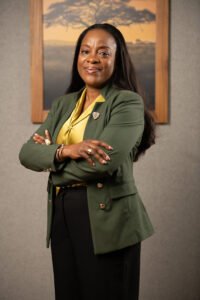
TVA: What are the biggest challenges for women in leadership?
SI: The biggest challenge for women in leadership is not lack of talent, ambition or capability; it is being truly seen and heard in spaces that were not always built for them. Many still face silent biases, constant judgment and pressure to be strong but not too strong, capable but not too commanding (at times from women too). They juggle professional ambition with responsibilities, often carrying more than they show. Still, they rise, proving their worth again and again, not just for themselves but for the women coming after them. What holds them back is not ability, it’s the weight of outdated and expectations that need to be changed.
TVA: What are some of the key lessons you’ve learned in your current role, and how are you applying them to shape the next phase of your journey?
SI: In my current role, the most important skill is to be efficient with limited resources and to do much more with less. I have had to demonstrate a full understanding of all my stakeholders i.e. Employees (Team/ colleagues), my Boards, Customers and our Principals at the Group level. We are a growing Bank in Ghana, and capital is very expensive, so I need to run my business as an owner, not an employee. It’s my best bet to continued success.
TVA: Strong leadership is often influenced by one’s personality and values. How would you describe your leadership style, and how has it evolved over the years?
SI: As I mentioned earlier, I am an ambitious person; I like to win and see great results. Working in a competitive and results-oriented sector, I have found that these personal skills have fueled my success by giving me the energy to keep pushing myself. I also describe myself as a person who can spot and groom talent. I have led people who, in a few years, act and think like me or even better, in most cases when it comes to work. I attribute a lot of my success to these attributes, not forgetting the Bigman upstairs for his favour.
TVA: Being a woman in the C-suite often comes with heightened scrutiny and expectations. Leadership at the top comes with pressure. What internal qualities or habits help you stay grounded and navigate the demands of such an executive position?
SI: The statistics show that women need to work multiple times and harder than their male counterparts, but there is also enough to prove that there is room for not just a beautiful face but big brains. So, the first principle in my view is building knowledge and capacity to produce consistency in outperformance. This way, you cannot be ignored or overlooked.
Showing kindness, being humane and reasonable. These are emotions that resonate with everyone, male or female.
I have learned to find time for stillness and talk to myself, whether it is journaling, walking, or a silent prayer, to reconnect with purpose. I talk to myself a lot, mostly when I need advice. I also surround myself with a circle of truth-tellers, very few people who keep me centered, not impressed.
Finally, I have embraced the discipline of grace, extending it to myself when the expectations feel heavy. I know I am human and not a superhero. Because at this level, composure is not a luxury; it is leadership.
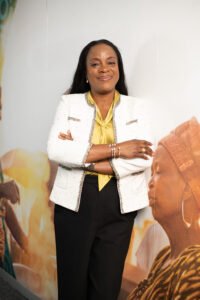
TVA: Work-life balance often comes under scrutiny for women in executive roles because of their dual roles as mothers and executives. How have you managed to balance this ‘double life’, and what message do you have for women who feel it’s impossible?
SI: Some days I lead boardrooms, other days I am just trying to be fully present at the dinner table. I have stopped chasing perfection in both. What has helped me is learning to be where my feet are; giving myself fully to work when I am at work and not apologizing for not being available when I need to show up for my family. Get something to start, and the rest will follow up. Have some discipline in there, integrity is key, and the ability to focus on what is due at any point in time is the way to go.
To any woman who feels like it is impossible, I will say this: it’s not about doing it all, it’s about doing what matters well and permitting yourself to redefine that every single day.
TVA: Your achievements have become a point of inspiration in the business community.
Which of your accomplishments stand out as defining moments in your career, and why do they stand out to you?
SI: My customers like me so much that they speak for me when I am not present, they speak about me better than I do for myself, and it is humbling. They try to pitch me for opportunities, and that is a priceless vote of confidence. Some of my closest friends today are people I have encountered in my career journey. Some are almost like family. Our biggest achievements are the people we touch and the bonds we build.
TVA: Women in the corporate world, often face an uphill journey, navigating bias while proving their capabilities. You’ve worked your way up in this complex business environment where women are often disregarded. What do you think young females should do differently to earn a place in the C-suite?
SI: I have been blessed to work in organizations that are supportive of women. That said, I will say, stop waiting for permission. Sometimes we wait to be invited, validated or told we are ready. That is well and good, but what if we get forgotten or overlooked? Why not raise your hand, show up where it matters the most? Speak up and stretch beyond your confidence as intentionally as you build your CV and do your make-up. The boardroom may not hand you a seat. It’s not just about being qualified, it’s about being visible, bold and leaning in as Sheryl Sandberg puts it in her book ‘Lean In’. And don’t forget to keep the door open for others to join you.
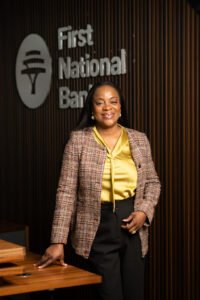
TVA: What do you foresee as the biggest challenges ahead for the next generation of females desiring a place in the corner office, and how can they be nipped in the bud?
SI: I believe the biggest challenge will be navigating the ever-demanding expectations that come with the workplace and leadership. The desire to be it all and do it all. This can erode confidence before it even has the chance to mature. Making excuses for ourselves… we have to constantly learn and upskill to remain relevant.
To nip it in the bud, we must build networks of truth and support, spaces where women would see what real, authentic leadership looks like. Mentorship matters, representation matters, most of all, honesty matters. We must be resolute about showing up as yourself. That is how we build not just leaders but women who lead with sincerity. Emotional intelligence and confidence but know where and how to display it. Above all, have self-drive and inner strength (there will not always be happy times, but you need to find the motivation to keep going).
TVA: Looking into the future, there’s much anticipation for increased women participation in the corporate world. What is your vision for the next generation of women leaders, and how do you hope your legacy will influence that vision?
SI: My vision is simple but powerful: that women rise without needing to shrink. That confidence won’t be mistaken for arrogance, and that leadership won’t come at the cost of identity. I hope the next generation will walk into boardrooms where they’re not ‘the first’, not ‘the only’ but one of many, fully seen and fully heard like in my current First National Boardroom. If my journey leaves behind anything, it’s proof that grace and grit can coexist; that you don’t have to become someone else to lead. You just must become more of yourself, perhaps a nicer and finer version day after day.
TVA: As a role model, what advice would you give to young women who aspire to be in the C-suite as they climb the corporate ladder?
SI: I will say what I tell my daughter always…don’t wait until you are totally ready, that day rarely comes. Step forward, speak up, and take the seat, even if your hands shake while doing it. You may fail at some things that only confirms your humanity not your incapacity. Build relationships with people who challenge and champion you, don’t be afraid to ask for help, strength is not silence. Above all, protect your authenticity, lead from who you are, not who they expect. Stay winning!