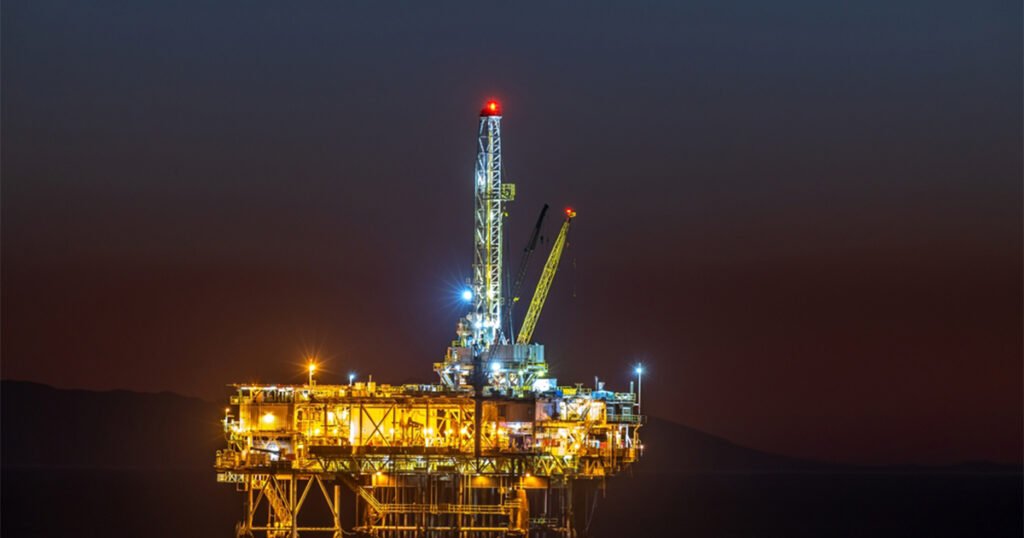


The images coming out of the Persian Gulf recently are the stuff of nightmares for anyone who remembers the oil shocks of the past. Tankers sit idle or turn back, their massive hulls empty or half-loaded. Smoke rises from distant horizons where infrastructure has taken hits. And in trading rooms from London to New York to Singapore, screens flash red as prices climb higher by the hour.
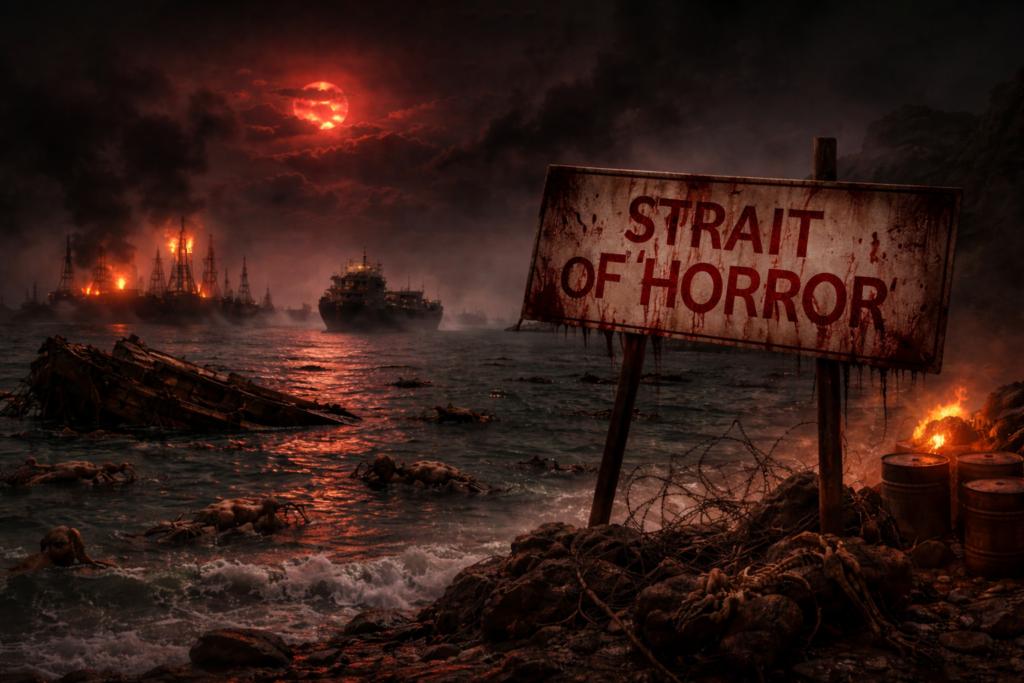
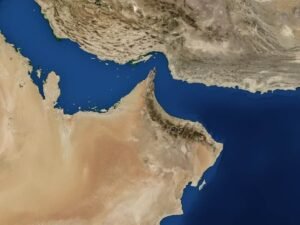
The Strait of Hormuz, that narrow sliver of water between Iran and Oman, has now become the Strait of ‘Horror’ as it is currently the focal point of a conflict that is rapidly turning into one of the biggest energy crises in modern history.
For decades, energy analysts have warned about this exact scenario. Roughly 20 to 21 million barrels of oil and petroleum products pass through the strait every single day under normal conditions. That is about one-fifth of the world’s entire daily oil supply. Add in significant volumes of liquefied natural gas from Qatar and you have a chokepoint that keeps the global economy running smoothly, or brings it to its knees when things go wrong.
Now, with the ongoing war involving Iran, the United States, Israel, and regional players, that chokepoint is effectively paralyzed. Shipping has slowed to a trickle. Insurance rates have skyrocketed. And major producers in the Gulf have begun cutting output because they simply cannot get their crude to market.
As the words of a veteran tanker captain who has navigated these waters for over 30 years echoed in a tired voice: “I’ve seen tensions before,” he said, “but nothing like this. The last time we tried to move through, the warnings were clear. No one wants to be the next ship on the news with flames shooting from the deck.” His company, like many others, has rerouted vessels or simply halted operations in the area. The human cost is real, too. Crews are anxious, families back home are worried, and the economic fallout is only beginning to hit households around the world.
The Anatomy of a Chokepoint
The Strait of Hormuz is not wide. At its narrowest point, it is just about 21 miles across, with shipping lanes even tighter. On one side lies Iran. On the other, Oman and the United Arab Emirates. Tankers carrying Saudi, Iraqi, Kuwaiti, Emirati, and Qatari oil and gas must pass through this corridor to reach the open waters of the Gulf of Oman and then the Indian Ocean.
Before the latest escalation, approximately 20 million barrels per day moved through here in 2025, according to estimates from the U.S. Energy Information Administration. That flow is worth hundreds of billions of dollars annually. Asia has been the biggest customer, with China, India, Japan, and South Korea relying heavily on these shipments. Europe and other markets also feel the ripple effects through global pricing.
When conflict erupts, the strait becomes incredibly vulnerable. Iran has long maintained that it could disrupt traffic if pushed too far, using mines, missiles, fast-attack boats, or simply declaring the area too dangerous for commercial vessels. In the current war, that threat has materialized. Attacks on ships, combined with military activity, have made insurers pull coverage or demand premiums that make voyages uneconomical. Traffic has dropped dramatically since early March 2026. Some reports describe it as “effectively closed” for large-scale commercial operations.
Alternative routes exist, but they are limited and costly. Saudi Arabia has pipelines that can move some oil to the Red Sea coast at Yanbu, bypassing the strait entirely. The UAE has similar infrastructure. Together, these can handle perhaps a quarter of the normal strait volume at full capacity. But ramping up takes time, and the Red Sea itself carries risks from Houthi activity and longer transit distances. Diverting even part of the flow adds days or weeks to journeys, increases fuel consumption, and drives up costs that eventually land on consumers.
How We Got Here: The Spark and the Escalation
The roots of the current crisis run deep, but the immediate trigger came in late February 2026 with intensified military operations involving U.S. and Israeli strikes on Iranian targets. Iran responded with retaliation across the region, including actions that targeted shipping and energy infrastructure. What began as targeted exchanges quickly spiraled.
By early March, reports emerged of ships being attacked or warned away near the strait. Iranian officials issued strong statements about security in the waterway, while Western leaders, including President Trump, warned of severe consequences if flows were interrupted.
The International Energy Agency (IEA) has described the situation as potentially the largest supply disruption in the history of oil markets, worse in scale than the 1973 Yom Kippur War or the early days of the Ukraine conflict. Production cuts in the Gulf states have already reached estimates of 8 to 10 million barrels per day or more as storage fills and exports stall. Damaged facilities and cautious operators have compounded the problem.
Energy traders, The Vaultz Africa contacted, described the mood as one of controlled panic mixed with opportunism. Everybody knew the risks were there, but seeing it play out this fast is something else. Prices jumped from the $70s into triple digits in a matter of weeks. The question now is how long this lasts.
Brent crude, the global benchmark, has surged past $100 per barrel, with peaks reported well above that in volatile trading sessions. West Texas Intermediate has followed suit. Gasoline prices at the pump in the United States have climbed noticeably, with some areas seeing averages approach or exceed $4 a gallon.
In Europe, Africa and Asia, the pain is similar or worse, depending on local refining and import dependencies. Airlines are hedging fuel costs aggressively, and manufacturers are bracing for higher input prices that could feed into everything from plastics to transportation.
The Human and Economic Toll
Behind the big numbers are real people. In Gulf cities, workers at oil terminals and ports face uncertainty about their jobs as operations slow. Families in importing nations worry about rising costs for heating, commuting, and groceries, since energy touches nearly every part of modern life. Truck drivers in the American Midwest, farmers in India, and factory workers in China are all feeling the pressure indirectly.
Small businesses are particularly vulnerable. Inflation is certainly wrecking havocs across the world especially in Africa. So, people are squeezing margins and hoping things calm down. On the other side of the world, an importer of petrochemicals described sleepless nights calculating whether his contracts would still make sense if prices stay elevated.
The IEA has already moved to release strategic reserves in record volumes to try to ease the pressure. But stockpiles are not infinite, and they buy time rather than solve the underlying issue. If the strait remains restricted for months, the world could face genuine shortages in certain products, not just higher prices. Jet fuel, diesel, and petrochemical feedstocks are among the first to feel the strain.
Who Wins, Who Loses?
Not everyone is suffering. Oil producers outside the immediate conflict zone, particularly in the United States, Canada, Brazil, and parts of Africa, stand to benefit from higher prices. American shale operators, many of whom have been cautious in recent years due to investor pressure for discipline, may see renewed investment if prices hold above $90 or $100 for an extended period.
Big oil companies with diversified operations and strong balance sheets are watching closely. While some of their Gulf assets are affected, others elsewhere are reaping rewards. Refiners with flexible configurations might profit from crack spreads if product prices rise faster than crude in certain regions.
On the flip side, countries heavily dependent on Gulf oil imports without adequate stockpiles or alternatives are hurting most. China, despite its own production and strategic reserves, faces higher costs that could affect its manufacturing competitiveness. Europe, still recovering from previous energy shocks, must navigate winter demand (if the crisis drags) alongside summer driving season pressures.
That notwithstanding, developing nations could see the biggest pain. Higher fuel costs translate into more expensive food transportation and fertilizer production, potentially worsening food security in vulnerable regions.
What Happens Next? Scenarios and Wild Cards
The big unknown is duration. If diplomatic efforts or military actions succeed in reopening safe passage through the strait relatively soon, markets could stabilize, though prices may not fall all the way back to pre-crisis levels quickly. Some analysts suggest a “new normal” with a persistent risk premium built into oil.
If the disruption lingers, scenarios get darker. Prolonged closure could force more production shut-ins, leading to actual physical shortages rather than just price spikes. Alternative routes would be maxed out, and global inventories drawn down rapidly. The IEA and governments would likely coordinate further releases, but those are emergency measures.
Wild cards include: Direct damage to major production or export facilities beyond what has already occurred; Involvement of additional regional actors; Weather events or technical issues at alternative terminals that compound problems; and policy responses, such as export restrictions or subsidies in consuming nations.
President Trump’s recent statements about securing the strait, including potential naval escorts or stronger measures, add another layer of tension. Iran has pushed back firmly. The rhetoric on both sides suggests this could be a high-stakes game of brinkmanship.
Lessons from History, Warnings for the Future
This is not the first time the world has stared down an oil supply crisis. The 1973 embargo, the Iranian Revolution in 1979, the Gulf War in 1990-91, and more recent events all left scars. Each time, markets eventually adapted through higher prices encouraging new supply, efficiency gains, and diversification.
But the world today is different. Global oil demand remains robust even as the energy transition accelerates in some countries. Renewables are growing, but they cannot yet replace the volume and reliability of oil in transportation and industry on short notice. Electric vehicles are increasing, yet most of the global fleet still runs on gasoline or diesel. Aviation and shipping have even fewer quick substitutes.
The current crisis highlights the fragility of relying on a handful of chokepoints for critical commodities. It also underscores the geopolitical risks that come with concentrated energy production in volatile regions.
A Glimmer of Hope Amid the Chaos?
Even in dark moments, adaptation happens. Companies are already exploring accelerated development of non-Gulf supplies. Governments are dusting off contingency plans. Innovators in hydrogen, advanced biofuels, and battery technology see opportunity to speed deployment.
Yet none of that will happen overnight. In the coming weeks and months, the world will be watching the Strait of Hormuz closely.