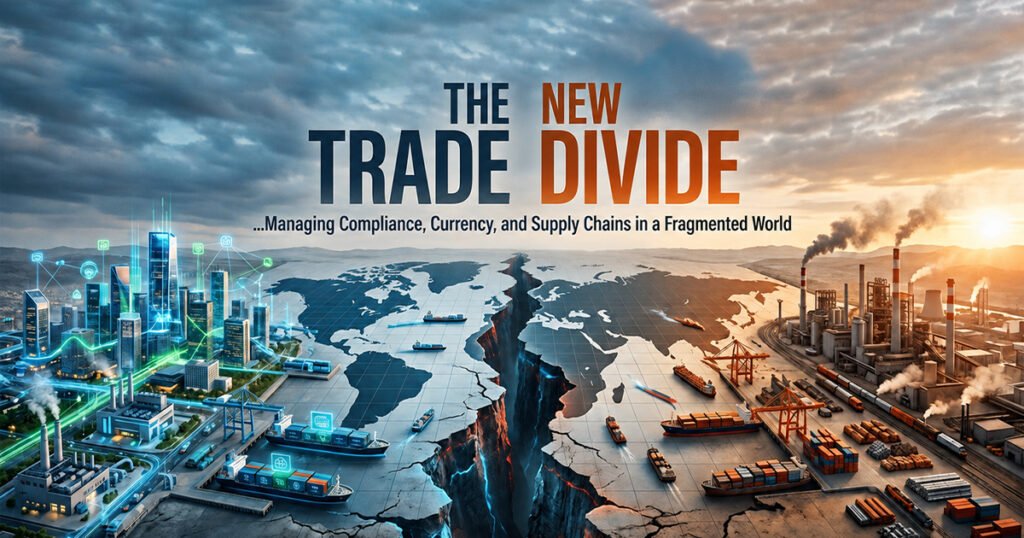



The global business environment is entering a phase that many executives are quietly describing as a reset rather than a continuation of existing trends.
As organisations move past 2025, technology is no longer simply an enabler of efficiency, it is becoming the architecture on which entire business models are built, tested, and sometimes completely rebuilt.
What makes this moment different is not just the speed of innovation, but the depth of transformation taking place. Artificial intelligence, automation systems, advanced cybersecurity tools, and digital infrastructure are converging in ways that are forcing companies to rethink how they operate at every level. From decision-making to customer engagement, from risk management to internal governance, the rules are shifting faster than many boardrooms can adapt.
Across industries, one idea is becoming increasingly clear: the businesses that survive this transition will not be those that merely adopt new tools, but those that redesign themselves around them.
From Digital Adoption to Digital Dependence
For the past decade, companies have spoken about digital transformation as a strategic goal. In many cases, this meant introducing software systems, automating isolated tasks, or integrating cloud platforms into existing operations. But the shift now underway is fundamentally different. Technology is no longer sitting beside the business. It is becoming the business.
Artificial intelligence systems are beginning to manage workflows that were once handled by entire teams. Data systems are no longer just reporting what happened yesterday but are actively shaping what happens next. Even customer service, supply chain coordination, and financial forecasting are increasingly influenced by automated systems operating in real time.
This shift has created a new kind of dependence. Companies are not just using technology to improve performance, they are relying on it to function. And with that reliance comes a new urgency around trust, accountability, and control.
Artificial Intelligence Moves From Tool to Decision Maker
At the heart of the 2026 tech shock is the evolution of artificial intelligence. What began as predictive analytics and conversational assistants is now moving toward systems capable of executing tasks independently across multiple steps.
These advanced systems are beginning to draft communications, manage internal workflows, trigger operational processes, and even recommend strategic decisions. In some organisations, they are already embedded within enterprise platforms, quietly shaping how work gets done without constant human input.
This is where the transformation becomes more complex. When AI simply provides suggestions, responsibility remains clearly human. But when systems begin to act independently, accountability becomes harder to define.
Executives are now grappling with questions that did not exist a few years ago. Who is responsible when an automated system makes a costly decision? How do you audit actions taken by an algorithm operating across multiple platforms? And perhaps most importantly, how do you ensure these systems align with corporate values and regulatory expectations?
These are not technical questions alone. They are governance challenges that reach into the core of corporate leadership.
The Governance Gap: Trust Becomes the Bottleneck
One of the most pressing concerns for global businesses heading into 2026 is not whether artificial intelligence can work, but whether it can be trusted at scale.
As organisations deploy more autonomous systems, the demand for transparency is rising sharply. Boards and regulators are increasingly asking for clear explanations of how decisions are made, what data is used, and whether outcomes can be independently verified.
This has exposed a significant gap between technological capability and governance readiness. Many systems are capable of acting with remarkable speed and efficiency, but far fewer are designed to explain themselves in a way that satisfies regulatory or corporate oversight standards.

As a result, some organisations are slowing down deployments, not because the technology is ineffective, but because the risk of operating without full visibility is too high.
In practical terms, this means that trust is becoming the new currency of digital transformation. Without it, even the most advanced systems struggle to move beyond pilot stages.
The Rise of Invisible Intelligence in Everyday Operations
While some AI systems are being debated at board level, others are quietly becoming part of daily business life without drawing much attention.
A growing trend is the embedding of intelligence directly into everyday digital tools. Instead of interacting with standalone AI applications, employees are increasingly working within systems where intelligence is always present in the background.
These systems help draft reports, organise schedules, prioritise tasks, and streamline communication without requiring users to actively prompt them. Over time, this creates a working environment where AI is not a separate tool but a constant layer of support embedded in every workflow.
This shift is subtle but powerful. It changes how employees perceive productivity, how managers measure performance, and how organisations structure work itself.
The result is a workplace where intelligence is no longer something you access, it is something you operate within.
From Experimentation to Performance Pressure
For several years, businesses treated artificial intelligence as an experimental space. Pilot projects were launched, prototypes were tested, and innovation teams explored possibilities without immediate pressure to deliver measurable financial returns. That phase is now ending.
With the first quarter of 2026 behind, there is increasing pressure from investors, executives, and financial officers to demonstrate clear value. AI investments are no longer judged by potential alone but by their contribution to productivity, cost reduction, and revenue growth.
This shift is reshaping how organisations approach innovation. Instead of asking what is possible, they are now asking what is profitable.
The implication is significant. Projects that cannot demonstrate clear operational impact are increasingly being paused, restructured, or discontinued. At the same time, successful implementations are being scaled rapidly across entire organisations.
This marks the beginning of a more disciplined era of technological adoption, where experimentation must eventually justify itself in financial terms.
Cybersecurity Enters a More Aggressive Era
As digital systems become more powerful, they also become more exposed. The expansion of AI and automation has created a larger and more complex attack surface for cybercriminals.
The nature of cyber threats is also evolving. Attacks are becoming faster, more targeted, and increasingly automated. Instead of relying on manual hacking attempts, malicious actors are beginning to use AI systems to identify vulnerabilities, test scenarios, and execute coordinated attacks at scale.
One of the most concerning developments is the rise of highly personalised digital deception. Fraudulent communications are becoming more convincing, often mimicking real individuals with alarming accuracy. This makes it increasingly difficult for employees and customers to distinguish between legitimate and malicious interactions.
At the same time, security experts are warning that traditional defensive approaches may no longer be sufficient. Automated attacks can now adapt in real time, shifting strategies as they encounter resistance.
This has created a new reality in cybersecurity. Defenders are no longer just protecting systems. They are competing against intelligent adversaries capable of learning and evolving during the attack itself.
The Infrastructure Challenge Behind the Digital Boom
Behind the software revolution lies a less visible but equally important issue. The physical infrastructure supporting global technology systems is under increasing strain.
Artificial intelligence and cloud-based platforms require vast amounts of computing power and energy. As demand grows, traditional infrastructure systems are struggling to keep pace.
This is pushing organisations to rethink how they approach energy and computing resources. Instead of relying solely on centralised systems, many companies are exploring distributed models, including on-site power generation and decentralised data processing.
This shift reflects a broader truth. Digital transformation is no longer just about software. It is also about physical capacity, energy stability, and infrastructure resilience.

Autonomous Systems and the Future of Decision-Making
Another major shift expected by the end of 2026 is the move toward autonomous decision-making systems. These are not just tools that support human choices but systems that can make operational decisions independently within defined boundaries.
In industries such as manufacturing, logistics, and supply chain management, this is already beginning to reshape operations. Systems can now respond to disruptions, adjust production schedules, and reroute logistics without waiting for human approval.
While this improves efficiency, it also introduces new complexities. Businesses must decide how much authority to delegate to machines and where human oversight must remain essential.
The balance between autonomy and control is becoming one of the defining strategic questions of the digital age.
A Global Shift Toward Digital Sovereignty and Control
As technology becomes more embedded in national and corporate infrastructure, questions of ownership and control are becoming more important.
Governments and regulators are increasingly focused on where data is stored, how it is processed, and who has access to it. This concept of digital sovereignty is influencing cloud strategies, data policies, and cross-border technology partnerships.
For global businesses, this means navigating an increasingly fragmented digital landscape where compliance requirements vary across regions. Technology decisions are no longer purely technical. They are also geopolitical.
A New Business Reality Takes Shape
It is becoming clear that global business is entering a new phase of transformation. The combination of artificial intelligence, cybersecurity evolution, infrastructure strain, and governance pressure is reshaping how organisations function at a fundamental level.
What emerges from this shift is not just a more digital world, but a more complex one. Businesses are being asked to move faster while becoming more transparent. To innovate aggressively while maintaining tighter control. To adopt powerful technologies while managing the risks they introduce.
In this environment, success will depend less on who adopts technology first and more on who adapts to it most intelligently.
The rules of global business are not just changing. They are being rewritten in real time. And 2026 may well be the year that defines the new operating system of the global business.