

Across the globe, the definition of money is rapidly evolving. Transactions that once depended entirely on physical cash are increasingly executed through digital platforms powered by technology, data, and interconnected financial infrastructure. According to Mckinsey Global, the growing divergence in payments reflects the evolution of the broader financial system into a mosaic of regions with different standards, timelines, currencies, and trust anchors.
Against this backdrop, the 2025 McKinsey Global Payments Report highlights that the payments industry remains the most valuable segment of financial services, generating approximately $2.5 trillion in revenue from $2.0 quadrillion in value flows, supported by 3.6 trillion transactions globally.
The report further notes a continued global decline in cash usage, which now accounts for 46 percent of total payments, down from 50 percent in 2023. Meanwhile, account-to-account (A2A) payments are gaining significant traction, particularly through digital wallets. These wallets now represent about 30 percent of global point-of-sale transaction volumes, with strong adoption in markets such as India, Brazil, and Nigeria.
In light of these trends, the report provides critical insights into the future of the payments sector and outlines what industry players must do to remain competitive in an increasingly dynamic and rapidly evolving landscape.
In Ghana, this transformation is steadily reshaping commerce, governance, entrepreneurship, and everyday life.
At the heart of this national shift is the strategic work of Ghana Interbank Payment and Settlement Systems (GhIPSS), the institution mandated to build and manage Ghana’s core payment infrastructure.
For over two decades, Ghana Interbank Payment and Settlement Systems has worked closely with the Bank of Ghana and financial service providers to advance digital payment adoption nationwide.
This has led to the development of strong national payment infrastructure that supports digital transactions across banks, mobile money platforms, and fintech applications. Systems such as Mobile Money Interoperability (MMI), GhIPSS Instant Pay (GIP), GhQR, gh-link, and the Automated Clearing House (ACH) have made digital payments faster, more convenient, and accessible to both individuals and businesses.”
The Transition To A Cashless Economy
The shift towards a cashless economy is fundamentally transforming how businesses operate across the globe. As consumer preferences evolve, supportive regulatory frameworks and bold industry initiatives are accelerating this transition, driven by the rapid adoption of digital transactions over cash—the backbone of this new financial landscape. Innovations such as open finance and instant payments are not only enabling faster transactions but are also redefining how value is exchanged, unlocking new opportunities across the financial ecosystem.
Indeed, the transition from a “less-cash” to a truly cashless global economy is already well underway, as highlighted in the World Payments Report 2025.
Non-cash transaction volumes continue to rise steadily year on year, reflecting a sustained shift in both consumer and business payment behaviour. The COVID-19 pandemic served as a powerful catalyst, accelerating the move to digital channels as lockdowns and health concerns drove widespread adoption of e-commerce and contactless payments.
In response, businesses have rapidly expanded their digital capabilities, investing in e-commerce platforms and real-time payment infrastructure to support seamless, omnichannel customer experiences. This has broadened access to faster, more convenient, and secure payment options, fundamentally reshaping how transactions are conducted.
A parallel transformation is unfolding in the business-to-business (B2B) space. Global B2B non-cash transaction volumes are growing significantly, driven by the ongoing digitisation of financial operations, increasing demand for efficiency and transparency, and the adoption of innovations such as electronic invoicing, real-time payments, and integrated financial systems.
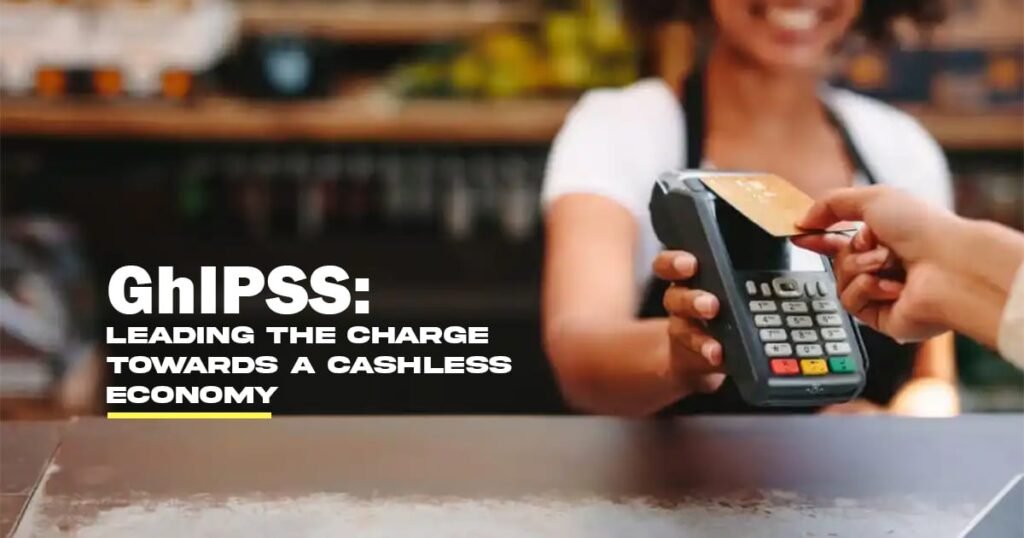
Considering the foregoing, GhIPSS notes that Ghana’s transition to a cashless economy is also feasible, but it will happen progressively rather than overnight. The institution admitted that though cash still plays a dominant role in day-to-day transactions, particularly within the informal sector, consistent growth in digital usage signals meaningful progress toward a cash-lite environment.
It further notes that the rapid rise of mobile money have drawn millions of Ghanaians into the formal financial ecosystem. As such, individuals who previously depended entirely on physical cash can now transfer funds, pay bills, and manage business payments directly from their mobile devices. This shift is gradually redefining how financial services are accessed and delivered.

Ghana’s transition to a cashless economy is achievable, but the more realistic objective in the near term is a cash-lite economy, where digital payments become the preferred option while cash gradually reduces in prominence. Continued collaboration between regulators, financial institutions, and infrastructure providers like GhIPSS will remain key to sustaining this transition.”
However, GhIPSS cautions that structural challenges remain. Digital and financial literacy gaps, especially in rural communities, require sustained attention. Cash also retains an advantage in small-value transactions, largely due to familiarity and perceived ease of use. Overcoming these barriers will demand consistent public education, stronger system reliability, and affordable digital payment solutions for both merchants and consumers.

Facilitating Ghana’s Cashless Transition
GhIPSS explains that current efforts are focused on maximizing the use of national payment infrastructure to accelerate Ghana’s transition toward a cash-lite and eventually cashless economy. With foundational systems already established, the priority is ensuring ecosystem-wide integration rather than bilateral connections.
The organisation indicates that banks, mobile money operators (EMIs), and fintech companies are being encouraged to connect through GhIPSS infrastructure instead of creating multiple bilateral integrations that raise costs and weaken system cohesion.
By encouraging participants to integrate through GhIPSS, the industry can reduce the cost of integration, simplify access for new players, and ensure that digital payment services scale efficiently across the country. This approach also allows institutions and fintechs to focus on building innovative services and customer-facing solutions while relying on trusted national infrastructure for processing and settlement.”
Merchant digitisation is another critical pillar of the strategy, particularly among small and medium-sized enterprises and informal sector businesses where cash remains dominant.
Expanding low-cost digital acceptance solutions will make it easier for more businesses to accept digital payments, helping to reduce reliance on cash in everyday transactions.”
Trust-building also remains central to the transition agenda. GhIPSS emphasizes that users are more likely to adopt digital channels when systems consistently deliver reliability, security, and seamless user experiences. From GhIPSS’s perspective, maintaining infrastructure stability and ecosystem-wide service excellence is essential to reinforcing public confidence.
Finally, digital literacy and consumer education remain essential. As more people understand how to use digital payment platforms safely and conveniently, adoption will increase, supporting Ghana’s gradual transition toward a more digital payments environment.”
Digital Payment Platforms Revolutionizing Ghana’s Financial Sector
Technological progress has accelerated the growth of mostly local and regional payment systems. Ghana’s financial ecosystem is also undergoing this major change, powered by an increasingly interoperable digital payments framework supported by mobile money services, national infrastructure, and a fast-growing fintech space.
A central force behind this evolution is the expansion of mobile money platforms, including MTN MoMo, AT Money, Telecel Cash, and G-Money. These services enable millions of Ghanaians to send and receive funds, pay utility bills, and complete daily transactions using their mobile phones, dramatically widening access to financial services.
A key enabling innovation is Mobile Money Interoperability (MMI), which allows seamless, real-time transfers between different mobile money networks as well as between mobile wallets and bank accounts. This integration has improved convenience for users and positioned Ghana as one of the leading interoperable payment ecosystems in Africa.”
Another major platform strengthening the ecosystem is GhIPSS Instant Pay (GIP), a real-time interbank payment system that enables instant transfers between bank accounts and mobile wallets, while supporting round-the-clock transactions across the financial system.
Additionally, GhanaPay Mobile Money, an initiative of the Ghana Association of Banks powered by GhIPSS, provides banks with the opportunity to extend mobile wallet services directly to customers. It complements the efforts of existing mobile money operators, helping to drive financial inclusion and expand access to financial services.
The national switching and processing platform, which powers the gh-link card—Ghana’s domestic card scheme—also facilitates seamless card transactions across ATMs and point-of-sale terminals, with future capabilities expected to include e-commerce and cross-border payments. The gh-link card offers a cost-effective local alternative to international card schemes.
Together, these digital payment platforms are redefining how money moves across Ghana’s economy, accelerating financial inclusion and reinforcing the foundation for a modern, efficient, and increasingly cash-lite financial system.
Beyond domestic payments, GhIPSS is connected to the Pan-African Payment and Settlement System (PAPSS), which facilitates cross-border payments in local currencies and supports trade under the African Continental Free Trade Area (AfCFTA).”
Complementing these platforms is a growing fintech ecosystem, with companies such as Zeepay, Hubtel, ExpressPay, Slydepay and the likes offering innovative digital wallet and payment solutions that further expand digital financial services across the country.
The “Decoupled Era’s” Impact on Ghana’s Payment and Settlement Systems
The global shift toward what analysts describe as the “decoupled era” is reshaping how payment ecosystem’s function. Traditional bank-centered models are giving way to open, technology-driven environments where multiple players collaborate and compete across the value chain.
According to GhIPSS, this transition has significantly influenced Ghana’s financial landscape, accelerating modernization and broadening access to digital financial services for individuals and businesses alike. The ecosystem now features stronger participation from banks, fintech firms, mobile money operators, and payment service providers, all contributing to a more dynamic payments architecture.
One of the most visible impacts has been the rapid growth of digital payments, particularly through mobile money and fintech platforms. Payments are no longer limited to traditional bank accounts; consumers can now transact through mobile wallets and digital platforms that are often more accessible and convenient. This has contributed significantly to financial inclusion, bringing more people—especially the unbanked and underserved—into the formal financial ecosystem.”
This structural shift has not only diversified access but also strengthened the case for interoperable infrastructure. Shared national systems have become critical in ensuring that expanding participation does not lead to fragmentation or inefficiency.
The decoupled environment has also reinforced the importance of shared national payment infrastructure. At GhIPSS, systems such as GhIPSS Instant Pay (GIP) and Mobile Money Interoperability (MMI) have enabled seamless, real-time transfers between bank accounts and mobile money wallets across different networks. This interoperability has helped remove traditional barriers between banks and mobile money platforms, creating a more integrated 24/7 payment ecosystem.”
From a policy and oversight perspective, regulatory institutions have also evolved alongside technological progress. The Bank of Ghana continues to refine its regulatory frameworks to encourage innovation while safeguarding financial system integrity and consumer interests. Updated guidelines for payment service providers and strengthened supervision of digital financial activities are helping to maintain resilience as the ecosystem expands.
Overall, GhIPSS emphasizes that the decoupled era is not weakening Ghana’s payment ecosystem but accelerating its transformation. The country is steadily advancing toward a more digital, interoperable, and inclusive financial system where innovation thrives on trusted infrastructure. In view of this, the company remains central to this progress by providing the national backbone that connects diverse players and sustains secure, reliable payment flows across the economy.
Addressing the Complexities of the “Decoupled Era”
As digital finance ecosystems grow and technology evolves at speed, the pressure on national payment systems to remain reliable and secure continues to intensify. Addressing how Ghana is responding to the “decoupled era,” GhIPSS underscores the importance of balance.
The institution explains that, as a nation, Ghana is deliberately aligning innovation with security and collaboration to preserve a payment ecosystem that is secure, reliable, affordable, and accessible to all. As such, industry players are always collaborating on how to strengthen the infrastructure, regulation, and across the financial services landscape.
One of the key responses has been the modernization of payment infrastructure. Through platforms such as GhIPSS Instant Pay (GIP) and Mobile Money Interoperability (MMI), the country has established systems that support real-time, 24/7 transfers between bank accounts and mobile money wallets. These shared national rails ensure that even as new digital players enter the market, transactions can move seamlessly across institutions without creating fragmentation in the payment ecosystem.”
Beyond infrastructure upgrades, regulatory reforms have evolved alongside innovation. The Bank of Ghana continues to tighten oversight of payment service providers, fintech companies, and payment platform providers under the Payment Systems and Services Act, 2019 (Act 987). Stronger operational resilience requirements, improved settlement discipline, and enhanced consumer protection measures are helping ensure that rapid digitization does not weaken financial system stability.
Security and risk management are also a major focus. As digital transactions grow, institutions are investing in stronger fraud monitoring, identity verification, and data protection measures. Integration with national identification systems and improved transaction monitoring helps reduce fraud while maintaining trust in digital payment channels.”
GhIPSS emphasizes that ecosystem-wide collaboration has become indispensable. Banks, fintechs, mobile money operators (EMIs), and other payment service providers are increasingly aligning efforts through interoperable platforms rather than bilateral relationships. This collective approach keeps innovation alive while ensuring inclusivity and efficiency for both individuals and businesses nationwide.
Ultimately, while the technology behind payments may be becoming more complex, the goal remains to ensure that for the end user, payments are efficient, secure, reliable, fast, and available to everyone.”

Ways Players Can Thrive In The Next Era of Payments
With rapid technological shifts reshaping the industry, there are multiple opportunity areas for players within the payment and settlement ecosystem. Central among them is the use of data to power smarter financial services. Transaction data is becoming a vital tool for improving credit scoring models, enabling micro lending and designing tailored financial products for underserved populations.
Also, embedded finance is another powerful frontier. Integrating payments directly into everyday platforms such as retail networks, transportation systems and agricultural marketplaces allow financial services to reach consumers naturally within their daily activities. This embedded model reduces friction and accelerates digital adoption.
Cross-border payments also present strong growth prospects, particularly as regional trade intensifies across Africa.
Beyond the above opportunity areas for growth, Mckinsey Global Institute also suggests other core strategies that players can adopt to capture new value at the forefront of a future defined by intelligent, programmable, and interconnected payment flows. These include designing for intelligent simplicity; treating interoperability as infrastructure; moving intelligence to the edge; making compliance programmable; playing through ecosystems, not against them; and earning trust upstream.
The Future Of Ghana’s Payment and Settlement Systems
As the journey continues, the future is defined by deeper integration, stronger efficiency and broader financial inclusion. From GhIPSS’s standpoint, Ghana’s payment ecosystem is steadily evolving into a tightly connected network where institutions operate seamlessly on shared rails.
We anticipate a more connected ecosystem where banks, mobile money operators, fintechs and government platforms operate seamlessly on a shared infrastructure, delivering secure and more reliable real time transactions.”
The company projected sustained digital adoption as confidence in electronic payments strengthens and reliance on physical cash steadily declines. Interoperable infrastructure will remain the backbone for new innovations, enabling smarter services that go beyond simple transfers.
We see continued growth in digital adoption as cash usage gradually declines and confidence in secure electronic payments strengthens. Innovation will increasingly build on interoperable rails, enabling smarter services such as request to pay solutions, recurring digital payments and enhanced fraud monitoring powered by advanced analytics.”
Also, Ghana’s systems will increasingly connect with regional networks to facilitate continental trade and remittance flows. At the same time, resilience will remain central, supported by continuous infrastructure upgrades and risk management improvements.
We also expect stronger regional linkages as cross border interoperability within Africa expands, supporting trade and remittances. At the same time, resilience and security will remain a priority, with ongoing investment in infrastructure upgrades and risk management frameworks. Overall, we believe Ghana is well positioned to consolidate its leadership in digital payments, driven by collaboration, innovation and a shared commitment to financial inclusion.”
Strengthening Cybersecurity and Fraud Prevention
With cyber threats rising globally, concerns about digital financial safety remain pressing. Referencing research by the Cyber Security Authority indicating significant financial losses to cybercrime in recent years, GhIPSS outlines the measures being deployed to safeguard Ghana’s digital payment infrastructure.
The company discloses the continuous reinforcement of cybersecurity and fraud prevention mechanisms through resilient frameworks, constant system surveillance and frequent security audits.
The company also maintains international information security standards, strong encryption protocols, and multi-layer authentication mechanisms to protect transactions and sensitive data. In addition, GhIPSS works closely with banks, regulators, and other ecosystem participants to detect and respond to emerging fraud threats while ensuring the reliability and integrity of Ghana’s national payment infrastructure.”

Leveraging Technology to Enhance Efficiency and Security of Ghana’s Payment infrastructure
Emerging technologies are also shaping the future of payment systems. Accordingly, GhIPSS is actively exploring Artificial Intelligence and blockchain innovations to strengthen both efficiency and security across Ghana’s payment infrastructure.
AI can support advanced fraud detection, transaction monitoring, and predictive risk management, helping to identify suspicious activities in real time and improve system resilience. At the same time, blockchain and distributed ledger technologies present opportunities to enhance transparency, settlement efficiency, and cross-border payment capabilities. As these technologies evolve, GhIPSS continues to assess how they can be integrated responsibly to support a secure, reliable, and future-ready digital payments ecosystem.”
These efforts have become necessary as recent financial reports from the central bank show exponential growth in digital transactions between January and October 2025, underscoring how technology adoption is reshaping financial behavior nationwide.
The Next Revenue Frontier
On the commercial outlook for the payments industry, revenue growth will largely be fueled by expanding digital payment usage in daily transactions, especially within the SME and informal sectors.
As more merchants adopt digital payment acceptance tools such as QR-based payments, POS devices, and mobile wallets, transaction volumes will increase significantly, creating new revenue streams for payment service providers.
Another major opportunity lies in value-added services built on payment platforms. Beyond basic transfers, payment providers can generate revenue through services such as merchant solutions, digital lending, savings products, insurance, and data-driven financial services that support individuals and small businesses.”
Also, cross-border payments is a major frontier, particularly as intra-African trade expands and continental financial integration deepens through initiatives such as the Pan-African Payment and Settlement System. Providers enabling faster and more affordable regional transactions stand to benefit significantly from rising commerce flows.
In addition, the rise of embedded finance and fintech integrations will create new opportunities. As payments become integrated into e-commerce platforms, digital marketplaces, ride-hailing services, and other digital platforms, financial services can be delivered directly within everyday digital experiences.”
Finally, trust-enabling services will become increasingly valuable in a data-driven financial landscape. Institutions capable of delivering advanced fraud detection, identity verification solutions and intelligent payment analytics will play an indispensable role in sustaining a secure, efficient and innovative payments ecosystem.
Emerging Opportunities For Players In The Payments Industry
As the global payments landscape reconfigures into a mosaic of diverse rails, there will be many possible paths for industry players. The rapid digitisation of commerce, coupled with technological innovation, is creating strategic openings for institutions willing to innovate and scale responsibly.
A major opportunity lies in the application of artificial intelligence and advanced data analytics to strengthen operational performance and safeguard digital transactions. As payment volumes expand, intelligent systems are becoming essential to maintaining trust and efficiency across platforms.
“As digital transactions increase, institutions can deploy AI-driven fraud detection and behavioral monitoring tools to identify suspicious activities in real time, helping reduce fraud.”
Likewise, the continuous modernisation of business-to-business (B2B) transactions and cross-border payment systems represents another promising frontier, with the potential to enhance efficiency, reduce transaction costs, and facilitate seamless trade across borders. Businesses are increasingly demanding faster, more automated settlement processes that integrate directly into enterprise resource planning systems and digital finance platforms. Seamless treasury operations, automated reconciliation, and instant settlement capabilities are becoming competitive necessities.
Beyond traditional rails, emerging innovations in digital currencies and stablecoin-based settlement frameworks are opening new possibilities for international commerce. These models offer the potential for faster transaction cycles, improved liquidity management, and more efficient trade settlements, particularly within global supply chains and international payment corridors.
The expansion of embedded finance is also reshaping how financial services are delivered and monetised. Rather than existing as standalone offerings, payments and financial tools are now being woven directly into everyday digital environments. E-commerce platforms, digital marketplaces, and enterprise software ecosystems are increasingly integrating financial capabilities into their user journeys.
This transformation allows businesses to deliver payments, credit, insurance, and other financial services seamlessly within their platforms, significantly improving user convenience while unlocking diversified revenue streams. The convergence of commerce and finance is steadily redefining competitive advantage in the digital economy.
As financial services migrate online, trust frameworks must evolve accordingly. Advanced technologies are enabling institutions to enhance protection while improving customer experience. Tokenization safeguards sensitive data, biometric authentication strengthens access control, and digital identity verification accelerates onboarding processes. Together, these tools make transactions both secure and faster.
Ultimately, Ghana’s journey toward a ‘cashless’ future is no longer a distant ambition but a steadily unfolding reality shaped by deliberate policy, interoperable infrastructure, and ecosystem-wide collaboration. Institutions such as Ghana Interbank Payment and Settlement Systems continue to provide the trusted backbone that allows banks, fintechs, mobile money operators, businesses, and government platforms to innovate on shared rails without fragmenting the system.
Working in close alignment with the Bank of Ghana, the national payments architecture is evolving to ensure that innovation does not outpace safety, and that inclusion advances alongside efficiency. As digital channels become more reliable, affordable, and secure, public confidence deepens, reinforcing a virtuous cycle of adoption that steadily reduces dependence on physical cash.
What lies ahead is an ecosystem where payments are seamlessly embedded into everyday life, cross-border trade flows more freely, and financial services reach people who were once excluded from formal systems. With interoperable platforms, smarter data use, emerging technologies, and stronger cybersecurity frameworks, Ghana is positioning itself as a continental leader in digital finance.
The momentum built today is setting the stage for a future where moving money is instant, secure, and invisible to the user, yet powered by robust national infrastructure and shared commitment across the industry. In that future, digital payments will not simply replace cash; they will unlock productivity, deepen inclusion, and accelerate economic transformation across every layer of society.