

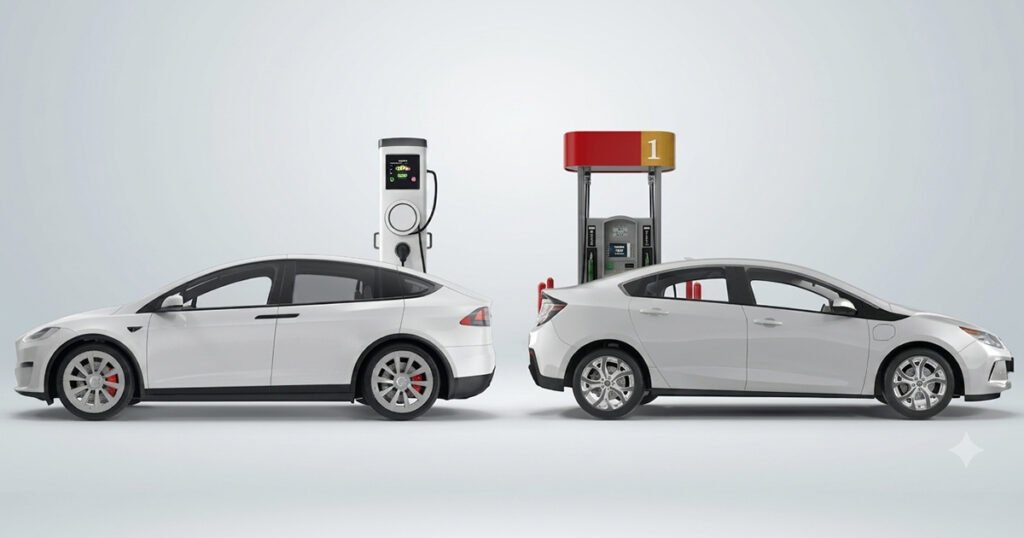
The automotive world entered 2026 with a startling reversal. After years of bold predictions that battery electric vehicles would dominate roads by the end of the decade, pure EV momentum has stalled in key markets while hybrid powertrains have surged in popularity.
Consumers are voting with their wallets for practical, efficient solutions that do not require major lifestyle changes. Automakers have taken notice, quietly shifting resources and marketing focus toward hybrids that deliver strong fuel economy without the drawbacks that hold back full electrics.
This shift marks more than a temporary blip. It reflects deep consumer realities around cost, convenience, and confidence. Global electric vehicle sales, including plug-in hybrids, reached roughly 25 percent of new vehicle purchases in 2025. Yet pure battery electric vehicles faced headwinds, especially in the United States, where their market share dropped sharply after federal incentives expired.
The Numbers Tell a Clear Story
Industry data for early 2026 paints a nuanced picture. Globally, the International Energy Agency projects electric vehicle sales, including both battery electrics and plug-in hybrids, to approach 23 million units in 2026, representing about 28 percent of total car sales. Europe continues to experience relatively strong growth driven by strict CO₂ regulations, while China maintains its dominance, albeit at a slower pace than in previous years.
In the United States, the story differs dramatically. New EV sales share fell to around 5 to 6 percent during several months of 2026 following the expiration of the $7,500 federal tax credit in late 2025. Hybrids, on the other hand, captured nearly 20 percent of new vehicle sales by late 2025 and have continued climbing, with growth rates outpacing both traditional gasoline models and pure electrics.
Cox Automotive and other industry trackers report that hybrid sales have jumped significantly, while pure EV volumes declined year over year during key periods. Toyota, in particular, has benefited enormously from this trend, with models like the RAV4 Hybrid, Camry Hybrid, and Grand Highlander Hybrid selling briskly. Honda, Hyundai, and Kia have also seen strong demand for their hybrid offerings across sedans and SUVs.
This reversal comes after massive industry bets on electrification. Billions were poured into battery plants, dedicated EV platforms, and ambitious production targets. Several manufacturers have now quietly scaled back their pure EV goals. Toyota reduced its 2026 EV production targets substantially, while others delayed launches or shifted capacity toward hybrid systems that customers actually want today.
Why Consumers Are Choosing Hybrids
Several powerful factors are driving the hybrid resurgence. First and foremost is affordability. A typical hybrid costs several thousand dollars less upfront than a comparable battery electric vehicle, even after accounting for any remaining local incentives. Buyers avoid the anxiety of high sticker prices that often exceed $50,000 for mainstream EVs.
Range anxiety remains a major barrier for many consumers. While battery technology continues to improve, real-world driving in cold weather, on highway trips, or in areas with limited charging infrastructure still creates hesitation. Hybrids eliminate this concern entirely. Drivers enjoy combined fuel economy ratings of 35 to 50 miles per gallon in many popular models without ever needing to plug in. The gasoline engine seamlessly assists or takes over when needed, providing peace of mind on long journeys.

Charging infrastructure presents another hurdle. Although public charging networks have expanded, gaps persist, particularly outside major urban corridors. Apartment dwellers and those without home charging access often find daily charging inconvenient or impossible. Hybrids require no such routine. They recharge their smaller batteries automatically through regenerative braking and engine power, making ownership seamless for the average driver.
Fuel price volatility also plays a role. Spikes in gasoline prices often push shoppers toward more efficient options. Hybrids deliver immediate savings at the pump without requiring a complete switch to electricity. Many buyers appreciate this middle path, which reduces fuel consumption by 25 to 45 percent compared to traditional gasoline vehicles while avoiding full commitment to the uncertain long-term ownership costs associated with EVs.
Policy Shifts Reshape the Transition
Government policies have significantly influenced this transition. The end of generous federal tax credits in the United States removed a key price support mechanism for EVs. Additional regulatory changes and uncertainty around future mandates reduced manufacturers’ urgency to push pure electrics aggressively. Some companies even welcomed the flexibility to meet customer demand rather than strict quotas.
Tariffs on imported vehicles and components, particularly from China, have further complicated EV economics. While intended to protect domestic industry, these measures raised costs for affordable battery electric options, making hybrids comparatively more attractive. International trade tensions continue to influence supply chains and final pricing.
Europe maintains stronger EV momentum through stringent emissions rules and incentives, yet even plug-in hybrids are gaining ground in several countries. Japan continues embracing traditional hybrids as a core strategy, with models achieving impressive efficiency and reliability. Southeast Asian markets show mixed patterns, with some nations prioritizing local production incentives that favor various powertrains.

Standout Hybrid Models Leading the Charge
Several vehicles exemplify why hybrids are thriving in 2026. The Toyota RAV4 Hybrid remains a bestseller, offering excellent fuel economy of around 38 to 40 miles per gallon combined, along with practical SUV utility and available all-wheel drive. Its reputation for reliability continues to attract families and commuters alike.
The Honda CR-V Hybrid delivers refined driving dynamics and spacious interiors, coupled with strong efficiency ratings near 35 to 40 miles per gallon. The redesigned Civic Hybrid has earned praise for blending sporty handling with exceptional fuel economy, making it ideal for younger buyers and urban drivers.
The Toyota Camry Hybrid has transformed the midsize sedan segment with striking styling and fuel economy ratings of up to 51 miles per gallon. The Hyundai Tucson Hybrid and Kia Sportage Hybrid offer strong value through generous features and competitive pricing. Luxury buyers increasingly turn to Lexus RX Hybrid and Lincoln hybrid models that combine refinement with efficiency.
Three-row options like the Toyota Grand Highlander Hybrid address family needs with impressive space and towing capability while still delivering solid mileage. Even performance-oriented buyers can now find appealing choices as manufacturers continue refining hybrid systems for better power delivery.
Challenges Facing Pure EVs
Battery electric vehicles still excel in certain segments. Tesla maintains strong customer loyalty, particularly among early adopters, thanks to its Supercharger network and software ecosystem. Luxury models from Lucid and others showcase impressive range and performance. Yet mainstream adoption has slowed as average transaction prices remain high and charging accessibility continues to frustrate many consumers.
Used EV inventory has grown, creating downward pressure on resale values for some models. Fleet operators and early lessees have returned vehicles to the market, creating bargains for buyers but also raising concerns about long-term ownership risks, particularly regarding battery replacement costs. Public perception has shifted as stories of charging difficulties and reduced winter driving range have circulated more widely.
Infrastructure development continues but still lags behind optimistic timelines. Grid capacity concerns have emerged in some regions as electricity demand rises across multiple sectors. Home charging installation costs can add hundreds or even thousands of dollars to the effective ownership cost for many households.
What This Means for the Future
The hybrid surge does not signal the end of electrification. Instead, it represents a more pragmatic transition. Many experts view hybrids as a bridge technology that can reduce emissions immediately while battery technology, charging networks, and grid capacity continue to mature. Plug-in hybrids, in particular, offer a compelling compromise by providing electric-only ranges suitable for daily commuting alongside gasoline backup for longer trips.
Automakers are adjusting their strategies accordingly. Several have delayed or canceled pure EV programs while expanding their hybrid lineups. This pivot helps preserve profitability and jobs tied to traditional powertrain manufacturing. Suppliers also benefit from continued demand for engines, transmissions, and related components, alongside growing opportunities in electric motors and battery technologies.
Over the longer term, battery prices are expected to continue declining, while solid-state battery technologies promise greater energy density and faster charging. Policy support in Europe and parts of Asia continues to sustain EV investment globally. Chinese manufacturers are pushing increasingly affordable models that could reshape markets if trade barriers ease. However, consumer behavior suggests that the path to full electrification will take longer and prove more varied than originally forecast.
Dealers report that hybrids are leaving showroom floors faster than either pure gasoline or electric vehicles in many regions. This strong inventory turnover benefits retailers operating on thin margins. Service departments also appreciate the familiarity of hybrid technology, which generally requires less specialized training than high-voltage EV systems.
Broader Industry Implications
The 2026 landscape is forcing difficult choices across the industry. Legacy automakers with substantial EV investments face potential write-downs and factory underutilization. New entrants focused solely on battery electrics encounter tougher competition for a smaller pool of buyers. Meanwhile, Toyota’s long-standing commitment to hybrid technology has positioned it strongly with profitable and highly desirable products.
Environmental goals face mixed outcomes. Hybrids significantly reduce emissions compared to conventional vehicles, providing meaningful near-term progress. However, they may also delay the deeper emissions reductions possible through widespread adoption of zero-tailpipe-emission vehicles. Policymakers continue to wrestle with balancing realistic adoption rates against ambitious climate targets.
Looking Ahead to 2027 and Beyond
Industry forecasts suggest hybrid popularity will persist throughout the decade, even as EV technology improves. Some analysts predict that hybrids could outsell pure gasoline vehicles in certain segments before full electrics eventually achieve dominance. Continued refinement of hybrid systems, including more powerful electric motors and smoother integration, will help keep them highly competitive.
Consumers will ultimately determine the pace of change. Their preference for hybrids in 2026 sends a clear message: affordability, convenience, and reliability matter more than visionary promises when purchasing a vehicle used every day. The EV dream has encountered reality and adapted. Hybrids have stepped in to fill the gap, providing meaningful efficiency gains while the industry works through the remaining challenges.
This evolution benefits drivers by offering more choices and better options across different price points. It also buys time for necessary advancements in battery technology, charging infrastructure, and electrical grid capacity. The road to widespread electrification continues, but it is following a more measured path that reflects current consumer priorities and practical limitations. In 2026, hybrids have stormed back, proving their enduring appeal in an uncertain automotive future.