

The world entered 2025 with cautious optimism, hoping that the turbulence of the past few years would gradually ease. Instead, the global economy finds itself walking a tightrope.
Recent data from the latest World Economic Outlook reveals a worrying picture of slackening momentum, persistent uncertainty in trade policy, weakening consumption in major economies, and the gradual fading of the temporary factors that kept growth afloat earlier in the year. The overriding sentiment among analysts and policymakers is clear: The global expansion is losing steam, and the risks to the outlook are rising fast.
The near-term forecast has improved only modestly, but long-term prospects remain fragile. While global growth is expected to reach 3.2 percent in 2025, slightly above earlier projections, this figure still represents a downward shift from the pre-policy-shock trajectory. What lurks below the surface is more troubling. Powerful forces are quietly reshaping economic structures, from protectionist trade policies to shifts in migration patterns, inflation pressures, and tightening fiscal positions across both advanced and developing nations. Combined, these factors form a dangerous cocktail that threatens to pull the global economy into a deeper downturn.
A World Reshaped by Policy Shocks
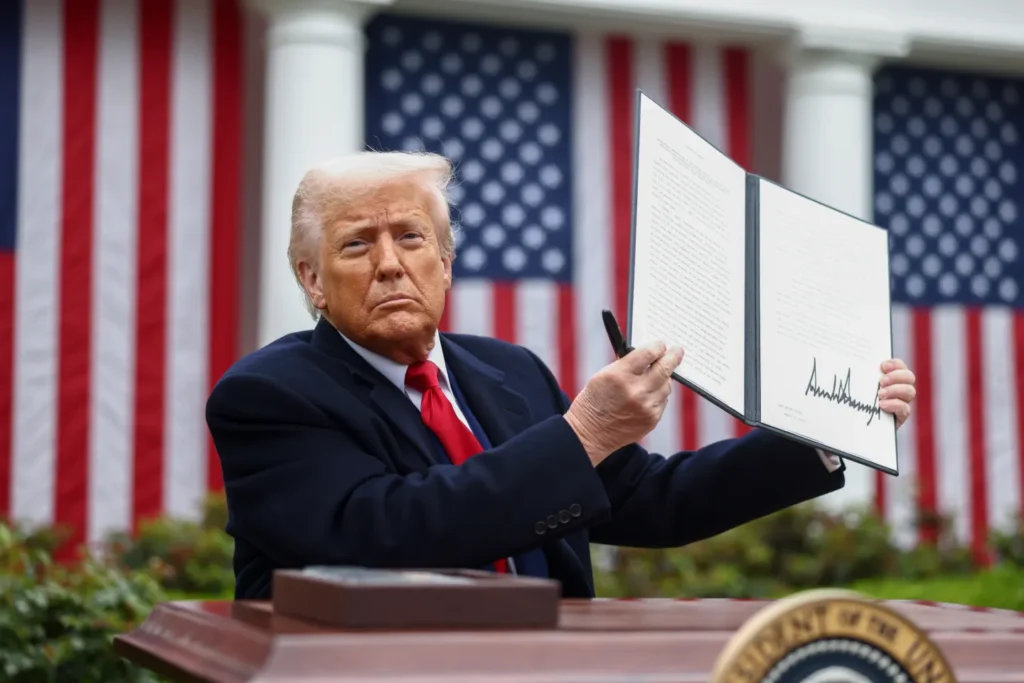
The roots of the slowdown can be traced to a volatile reordering of global economic policies. The United States spearheaded a dramatic shift in trade posture in early 2025, introducing tariff measures that lifted duties to levels not seen in nearly a century. While later policy resets and trade deals pulled the effective tariff rate back toward a range between 10 and 20 percent for most countries, the damage to confidence had already been done.
The world had barely begun adapting to new tariff schedules when additional shocks emerged. Cuts to development aid by major donors created fresh financial pressures for low-income economies, compounding the stress of high borrowing costs and weaker export markets. Meanwhile, net migration patterns shifted sharply as several advanced economies tightened immigration rules, reducing labor supply at a time when aging populations are already straining workforce participation.
These developments have created a new reality. It is not yet stable, and it is far from predictable. The uncertainty surrounding trade policy can be felt in global investment decisions, currency movements, and the broader sentiment that drives consumption. Analysts point to a critical shift. Instead of focusing only on headline tariff levels, markets and firms are increasingly preoccupied with how these changes affect prices, investment decisions, and long-term production models.
Temporary Strength, Lasting Weakness
One of the puzzles of 2025 has been the resilience of economic activity during the first half of the year. Growth held at around 3.5 percent on a year-over-year basis despite the turbulence in trade policy. Inflation showed mixed signals, rising in countries like Mexico and the United Kingdom while easing in India, Malaysia, and the Philippines. China displayed its own complexities with stable but very low consumer inflation and continued negative producer prices.
However, these numbers mask a more concerning dynamic. The resilience was driven largely by temporary factors. Firms and households aggressively front-loaded purchases and investment in anticipation of higher tariffs. Companies diverted trade flows through third countries and stockpiled inventory. Suppliers delayed passing on cost increases due to implementation gaps in the new tariff rules. Corporations used healthy post-pandemic profit margins as a buffer to temporarily absorb rising costs.
Such measures created a short-lived boost, but none of them reflect underlying strength in global fundamentals. As these temporary supports fade, the underlying weaknesses are coming into full view.
The Slow Creep of Downside Risks
Since mid-2025, the signs of a downturn have grown more visible. Consumption growth has been subdued across major economies. Investment activity has weakened, reflecting both a cautious corporate outlook and the lingering uncertainty from shifting trade rules. Business and consumer confidence indicators remain depressed, signaling an erosion of optimism about the future.
In the United States, cracks are widening. The economy posted an annualized growth rate of 3.8 percent in the second quarter of 2025, but this figure was heavily influenced by a reversal in imports and inventories. The broader picture points to trouble. Investment in commercial and residential construction fell. The job market weakened significantly, with slower hiring and an unemployment rate that climbed to 4.3 percent in August. The decline in net migration further constrains labor supply and threatens future growth.
China, meanwhile, experienced a notable deceleration. Growth fell to 4.2 percent in the second quarter from 6.1 percent in the first. Trade flows began adjusting to new tariff realities, and high-frequency indicators suggest a slowdown in July and August. Domestic demand showed temporary improvement due to policy stimulus, but the sustainability of this momentum remains doubtful.
Europe also faced headwinds. The euro area’s growth fell sharply to 0.5 percent in the second quarter. Germany and Italy posted declines, while Ireland’s extraordinary first-quarter performance, driven by pharmaceutical exports, normalized. Japan recorded a reasonable expansion at 2.2 percent, yet new export orders fell soon after, particularly in sectors most exposed to tariffs.
In emerging markets, the picture is mixed but increasingly fragile. Brazil is grappling with moderation linked to tight monetary and fiscal conditions. India’s services sector remains robust, but external headwinds threaten its broader outlook. Türkiye displayed strong domestic demand early in the year but faces an uncertain path as global conditions tighten. Low-income countries remain the most vulnerable. With donor aid declining and external financing scarce, many of these nations are trapped in low-growth cycles and elevated debt distress.
Financial Markets Display Calm Above Hidden Tension
Financial markets, at least on the surface, appear relatively calm. Equity prices rebounded after initial losses following weak US economic data. Global financial conditions remain accommodative by historical standards. Yet, a significant share of market gains has been driven by artificial intelligence stocks, raising concerns about stretched valuations.
See Also

Analysts worry that markets have priced in optimism that is not aligned with economic fundamentals. A negative shock or a disappointing wave of AI-related earnings could trigger a sharp correction. With investment in data centers and AI infrastructure becoming one of the main drivers of global capital expenditure, any slowdown in that sector could have broad spillover effects.
One of the most important dynamics shaping the outlook is the delayed impact of uncertainty. Research shows that uncertainty typically acts as a negative demand shock, reducing investment and consumption as firms and households postpone major decisions. However, the front-loading induced by tariff fears temporarily masks this effect.
This means the true impact of uncertainty has not yet fully materialized. As the front-loading effect fades, firms are likely to scale back investment, households may spend more cautiously, and the drag on growth could intensify. Early evidence from past episodes, such as Brexit, suggests that the slowdown could unfold gradually over several quarters.
The Inflation Puzzle in the United States
Inflationary pressures remain a central concern. Despite only modest rises in US inflation to date, a closer look reveals troubling patterns. Core goods inflation is rising as tariff effects begin to feed through supply chains. At the same time, services inflation remains persistent.
The lack of significant currency appreciation following tariff increases differentiates this episode from previous tariff shocks. Instead, the US dollar weakened, reducing profit margins for exporters and making it harder for them to absorb tariff costs.
The aggregate data suggests that US firms and consumers are increasingly bearing the burden of higher costs. This raises the possibility that inflation could remain above target for longer, complicating the task of monetary authorities.
The global trade terrain is undergoing structural change. The surge in front-loaded imports and exports in early 2025 has faded, giving way to deceleration. European exports to the United States have dropped, while intra-European trade has remained resilient. China has strategically redirected exports to the euro area and ASEAN markets. Bilateral decoupling between China and the United States is unfolding faster than during the 2018–19 tariff war.
Current account balances are shifting as well. The United States recorded a wider deficit at 4.6 percent of GDP. China and Japan posted larger surpluses. Europe saw its surplus decline, partly due to rising primary income deficits. These shifts reflect deeper adjustments in global trade and investment patterns that may persist long after the immediate policy shocks fade.
A Dangerous Mix: Loose Fiscal Policy and Divergent Monetary Stances
As growth slows and inflation varies across regions, policymakers face a difficult balancing act. Fiscal policy remains too loose in many advanced and developing economies. Several major economies are running deficits that are significantly higher than pre-pandemic levels. Debt servicing costs have risen due to higher interest rates, and many countries face substantial refinancing pressures.
Monetary policy is moving cautiously toward easing, but the divergence across regions complicates the overall global picture. While some economies may be preparing to cut rates to stimulate domestic demand, others must remain vigilant as inflation pressures persist. This divergence risks creating spillovers through currency markets, capital flows, and shifts in investor sentiment.
Policymakers have been urged to act decisively. They must restore confidence through transparent and credible policies. Trade relations must become more stable. Fiscal buffers need rebuilding. Structural reforms must be revived after years of stagnation. Central bank independence must be protected to maintain monetary stability.
The stakes are high. The world has entered a phase where small shocks can trigger outsized consequences. The global economy is indeed on thin ice, and unless preventive measures are taken quickly, the risk of a deeper downturn will only grow.