


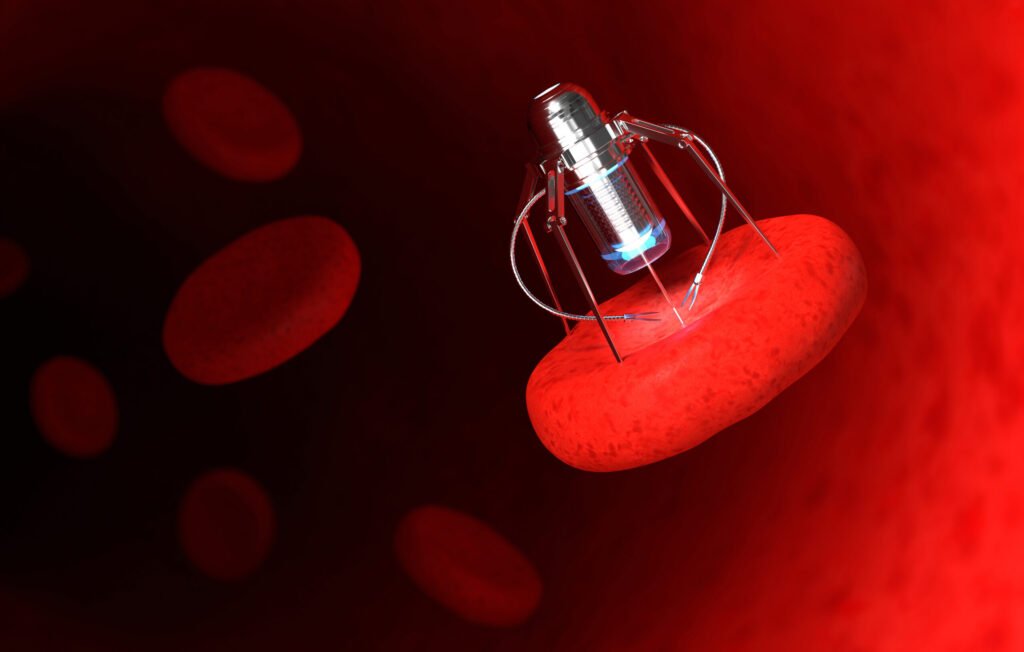
In the rapidly evolving world of medical innovation, a groundbreaking frontier is emerging that promises to redefine how doctors detect and treat illnesses. Tiny machines, smaller than a human cell, are now entering early human testing phases.
These nanobots patrol the bloodstream, scanning for signs of disease at the molecular level and delivering precise interventions on the spot. What once belonged to science fiction is stepping into clinical reality, offering hope for earlier diagnoses and more effective treatments with minimal side effects.
Exploring the science behind these microscopic marvels, this hold the transformative potential for healthcare. From cancer detection to tissue repair, nanobots could soon become silent guardians inside our bodies.
The Dawn of Nanomedicine
Nanotechnology has been advancing for decades, but the concept of active nanobots represents a significant leap forward. Traditional medicine often relies on drugs that circulate throughout the body, affecting both healthy and diseased tissues. This approach can lead to unwanted side effects and reduced effectiveness. Nanobots aim to change that by enabling targeted actions at the cellular and molecular scale.
These devices are typically engineered from biocompatible materials such as DNA, polymers, or magnetic nanoparticles. Sizes range from 50 to 300 nanometers, allowing them to navigate the narrowest blood vessels without causing blockages. Early designs drew inspiration from natural biological systems, including bacteria that propel themselves through fluids and immune cells that seek out invaders.
Pioneering work in the field began in research laboratories focusing on creating self-propelled structures. Some nanobots use chemical reactions for propulsion, converting surrounding molecules into energy for movement. Others rely on external magnetic fields or ultrasound waves to guide their path. The goal is to create systems that can sense their environment, process information, and respond autonomously or under remote control.
By the mid-2020s, progress accelerated dramatically. Preclinical studies in animal models demonstrated impressive results. For instance, self-propelled nanobots designed for tumor-targeting showed the ability to penetrate cancerous tissues and release therapeutic agents directly at the site. In one notable case involving bladder cancer models, a single dose achieved up to 90 percent reduction in tumor size. Such outcomes highlighted the potential for less invasive therapies that preserve healthy tissue while attacking disease more aggressively.
How Nanobots Navigate and Function in the Bloodstream
Navigating the human bloodstream presents formidable challenges. Blood flow is turbulent, immune systems attack foreign objects, and vessels branch into intricate networks. Researchers have developed sophisticated solutions to overcome these obstacles.
One key advancement involves mathematical modeling to optimize nanobot design for efficient travel. Teams have created accurate simulations that account for fluid dynamics, vessel geometry, and biological barriers. These models help engineers refine shapes, surface coatings, and propulsion mechanisms to improve maneuverability.
Magnetic guidance systems, for example, allow external magnets or MRI machines to steer nanobots toward specific organs like the liver or brain.
Sensing capabilities form the core of real-time disease detection. Nanobots can be equipped with molecular sensors that detect biomarkers such as elevated glucose levels in cancer cells, abnormal proteins associated with neurodegenerative diseases, or inflammatory signals. Upon identifying a threat, the device can release payloads including chemotherapy drugs, clotting agents, or genetic material for repair.
DNA-based nanobots stand out for their programmability. These structures self-assemble from synthetic DNA strands and can perform logic operations similar to simple computers. In laboratory tests, they have demonstrated the ability to recognize specific cell surface markers and respond by exposing therapeutic cargo. Some designs even incorporate four-fingered “hands” made of DNA that can grasp viruses or damaged molecules.
For repair functions, nanobots may deliver enzymes that fix DNA damage, remove harmful plaques from arteries, or stimulate tissue regeneration. In theory, swarms of these devices could work collaboratively, communicating through chemical signals to coordinate complex tasks like clearing blockages or rebuilding neural connections.
Power sources remain a critical area of innovation. Options include harvesting energy from blood glucose, using ultrasonic waves, or incorporating tiny batteries that degrade harmlessly after use. Biodegradable designs ensure that nanobots break down safely once their mission is complete, exiting the body through natural processes.
First Human Trials: A Historic Milestone
As of 2026, true autonomous nanobots with full navigation capabilities have not yet entered routine clinical practice. However, the landscape is shifting rapidly. Several advanced nanomedicine systems have progressed to early-phase human clinical trials, focusing on targeted drug delivery and safety assessments.
See Also

Companies and research institutions are conducting initial studies to evaluate how these devices behave in human subjects. Trials often begin with small groups of patients facing specific conditions, such as advanced cancers or vascular diseases. The primary objectives include confirming biocompatibility, assessing navigation accuracy, and monitoring for adverse reactions.
One area seeing momentum involves magnetic micro-robots for localized interventions. In related preclinical work, devices have successfully delivered clot-busting drugs in animal models of stroke or heart attack. Human trials for similar technologies are exploring applications in brain tumors and liver cancer, where precise delivery can minimize damage to surrounding healthy tissue.
DNA nanorobots have shown promise in detecting diseases quickly. In blood sample tests, self-assembling DNA machines have identified pathogens or cancer markers within hours rather than days. Researchers anticipate expanding these capabilities into live bloodstream monitoring, where nanobots continuously scan and report findings to external devices via wireless signals.
Spin-off companies are translating laboratory breakthroughs into clinical pipelines. For example, platforms built around self-propelled nanoparticles target multiple indications, including bladder and colon cancers as well as eye conditions like retinitis pigmentosa. Immersive demonstrations at technology events have allowed the public to visualize how these tiny agents might one day operate inside the body.
While full-scale deployment remains years away, these first-in-human studies mark a pivotal moment. Success in safety and efficacy could pave the way for broader applications, accelerating the timeline for regulatory approvals.
Potential Applications That Could Transform Healthcare
The versatility of nanobots opens doors to numerous medical breakthroughs. In oncology, they could detect tumors at the single-cell stage, long before traditional imaging methods spot them. By delivering chemotherapy directly to cancer sites, nanobots might reduce systemic toxicity, allowing higher doses with fewer side effects. Early animal studies suggest they can cut off tumor blood supply by clotting vessels selectively or release drugs in response to the acidic environment of malignant tissues.
Cardiovascular medicine stands to benefit enormously. Nanobots could patrol arteries, removing plaque buildup or dissolving dangerous clots in real time. Artificial platelets, or clottocytes, might achieve hemostasis hundreds of times faster than natural systems, proving invaluable in trauma care or surgery. Similarly, respirocyte-like devices could enhance oxygen delivery, aiding patients with anemia or lung disorders.
Neurological applications present exciting possibilities. Crossing the blood-brain barrier has long been a hurdle for treatments. Magnetically guided nanobots or those coated with special ligands show potential for delivering dopamine to Parkinson’s patients or clearing amyloid plaques in Alzheimer’s disease. Real-time monitoring of misfolded proteins could enable early intervention in neurodegenerative conditions.
Infectious disease management could see a revolution as well. Nanobots might hunt bacteria or viruses, neutralizing them before infections spread. During pandemics, programmable swarms could target specific pathogens while sparing beneficial microbes.
Beyond treatment, diagnostic roles could shift paradigms. Continuous bloodstream surveillance might alert doctors to imbalances or early disease markers, enabling preventive care rather than reactive responses. Some futurists envision nanobots contributing to longevity by repairing cellular damage associated with aging, though such claims require rigorous validation.
Integration with other technologies amplifies the impact. Artificial intelligence could analyze data from nanobot sensors, predicting health events before they occur. Combined with wearable devices or implants, the system might create a closed-loop healthcare network tailored to individual patients.
Technical and Ethical Challenges Ahead
Despite the promise, significant hurdles remain. Manufacturing nanobots at scale with consistent quality poses engineering difficulties. Each device must function reliably in the complex, dynamic environment of the human body.
Safety concerns top the list. The immune system may recognize nanobots as threats, triggering inflammation or clearance before they complete their tasks. Researchers address this through stealth coatings like polyethylene glycol that help devices evade detection. Long-term effects of accumulated materials or degradation byproducts need thorough investigation.
Navigation in vivo remains imperfect. Blood viscosity, branching vessels, and organ-specific barriers complicate movement. Advances in modeling and hybrid propulsion systems are helping, but human anatomy varies widely, requiring personalized approaches.
Regulatory pathways for such novel devices are still evolving. Agencies demand extensive data on biocompatibility, biodistribution, and efficacy. Ethical questions arise around autonomy: “Should nanobots make independent decisions, or must they always operate under human oversight?” Privacy issues emerge if devices transmit sensitive health data wirelessly.
Cost represents another barrier. Initial development and trials are expensive, potentially limiting access to wealthy nations or patients. Ensuring equitable distribution will be crucial as the technology matures.
Public perception also matters. Sensational headlines can generate excitement but also fear. Transparent communication about risks and benefits will help build trust.
The Road to Widespread Adoption
Experts project steady progress over the coming decade. Near-term applications may focus on localized therapies, such as urological or oncological interventions where nanobots can be introduced and retrieved more easily. Larger animal trials continue to
validate designs, providing data for human studies.
Investment in the sector is growing. The medical nanorobotics market is expanding rapidly, driven by demand for precision medicine. Collaborations between academia, startups, and pharmaceutical companies are accelerating translation from bench to bedside.
By the early 2030s, optimists hope to see approved nanobot therapies for select conditions. Broader integration could follow as manufacturing costs decrease and safety profiles improve. In the longer term, swarms of nanobots might offer comprehensive health maintenance, detecting and correcting issues before symptoms appear.
Challenges will persist, but incremental successes are building momentum. Each successful trial brings the vision closer to reality.
A New Era of Medicine
Nanobots in the bloodstream signal a profound shift in healthcare. From passive treatments to active, intelligent interventions, this technology could minimize suffering and extend healthy lifespans. Real-time disease detection and repair represent more than incremental improvements. They embody a proactive approach where medicine anticipates problems rather than merely responding to them.
As first human trials unfold, the scientific community watches closely. Successes will inspire further innovation, while setbacks will refine the path forward. Collaboration across disciplines, including nanotechnology, robotics, biology, and ethics, will be essential.
For patients facing chronic or life-threatening conditions, these tiny machines offer renewed hope. Imagine a future where cancer is caught and neutralized at its earliest stage, where heart attacks are prevented by dissolving clots instantly, or where neurological decline is slowed through precise cellular repairs.
The journey from laboratory concept to clinical tool is underway. Nanobots may soon flow through veins worldwide, quietly working to safeguard health. This is not the end of medical challenges, but the beginning of solutions once deemed impossible.
The implications extend beyond individual care. Healthcare systems could become more efficient, reducing hospitalization times and overall costs through preventive and targeted interventions. Global health equity might improve if scalable nanobot platforms address diseases prevalent in underserved regions.
Yet realization depends on continued research, responsible development, and societal readiness. Questions about enhancement versus treatment, data ownership, and long-term ecological impacts of nanomaterials warrant ongoing dialogue.
In the end, nanobots exemplify human ingenuity applied to one of our most fundamental needs: As trials progress, they remind us that the smallest innovations can yield the greatest transformations.