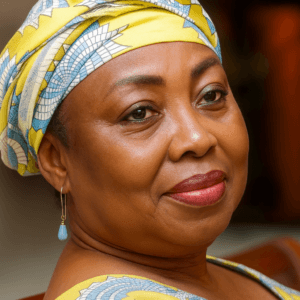
PERSONALITY FEATURE INTERVIEW With Madam FELICIA TWUMASI, Founder and CEO, Homefoods Processing and Cannery Ltd
News Team
News Team
INTERVIEW QUESTIONS:
TVA: Being one of the most celebrated female entrepreneurs in Ghana, kindly tell us about yourself?
FT: I am a visionary and a seasoned traveler whose passion for food has nurtured an agribusiness enterprise that empowers others to live better lives. I grew up in a convent and attended a convent school in Elmina in the Central Region of Ghana. I am a graduate of the Kwame Nkrumah University of Science and Technology in Ghana and the Harvard Business School, Boston, U.S.A. I am also a graduate and member of the Stanford Institute of Innovation in Developing Economies, SEED. Having gone through an array of business challenges, I have acquired flair and immeasurable capacity to configure and coordinate multimarket activities based on competitive advantage and experience.
TVA: You are the founder and Chief Executive Officer of Homefoods Processing and Cannery Ltd., with over 30 years of experience in the agro-processing and manufacturing industry. Homefoods marks 30 years this year. How has the journey of Homefoods Processing and Cannery Ltd. been in the last three decades?
FT: I ended a teaching career that lasted a year after Kwame Nkrumah University of Science and Technology (KNUST), and I went on to set up what is now Homefoods in 1995, starting with 1 staff from my kitchen table in a rented house. It is at this level that I found my passion for food. Having completed my national service, I proceeded to work in the bank and simultaneously engaged in business by traveling to Nigeria to purchase cloth and other items for resale. One day, I was late upon my return and was asked to step aside; that was when I plunged completely into business.
From there, we have grown in leaps and bounds over the past 30 years. We currently have 1 main factory and have adopted a new business model of private label contracts with small processing businesses for exports and the local market. Other two factories are currently under consideration. Our factory produces oils and other processed agro-products for Europe, especially the UK, South Africa, Equatorial Guinea, and Gambia.
TVA: Entrepreneurship, some years ago, was the preserve of the bold and daring at heart because of the risks and rigorous activities associated with it, and these are characteristics mostly associated with the male gender. As such, what inspired you to venture into this male-centric environment?
FT: My motivation to start my own business began at an early age, while I was in Convent School in Elmina in the Central Region of Ghana. Realizing that many of my friends dropped out of school when their father died, I vowed to be financially and economically independent to avoid having to put my children through the ordeal of illiteracy. That determination pushed me to venture into entrepreneurship so I could build the stability and opportunities I wanted for my family.
TVA: How did you navigate gender barriers in your quest to penetrate the thick glass ceiling that hindered women?
FT: I pushed through gender barriers by exposing myself to knowledge and opportunities beyond my immediate environment. I attended international exhibitions, and in the days before the internet, I relied heavily on reading and conducting research through embassies. Those experiences broadened my perspective, strengthened my confidence, and equipped me with the information I needed to break through the glass ceiling that held many women back.
TVA: What message do you have for women who want to break into such male-dominated environments, such as entrepreneurship?
FT: They should stay ethical in doing business, have integrity, be honest, and ethos that affects the society they live in.
TVA: Every successful entrepreneur, especially woman, has faced moments of difficulty that tested their resilience. Can you share a major setback you faced in your journey and the lessons you drew from overcoming it?
FT: One of the major setbacks I faced was dealing with product recalls in international markets, including a 4 Full Container Load recall due to delays in issuance of FDA certificate which we did not wait for but shipped before the certificate was issued. We also experienced delays from the FDA locally, which slowed down our operations. These challenges were difficult and financially draining, but they taught me the importance of strict regulatory compliance, meticulous quality control, and the need to constantly stay updated with evolving international standards. Overcoming these setbacks strengthened my resilience and made our processes even more robust.
TVA: What do you consider your proudest accomplishment to date as an entrepreneur and why?
FT: My proudest accomplishment is the impact we’ve had on farming communities—helping them create wealth, grow their livelihoods, and live with dignity. By providing farmers with a reliable, ready market for their produce, we’re not only supporting their economic stability but also empowering entire communities to thrive. Knowing that our work contributes to real, lasting change is what makes me most proud as an entrepreneur.
TVA: Sustaining a business for over three decades requires more than just passion—it calls for innovation, adaptability, and strong leadership. What leadership style and innovations have been central to sustaining Homefoods’ relevance and growth in Ghana’s competitive market and above all keeping 70% market share in the Red palm oil business in Europe?
FT: A key part of sustaining Homefoods’ relevance and maintaining our strong market position—especially our 70% share of the red palm oil market in Europe—has been my focus on continuous product development and adaptation. We tailor our products to suit the diverse gustatory preferences of different countries, ensuring that what we offer resonates with each market. In addition, my leadership approach prioritizes building and nurturing markets, both locally and internationally. This combination of innovation, adaptability, and strategic market development has been central to our growth over the past three decades.
TVA: What internal qualities or habits have helped you stay grounded and navigate the demands of running the business for the past 30 years?
FT: The qualities that have helped me stay grounded over the past 30 years are integrity, honesty, and a strong commitment to ethical practices. I value partnership and collaboration, and I hold myself and my team to high standards, striving for perfection and consistently focusing on quality in everything we do. These principles have guided us through challenges and kept our business thriving.
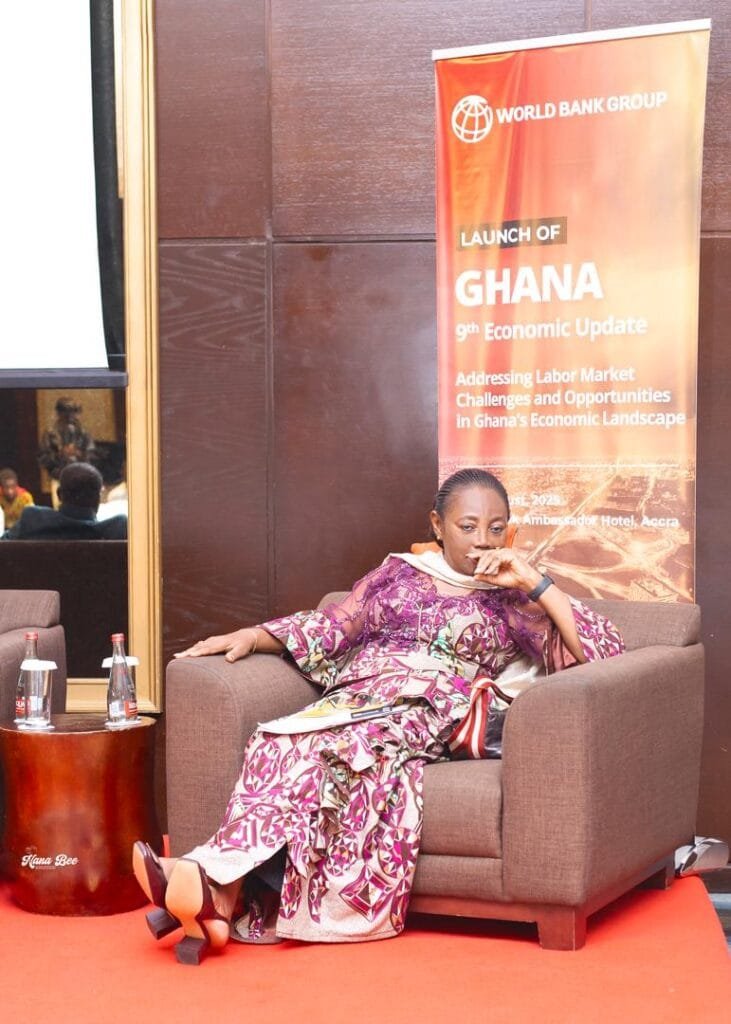
Felicia Twumasi, Founder and Chief Executive Officer of Homefoods Processing and Cannery Ltd
TVA: You are one of the most respected female entrepreneurs Ghana has produced, who is privileged to be doing cross-border business. From your experience, how would you describe doing business in Ghana compared to other jurisdictions?
FT: Doing business in Ghana is tough. Exchange rate fluctuations, regulatory challenges, and limited access to finance can make operations quite demanding. However, Ghana’s stability and peaceful environment provide a strong foundation for business. That sense of security is something many other jurisdictions don’t always offer, and it creates a conducive atmosphere for long-term investment and growth.
TVA: From your perspective, how can government make the business environment more conducive to industry players, more especially, female entrepreneurs?
FT: Government can make the business environment more supportive by identifying high-performing, female-led businesses and giving them the targeted support they need to scale. When these enterprises grow, they create more jobs, strengthen the economy, and serve as powerful examples for other women. Investing in female entrepreneurs is ultimately an investment in national development.
TVA: Currently, you operate in the agroprocessing sector and it is central to Ghana’s industrialization agenda, with enormous potential for job creation and exports. What is your take on the future of agroprocessing in Ghana?
FT: The future of agroprocessing in Ghana is huge. There is so much potential to unlock; from advancing into more sophisticated packaging to leveraging artificial intelligence to make consumer targeting smarter and more data-driven. With the right investment and innovation, the sector is poised for significant growth and can play an even bigger role in job creation and export expansion. The opportunities ahead are immense.
TVA: What role can women entrepreneurs in agroprocessing play in driving this transformation?
FT: Women entrepreneurs in agroprocessing can drive this transformation by learning quickly and adapting to new technologies, market trends, and global standards. Our ability to stay agile and embrace innovation will be essential in shaping the future of the sector.
TVA: What, in your view, can government do to support women in the sector?
FT: Government can support women in the agroprocessing sector by providing access to appropriate equipment and financial assistance. With the right tools and funding, women can expand their operations, increase productivity, and contribute more meaningfully to the sector’s growth.
TVA: Currently, the glass ceilings that hindered women from the upper echelon of leadership has been smashed, allowing women participate and redefine leadership. How do you personally feel to be part of the generation of women participating and redefining leadership in Ghana?
FT: It feels great. It feels incredibly rewarding to be part of this generation of women who are participating in and redefining leadership in Ghana. At the same time, I believe we still need more women’s voices in leadership to ensure diverse perspectives and stronger representation across all sectors.
TVA: In your own view, how differently are female leaders redefining corporate leadership? How do you see women shaping the future of leadership in Ghana?
FT: Female leaders are redefining corporate and national leadership by taking on key roles—from Vice President to Chief Justice—bringing new perspectives and approaches to decision-making. However, we must not be complacent, as women are still underrepresented in Parliament, where laws that shape our nation are enacted. Increasing women’s participation at all levels will be critical to shaping a more inclusive and forward-looking future for Ghana.
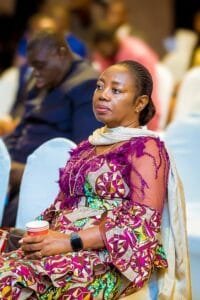
Felicia Twumasi, Founder and Chief Executive Officer of Homefoods Processing and Cannery Ltd
TVA: Young women across Ghana look up to trailblazers like you for inspiration and guidance. What is your vision for the next generation of women entrepreneurs, and how do you hope your legacy will influence that vision?
FT: I am deeply committed to mentoring young women, because I believe guidance and support are crucial for their growth as entrepreneurs. Beyond mentorship, I work closely with thousands of women farmers, training them in best practices and helping them build sustainable businesses. My vision for the next generation of women entrepreneurs is to see them empowered with the knowledge, confidence, and resources to lead in their communities and industries. I hope my legacy inspires them to embrace mentorship, lift others as they climb, and recognize that success is about creating opportunities for those who come after you.
TVA: What advice would you give to aspiring women entrepreneurs who dream of building businesses and smashing glass ceilings in their own industries?
FT: My advice to aspiring women entrepreneurs is simple: stay focused and pursue your goals unapologetically. Don’t let distractions or doubts steer you away from your vision. Don’t be distracted and go for what you want without being apologetic!
TVA: As you reflect on the journey of over 30 years and look toward the future, what does the future hold for Homefoods Processing and Cannery Ltd. in the wake of technology advancement?
FT: The future is AI, and in fact, it’s already here. At Homefoods Processing and Cannery Ltd., our focus is on leveraging AI tools to connect with our customers in more meaningful ways. We are exploring how AI can create immersive experiences, allowing clients to interact with and visualize our products before making a purchase. Embracing these technologies will help us stay innovative, customer-focused, and ahead in a rapidly evolving market.
TVA: What is your message to your stakeholders, especially your workers and customers, who have contributed to the 30 years journeys?
FT: To our workers, I want to say thank you for 30 years of dedication—without your hard work, we simply wouldn’t be here. To the farmers, I extend my heartfelt gratitude for your partnership. And to all our stakeholders, I encourage you to continue working with us as we take Ghana to the world through Homefoods.
TVA: When all is done and the curtains are drawn, what would you want to be remembered for as a legacy?
FT: I want to be remembered as a woman who came into Agribusiness with all the rhythms and redefined agribusiness by elevating it into world-class agribusiness empire—driving innovation, shaping strategic growth, and demonstrating that agriculture can be both transformative and globally competitive.