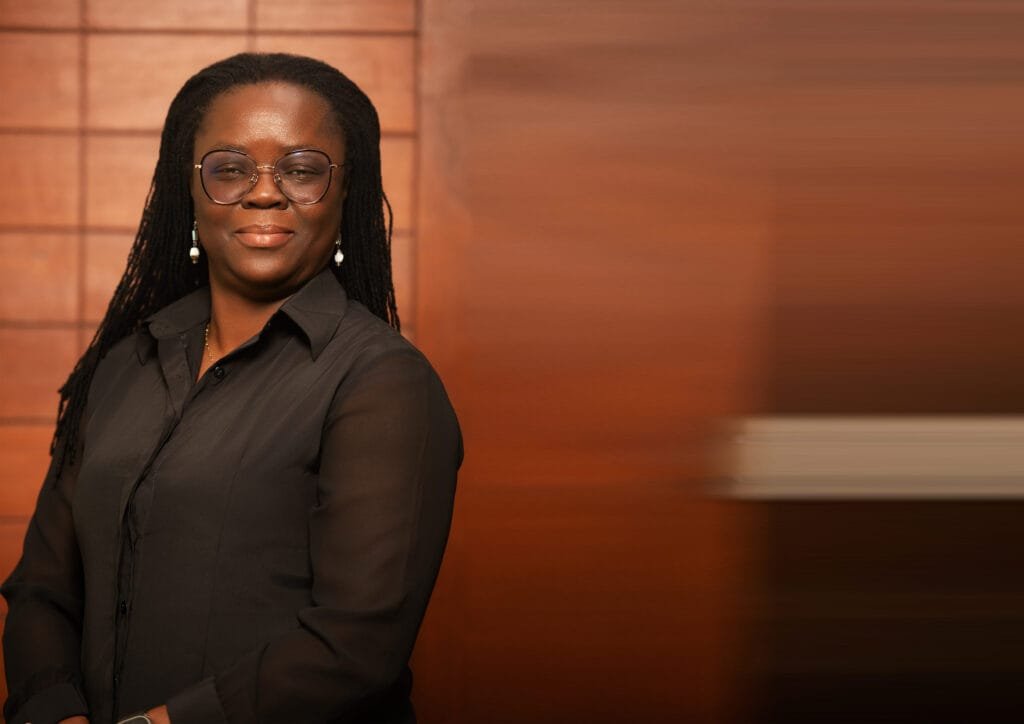
PERSONALITY FEATURE INTERVIEW WITH MRS. RUTH SMITH-ADJEI, DIRECTOR, WEST AFRICA, BLUE SKIES PRODUCTS LTD.
News Team
News Team
INTERVIEW QUESTIONS:
TVA: As the West Africa Director for Blue Skies and responsible for four factories, two packhouses and a large farm in four West African countries, how would you describe yourself beyond the name and portfolio?
RSA: Beyond my portfolio and professional milestones, I’d describe myself as a deeply empathetic leader. While I’ve grown through the ranks over the past 26 years and earned a reputation for being firm, what truly defines me is my commitment to people. I believe in leading with understanding, and creating spaces where others feel seen and supported. My greatest fulfillment comes not just from what I’ve achieved, but from how I’ve helped others grow along the way.
TVA: What influenced your journey into the agriculture and agroprocessing industry?
RSA: My journey into the agriculture and agroprocessing industry was deeply influenced by my academic foundation in Food Science. This curiosity naturally led me to explore the broader agricultural value chain; a passion for nutrition and deep appreciation for improving healthy eating and ensuring food security.
My experience working with various stakeholders in the industry has broadened my understanding of the opportunities that exist in the agriculture industry. I’m passionate about making a positive impact through my work.
TVA: When you began your career many years ago, did you ever imagine that you would have a leadership role in such a male dominated industry?
RSA: While I’ve always been driven to succeed and make a meaningful impact, I wouldn’t say I necessarily envisioned myself in a leadership role in such a male-dominated industry. However, I’ve never let industry dynamics dictate my potential. Instead, I’ve focused on building my skills, expertise, and network, which has enabled me to break through barriers and achieve my goals. I’m proud to be a role model and inspiration for others, particularly women, who aspire to leadership roles in agriculture and agro-processing.
TVA: You come across as a calm, focused and intentional leader. What core values or philosophies define who you are as a person and a leader?
RSA: At the core of who I am—both as a person and a leader—are the values of empathy, integrity, and purposeful service. I believe leadership is not just about driving results, but about understanding people, building trust, and creating environments where others can thrive. My approach is guided by a deep respect for others’ perspectives, a commitment to fairness, and a belief in leading by example. Over the years, I’ve learned that being firm doesn’t mean being unkind, and being structured doesn’t mean being inflexible. I strive to balance strength with compassion, and discipline with humanity. These values have shaped not only how I lead, but how I live.
TVA: What defining moments or principles shaped your journey to becoming the Director, West Africa, Blue Skies Products Ltd.?
RSA: My journey to becoming Director, West Africa, at Blue Skies has been shaped by a combination of defining moments and guiding principles. One of the most pivotal was realizing early in my career that leadership is not just about expertise, it’s about impact. With a foundation in Food Science, I was drawn to the agro-processing industry because it allowed me to contribute to something meaningful: transforming raw agricultural products into safe, high-quality food while supporting local communities.
Over the years, I’ve held onto principles that have guided me—discipline, empathy, and a commitment to excellence. I’ve always believed in leading with integrity and creating systems that empower others to succeed. Rising through the ranks wasn’t just about proving my capabilities; it was about staying true to my values, being consistent, and never losing sight of the people behind the processes. Becoming Director wasn’t a destination—it reflected a journey built on purpose, resilience, and a deep respect for the industry and those who make it thrive.
TVA: You currently operate in a very demanding sector that is seen to be the preserve of men because of its challenging and rigorous activities, i.e. large scale agricultural production and processing. What motivated you to step up and become a leader in such a high demanding industry?
RSA: What motivated me to step up and lead in such a demanding industry was a deep conviction that leadership is not defined by gender, but by purpose, competence, and courage. I’ve always believed that if you have the knowledge, the drive, and the heart to make a difference, then you belong—regardless of the norms or expectations around you.
Coming from a Food Science background, I saw firsthand the challenges and opportunities in large-scale agricultural production and processing. I was driven by the impact this sector has on food security, livelihoods, and national development. But more than that, I was driven by a desire to challenge the status quo—to show that women can lead with strength and empathy, even in the most rigorous environments. Every step of my journey has been about proving that excellence has no gender. I’ve leaned into the challenges, stayed true to my values, and led with both firmness and compassion. That’s what continues to motivate me—not just to lead, but to pave the way for others.
TVA: As a woman, what has been the most significant barrier stepping into the leadership of such an industry, and how have you navigated through the storm?
RSA: One of the most significant barriers I’ve faced is overcoming stereotypes and biases that can limit women’s potential in leadership roles. To navigate these challenges, I’ve also sought mentorship and support from peers and industry leaders, which has helped me stay resilient and adaptable. By leading with confidence, integrity, and a commitment to excellence, I’ve been able to earn respect and establish myself as a credible leader.
TVA: Women in business, especially in the agricultural sector, often face an uphill journey, navigating bias while proving their capabilities. You’ve worked your way up in this complex industry where women are often underrepresented. In your climb to the top, what inspired you to see the C-suite glass ceiling to be breakable, to you as a woman, especially in such a high male dominant sector?
RSA: What inspired me to see the C-suite glass ceiling as breakable was a combination of inner conviction and the influence of a remarkable mentor—the Secretary to the Group of Companies—who coached and guided me through some of the most defining moments of my career. Her belief in my potential, even when I doubted myself, helped me see that leadership is not reserved for a select few, but earned through consistency, courage, and character.
Working in a male-dominated sector like agriculture and agroprocessing, I was often the only woman in the room. But I never saw that as a limitation. Instead, I saw it as an opportunity to challenge norms and redefine what leadership looks like. My mentor helped me understand that breaking the glass ceiling isn’t about being loud—it’s about being clear, competent, and committed. Her guidance taught me to lead with empathy, to stand firm in my values, and to never shrink myself to fit into spaces that were never designed with women in mind.
That inspiration, combined with personal drive to create impact, is what propelled me. And now, I carry that torch not just for myself, but for every woman who needs to see that it’s possible.
TVA: In your own view, what needs to change to see more women in C-suite roles?
RSA: For me, it’s been a combination of personal drive and mentorship. Seeing others break through barriers and achieve success has been a powerful motivator. I’ve also learned to focus on building my strengths and staying adaptable in a rapidly changing environment which does help with overcoming obstacles. I’m passionate about paving the way for other women and demonstrating that with determination and hard work, the C-Suite is within reach.
TVA: Can you describe your leadership style and how you lead others; how different is it from your male counterparts?
RSA: My leadership style is collaborative, and empowering. I prioritize building strong relationships and encouraging diverse perspectives. While leadership styles do differ irrespective of gender, I believe I do bring a unique blend of empathy, intuition, and strategic thinking. I believe in qualities that transcend gender as effective leadership is about adaptation.
TVA: Being a woman in the C-suite often comes with heightened scrutiny and expectations. Leadership at the top comes with pressure. What internal qualities or habits help you stay grounded and navigate the demands of such executive positions?
RSA: For me, it’s about cultivating a strong sense of self-awareness, resilience, and purpose. I try to prioritize self-care, reflection, and stay connected to my values. Also surrounding myself with a supportive network of peers, mentors, and loved ones helps me navigate challenges and stay grounded. Additionally, I’ve learned to focus on what I can control, prioritize tasks effectively, and maintain a healthy work-life balance. By staying adaptable, open to learning, and true to myself, I’m able to manage the demands of my role and lead with confidence and authenticity.
TVA: The glass ceiling is often invisible, but its effects are deeply felt. What are some strategies that can help women achieve the success they want in their workplaces, especially in male-dominated industries?
RSA: There are quite a number of areas one can focus on to achieve success and it can never be the same for all but include building a strong network: Connect with mentors, peers, and sponsors who can offer guidance, support, and opportunities; Staying adaptable, resilient, and open to learning and development; Finding your voice: Communicate confidently, assertively, and authentically; Seek out opportunities: Take calculated risks, volunteer for challenging projects, and demonstrate your capabilities; Prioritize self-care: Maintain a healthy work-life balance, prioritize well-being, and manage stress; Build alliances: Collaborate with colleagues, build relationships, and foster a sense of community; Negotiate effectively: Advocate for yourself, your ideas, and your worth; Stay visible: By sharing your expertise and demonstrate your value, are among some of the areas that, by implementing these strategies, can increase the chances of success and break through barriers in male-dominated industries.
TVA: What do you think are the biggest challenges ahead for the next generation of female leaders?
RSA: One of the biggest challenges I see for the next generation of female leaders is navigating the tension between authenticity and expectation. Women are often expected to lead like men to be taken seriously yet penalized when they do not conform to traditional norms. The challenge will be to remain true to their values while asserting their leadership in spaces that may not yet be fully inclusive.
Another major hurdle is access—access to mentorship, networks, and opportunities that are often informally reserved for male counterparts. I was fortunate to have a mentor who believed in me and helped me rise, but many women still lack that support system. Creating those pathways will be essential.
Finally, I believe the next generation will need to manage the emotional labor that often comes with leadership—especially for women who lead with empathy. They’ll need to balance care with boundaries, ambition with wellness, and visibility with vulnerability. But I’m hopeful. With the right support, bold vision, and a strong sense of self, they won’t just overcome these challenges—they’ll redefine leadership for everyone.
TVA: The mentorship gap is a major barrier for young women in business, especial in highly demanding sectors such as where you operate currently. How are you helping to bridge the gap for young women aspiring to follow in your footsteps?
RSA:I’m very aware of the mentorship gap, especially for young women entering demanding sectors like agriculture and agroprocessing. While my current role is extremely demanding and hasn’t allowed me to mentor as actively as I’d like, I recognize how critical mentorship is—because I’ve experienced its impact firsthand. The guidance I received from the Secretary to the Group of Companies was instrumental in shaping my journey, and I carry that with me as a responsibility to give back.
I’m now at a point in my career where I’m intentionally creating space to support and uplift aspiring female leaders. Whether through informal conversations, sharing insights, or advocating for inclusive development programs, I’m committed to helping bridge that gap. My goal is to be a resource and a role model—showing that it’s possible to rise, lead with empathy, and stay true to your values, even in the most demanding environments.
TVA: Your achievements have become a point of inspiration in the business community.
Which of your accomplishments stand out as defining moments in your career, and why do they stand out to you?
RSA: One defining moment in my career was receiving recognition for my leadership style—described as empathetic, consistent, and inspiring. What made this moment truly meaningful wasn’t just the reward itself, but the heartfelt feedback from my team. They appreciated my ability to understand and support them, especially during challenging times.
That recognition affirmed something I’ve always believed: strong leadership isn’t just about delivering results—it’s about how you achieve them. Leading with empathy, integrity, and a genuine commitment to people creates trust, loyalty, and a culture where everyone can thrive. For me, that moment was a reminder that leadership is most powerful when it uplifts others.
TVA: Work-life balance often comes under scrutiny for women in executive roles because of their dual roles as mothers and executives. How have you managed to balance this ‘double life’, and what message do you have for women who feel it’s impossible?
RSA: Balancing work and family life is a challenge I’m still navigating, but I’ve learned that it’s possible with intentional effort and the right support. My nuclear family has been my rock, offering unwavering support and understanding. For me, it’s about setting clear boundaries, prioritizing quality time with loved ones, and taking moments to recharge. While I wouldn’t say I’ve got it figured out, I’m working on being more intentional about self-care and making time for what truly matters. To women who feel like it’s impossible, I’d say don’t give up – keep pushing forward, and don’t be afraid to ask for help when you need it. And most importantly, be kind to yourself along the way.
TVA: Looking into the future, there’s much anticipation for increased women participation in the corporate world. What is your vision for the next generation of women leaders, and how do you hope your legacy will influence that vision?
RSA: My vision for the next generation of women leaders is one where leadership is defined not by conformity, but by authenticity, courage, and compassion. I envisage a future where women lead boldly—without having to compromise their values or silence their voices to fit into traditional molds. I envisage more women in decision-making roles, shaping industries, influencing policy, and mentoring others with confidence and clarity.
As for my legacy, I hope it serves as a quiet but powerful reminder that leadership can be both firm and empathetic. That you can rise through the ranks with integrity, consistency, and care. I want young women to look at my journey and see possibility—not perfection, but purpose. If my story encourages even one woman to believe in her potential, to lead with heart, and to break barriers with grace, then I will have done something truly meaningful.
TVA: As a role model, what advice would you give to young women who aspire to be in the C-suite as they climb the corporate ladder?
RSA: My advice to young women aspiring to reach the C-suite is to lead with clarity, courage, and authenticity. Know your worth, and don’t wait for permission to take up space. The journey may be challenging, especially in industries where women are underrepresented, but your voice, perspective, and leadership are needed.
Stay grounded in your values, be consistent in your work ethic, and surround yourself with people who challenge and support you. Seek mentorship when you can, and when you can’t find it—be your own advocate. Learn continuously, speak up even when it’s uncomfortable, and remember that leadership is not just about titles—it’s about impact. Most importantly, don’t try to fit into a mold. The C-suite needs more women who lead with empathy, vision, and strength. Be that leader!