

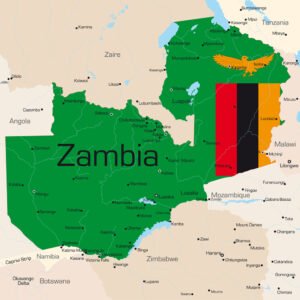
Zambia, officially the Republic of Zambia, is a landlocked country located in Southern Africa. The territory of Zambia was known as Northern Rhodesia from 1911 to 1964. It was renamed Zambia in October 1964 on its independence from British rule. The name Zambia derives from the Zambezi River.
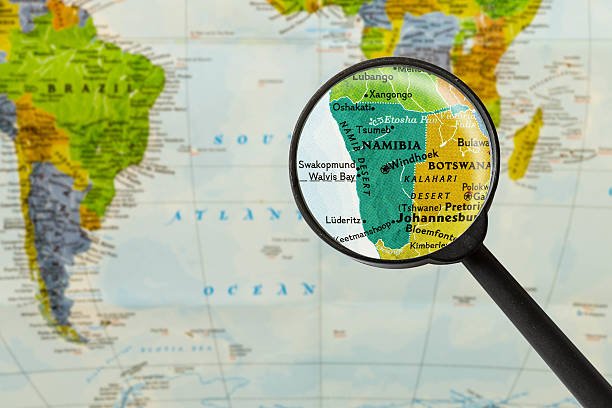
It is bordered to the north by the Democratic Republic of the Congo, Tanzania to the north-east, Malawi to the east, Mozambique to the southeast, Zimbabwe and Botswana to the south, Namibia to the southwest, and Angola to the west. The capital city of Zambia is Lusaka, located in the south-central part of Zambia. Zambia is one of the most highly urbanised countries in sub-Saharan Africa, with 44% of the population concentrated along the major transport corridors, while rural areas are sparsely populated. The population is concentrated mainly around Lusaka in the south and the Copperbelt Province to the north, the core economic hubs of the country.
Originally inhabited by Khoisan peoples, the region was affected by the Bantu expansion of the thirteenth century. Following European expeditions in the eighteenth century, Britain colonised the region, forming the British protectorates of Barotziland–North-Western Rhodesia and North-Eastern Rhodesia towards the end of the nineteenth century. These were merged in 1911 to form Northern Rhodesia. For most of the colonial period, Zambia was governed by an administration appointed from London with the advice of the British South Africa Company.
On 24 October 1964, Zambia became independent of the United Kingdom as a republic in the Commonwealth, and Prime minister Kenneth Kaunda became the inaugural President. Kaunda’s socialist United National Independence Party (UNIP) maintained power from 1964 until 1991 with him playing a key role in regional diplomacy, cooperating closely with the United States in search of solutions to conflicts in Southern Rhodesia (Zimbabwe), Angola, and Namibia. From 1972 to 1991, Zambia was a one-party state with UNIP as the sole legal political party under the motto “One Zambia, One Nation” coined by Kaunda. Kaunda was succeeded by Frederick Chiluba of the social-democratic Movement for Multi-Party Democracy in 1991, beginning a period of socio-economic development and government decentralisation. Zambia has since become a multi-party state and has experienced several peaceful transitions of power.
At 752,614 km2 (290,586 sq mi), Zambia is the 39th-largest country in the world, slightly smaller than Chile. The country lies mostly between latitudes 8° and 18°S, and longitudes 22° and 34°E. Zambia is drained by two major river basins: the Zambezi/Kafue basin in the centre, west, and south covering about three-quarters of the country; and the Congo basin in the north covering about one-quarter of the country. A very small area in the northeast forms part of the internal drainage basin of Lake Rukwa in Tanzania.
In the Zambezi basin, there are a number of major rivers flowing wholly or partially through Zambia: the Kabompo, Lungwebungu, Kafue, Luangwa, and the Zambezi itself, which flows through the country in the west and then forms its southern border with Namibia, Botswana and Zimbabwe. Its source is in Zambia but it diverts into Angola, and a number of its tributaries rise in Angola’s central highlands. The edge of the Cuando River floodplain (not its main channel) forms Zambia’s southwestern border, and via the Chobe River that river contributes very little water to the Zambezi because most are lost by evaporation.
The Kafue and the Luangwa confluences with the Zambezi are on the border with Zimbabwe at Chirundu and Luangwa town respectively. Before its confluence, the Luangwa River forms part of Zambia’s border with Mozambique. From Luangwa town, the Zambezi leaves Zambia and flows into Mozambique, and eventually into the Mozambique Channel.
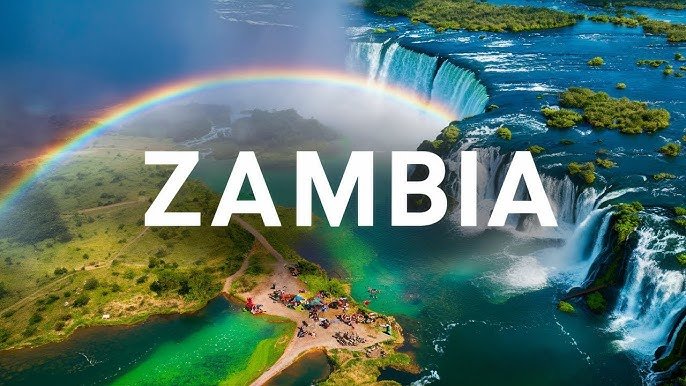
The Zambezi falls about 100 metres (328 ft) over the 1.6-kilometre-wide (1-mile) Victoria Falls, located in the southwest corner of the country, subsequently flowing into Lake Kariba. The Zambezi valley, running along the southern border, is both deep and wide. From Lake Kariba going east, it is formed by grabens and like the Luangwa, Mweru-Luapula, Mweru-wa-Ntipa and Lake Tanganyika valleys, is a rift valley.
The north of Zambia is very flat with broad plains. In the west the most notable being the Barotse Floodplain on the Zambezi, which floods from December to June, lagging behind the annual rainy season (typically November to April). The flood dominates the natural environment and the lives, society, and culture of the inhabitants and those of other smaller, floodplains throughout the country.
In Eastern Zambia, the plateau which extends between the Zambezi and Lake Tanganyika valleys is tilted upwards to the north, and so rises imperceptibly from about 900 m (2,953 ft) in the south to 1,200 m (3,937 ft) in the centre, reaching 1,800 m (5,906 ft) in the north near Mbala. These plateau areas of northern Zambia have been categorised by the World Wildlife Fund as a large section of the Central Zambezian miombo woodlands ecoregion.
Eastern Zambia shows great diversity. The Luangwa Valley splits the plateau in a curve north-east to south-west, extended west into the heart of the plateau by the deep valley of the Lunsemfwa River. Hills and mountains are found by the side of some sections of the valley, notably in its north-east the Nyika Plateau (2,200 m or 7,218 ft) on the Malawi border, which extend into Zambia as the Mafinga Hills, containing the country’s highest point, Mafinga Central (2,339 m or 7,674 ft).
The Muchinga Mountains, the watershed between the Zambezi and Congo drainage basins, run parallel to the deep valley of the Luangwa River and form a sharp backdrop to its northern edge, although they are almost everywhere below 1,700 m (5,577 ft). Their culminating peak Mumpu is at the western end and at 1,892 m (6,207 ft) is the highest point in Zambia away from the eastern border region. The border of the Congo Pedicle was drawn around this mountain.
The southernmost headstream of the Congo River rises in Zambia and flows west through its northern area firstly as the Chambeshi and then, after the Bangweulu Swamps as the Luapula, which forms part of the border with the Democratic Republic of the Congo. The Luapula flows south then west before it turns north until it enters Lake Mweru. The lake’s other major tributary is the Kalungwishi River, which flows into it from the east. The Luvua River drains Lake Mweru, flowing out of the northern end to the Lualaba River (Upper Congo River). Lake Tanganyika is the other major hydrographic feature that belongs to the Congo basin. Its south-eastern end receives water from the Kalambo River, which forms part of Zambia’s border with Tanzania.
Zambia is located on the plateau of Central Africa, between 1,000 and 1,600 metres (3,300 and 5,200 ft) above sea level. The climate is tropical, modified by the average elevation of 1,200 metres (3,900 ft). The two main seasons are the rainy season (November to April) corresponding to summer, and the dry season (May/June to October/November), corresponding to winter. The dry season is subdivided into the cool dry season (May/June to August), and the hot dry season (September to October/November). The modifying influence of altitude gives the country pleasant subtropical weather rather than tropical conditions during the cool season of May to August.[80] However, average monthly temperatures remain above 20 °C (68 °F) over most of the country for eight or more months of the year.
Zambia is officially a “Christian nation” under the 1996 constitution, but recognizes and protects freedom of religion. Zambia is the only African nation to designate Christianity as a state religion. The Zambia Statistics Agency in 2022 estimates that 98.0% of Zambians are Christian, with 74.5% Protestant, 17.9% Catholic and 5.6% Jehovah’s Witnesses. Many Zambian Christians are syncretic, combining indigenous religious traditions with Christianity. The largest Protestant denominations are the Anglicans, evangelicals, and Pentecostals.
Approximately 2.7% of Zambians are Muslim. Hindus, primarily of South Asian ancestry, numbered approximately 10,000 as of 2019. There are small numbers of Jews, Baha’is, Buddhists, and Sikhs.
The official language of Zambia is English, which is used for official business, education, and law.
GOVERNANCE
Politics in Zambia takes place in a framework of a presidential representative democratic republic, whereby the president of Zambia is both head of state and head of government in a pluriform multi-party system. The government exercises executive power, while legislative power is vested in both the government and parliament.
Executive branch
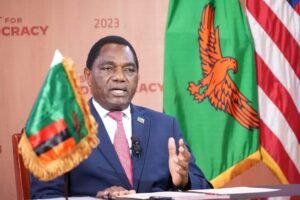
The President is elected by universal adult suffrage to no more than two five-year terms. He is empowered to appoint the Vice President. Hakainde Hichilema is the current President of Zambia.
Legislative branch
The National Assembly of Zambia is a unicameral legislative body responsible for making laws, approving budgets, and overseeing the executive branch of government. It is composed of 167elected members. Eight members are appointed by the President, bringing the total number to 175. The members serve a five-year term unless the National Assembly is dissolved sooner.
Judicial branch
The court system consists of the Supreme Court, the High Court, subordinate magistrate’s courts, and local courts. The Supreme Court consists of the Chief justice, Deputy Chief Justice, and several other justices; it is the court of last resort. The High Court is presided over by a Chief Justice and is basically an appellate court. There are three classes of magistrate’s courts, with progressive degrees of criminal and civil jurisdiction. Local courts consist of a President sitting alone or with other members, all appointed by the Judicial Services Commission.
Administrative divisions
Zambia is administratively divided into ten provinces subdivided into 117 districts, and electorally into 156 constituencies and 1,281 wards.
ECONOMY
Zambia’s economy is heavily dependent on mining, in particular the mining of copper. Agriculture is relatively poorly developed, however, and major investment in the manufacturing industry did not take place until after independence. Zambia has economic policy goals that include continued cooperation with its neighbours through the Southern African Development Community and the Common Market for Eastern and Southern Africa, in addition to its traditional ties with the Commonwealth and the United Nations (UN). Zambia is also a member of the African Union. Zambia continues to receive development assistance from a number of countries, the World Bank, and the IMF.
AGRICULTURE
Agriculture plays a very important part in Zambia’s economy, employing the majority of the country’s labour force. Zambia has a vast land and natural resource base, although only about one-sixth of the country’s arable land is under cultivation. Farms range in size from household farms to large commercial farms. Smallholder farmers use hand hoes and few external inputs, and they mainly produce food crops such as corn (maize), sorghum, millet, cassava (manioc), and groundnuts (peanuts). Much of Zambia’s cotton, which is used for the local textile industry as well as for export, is also grown by smallholders. Medium and large commercial farms benefit from improved seed, fertilizer, and animal draft power.
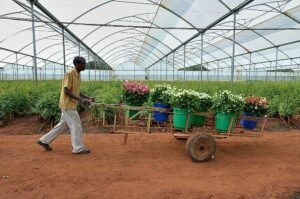
The country’s large-scale commercial farms are mainly located along the Line of Rail and are predominately owned and operated by European settlers and their descendants, a pattern that dates back to colonial days when African males were recruited to work the copper mines while European settlers were brought in to work the fields. The settlers were given fertile land along the Line of Rail while Africans were resettled in less fertile areas, a situation that has changed to some degree because of land reform programs.
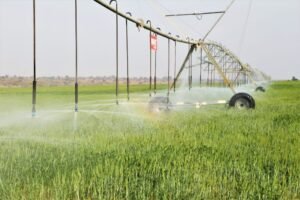
Irrigated agriculture is increasingly important. Started in 1966, the first successful scheme was at Nakambala, on the south side of the Kafue Flats, where the Zambia Sugar Company has more than 25,000 acres (101,000 hectares) under sugarcane. Their refinery also serves nearby smallholder cane-growing projects. Zambia provides for its own needs and exports sugar. At Mpongwe, south of Luanshya, a major irrigation scheme produces wheat and coffee. Kasama in the northeast is the location of two arabica coffee schemes, and there is a tea estate at Kawambwa in the far north. Wheat and cotton are grown at Sinazongwe and Sinazeze in the Gwembe (middle Zambezi) valley, using water from Lake Kariba. Cotton cultivation was encouraged by the construction of textile mills, first at Kafue and later at Kabwe. Zambia has relatively rich fisheries based on its many lakes, swamps, and seasonally inundated floodplains.
INDUSTRY
In 2024, industry contributed approximately 37.47 percent to Zambia’s gross domestic product.
Manufacturing
The manufacturing sector in Zambia is expanding, driven by the need for value-added products. Manufacturing companies in Zambia are involved in the production of various goods ranging from food and beverages, clothing and textiles, construction materials, chemicals and plastics, pharmaceuticals, and electrical equipment. The sector has been growing steadily in recent years, supported by government initiatives aimed at promoting industrialization and economic diversification.
Extractives
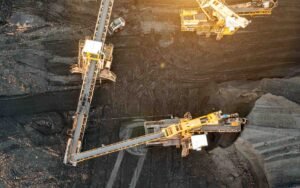
The Zambian economy has historically been based on the copper mining industry. The industry was nationalized in 1973; under government control, production declined substantially. After privatisation during the period 1996–2000, investment, production, and jobs in the copper sector increased. As of 2019, copper exports constituted about 69% of the value of all Zambian goods exported. In 2023, Zambia produced 698,000 metric tons of copper. It is the second-largest copper producer in Africa and the seventh-largest copper producer in the world, accounting for 4% of global production.
The Copperbelt Province of Zambia accounts for almost one-quarter of the country’s GDP and one-third of the country’s copper production. The state-owned ZCCM Investments Holdings owns several mining operations; it holds a 49% stake in Mopani Copper Mines, with the remaining 51% held by the United Arab Emirates through the International Holding Company. ZCCM has interests in mining operations owned by Vedanta Resources and First Quantum Minerals. As Zambia’s economy is heavily dependent on the copper industry, the national exchange rate changes in accordance with the copper price. The Chinese government, via state-owned firms and as part of its Belt and Road Initiative, has made substantial foreign direct investments in Zambian copper to secure this strategic resource for the Chinese market. The Chinese firm JCHX Mining owns 80% of Zambia’s Lubambe Copper Mines, with ZCCM holding the remaining 20%. Hazardous working conditions, low wages, and labor abuses at the Chinese-operated Collum Coal Mine have been a source of political controversy in Zambia.
In addition to copper, major minerals mined in Zambia include gold (Kansanshi mine), manganese (Serenje mine), and nickel (Munali mine), as well as gemstones (specifically amethyst, beryl, emerald, and tourmaline).
Construction
The construction sector is witnessing rapid growth due to increased investment in infrastructure projects, including roads, bridges, and housing developments. Urbanization and a growing population drive demand for residential and commercial properties, making real estate a lucrative sector. Government initiatives to improve housing affordability are also stimulating growth.
SERVICES
In 2024, the services sector contributed about 55.14 percent to Zambia’s gross domestic product.
Banking
Zambia’s financial sector has seen growth with the establishment of various banks and financial institutions, enhancing access to financial services. The sector supports economic activities through lending, investment, and insurance services. Innovative financial technologies, such as mobile banking, are also improving financial inclusion among the population. The Bank of Zambia (BoZ) is the Central Bank of the Republic of Zambia.
Tourism
Tourism comprised 5.8% of the Zambian GDP in 2021; the record high, of 9.8%, occurred in 2019. Most tourism focused on wildlife protected areas, specifically Zambia’s 20 national parks and 34 game management areas. The most significant tourist site, the Victoria Falls, is a UNESCO World Heritage Site. The Zambian side of the falls is within Mosi-oa-Tunya National Park; the rest of the falls are part of neighboring Zimbabwe. Livingstone, which lies close to Victoria Falls, has become an important tourist centre. Other popular national parks include North Luangwa, South Luangwa, Kafue, and Liuwa Plain. The Zambian government has promoted tourism as a tool for economic development, particularly in rural areas, as well as for wildlife conservation.
CULTURE
Most Zambians are Bantu-speaking. The three largest ethnolinguistic groups are the Bemba, Nyanja (also called the Chewa), and Tonga; four smaller groups are the Kaonde, Lozi, Luanda, and Luvale. In 2010, the population was estimated to be 21% Bemba, 13.6% Tonga, 7.4% Chewa, 5.7% Lozi, 5.3% Nsenga, 4.4% Tumbuka, 4.0% Ngoni, and 38.6% other. The Bemba group is predominant in the Northern, Luapula, and Copperbelt provinces; the Nyanja in the Eastern and Central provinces; the Tonga in the Southern and Western provinces; and the Lozi in the Western Province. The Tumbuka minority lives in the Luangwa River valley in the east. No single ethnolinguistic group is predominant in the North-Western Province, which is sparsely populated.
The main local language, especially in Lusaka, is Nyanja (Chewa), followed by Bemba. In the Copperbelt, Bemba is the main language and Nyanja second. Bemba and Nyanja are spoken in the urban areas, in addition to other indigenous languages that are commonly spoken in Zambia. These include Lozi, Tumbuka, Kaonde, Tonga, Lunda and Luvale, which featured on the Zambia National Broadcasting Corporation (ZNBC) local-languages section.
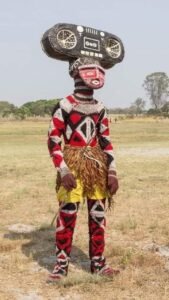
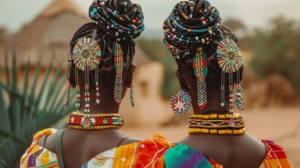
Prior to the establishment of modern Zambia, the inhabitants lived in independent tribes, each with its own way of life. One of the results of the colonial era was the growth of urbanisation. Different ethnic groups started living together in towns and cities, influencing each other’s way of life. They also started adopting aspects of global or universal culture, especially in terms of dressing and mannerisms. Much of the original cultures of Zambia have largely survived in rural areas, with some outside influences such as Christianity.
Zambian cuisine is characterized by staples like maize, cassava, and groundnuts which feature heavily in many popular dishes. Nshima, a thick porridge made from maize, is the country’s staple food, often served with savory dishes. Ifinkubala is a Zambian delicacy made by frying mopane worms. Kapenta is a popular Zambian snack or side dish.
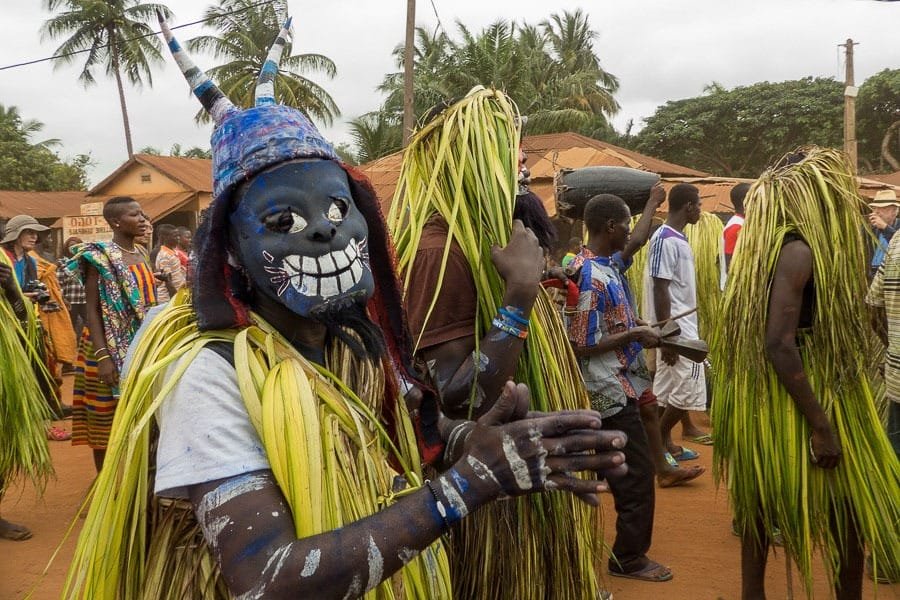
Zambia practices several ceremonies and rituals, ranging from nationally recognised traditional ceremonies to unrecognised yet important ceremonies. Popular traditional arts include pottery, basketry (such as Tonga baskets), stools, fabrics, mats, wooden carvings, ivory carvings, wire craft, and copper crafts. Most Zambian traditional music is based on drums (and other percussion instruments) with a lot of singing and dancing. Among musical instruments, drums are the most widely used, but there are also stringed bows, flutes, horns and pipes, xylophones, bells, rattles, and the kalimba, or African piano.
As a predominantly Christian country, Zambia marks the celebration of the Christian holidays of Good Friday, Easter, and Christmas. Independence Day is observed on October 24, and a variety of other holidays—such as Youth Day, Heroes Day, Unity Day, and Farmers’ Day—take place throughout the year. Additional feasts and festivals unique to various ethnic groups are also celebrated.
SPORTS
Sports and games in Zambia include but are not limited to football, athletics, netball, volleyball and indigenous games such as nsolo, chiyenga, waida, hide and seek, walyako, and sojo. Zambia started participating in popular global sports and games mainly in the 1964 Summer Olympics.
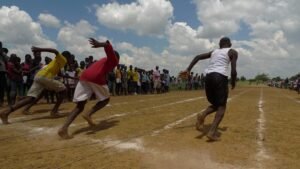
Zambia declared its independence on the day of the closing ceremony of the 1964 Summer Olympics, thereby becoming the first country ever to have entered an Olympic Games as one country and left it as another. Football is the most popular sport in Zambia. Rugby Union, boxing, and cricket are also popular sports in the country.