

Tanzania, long regarded as East Africa’s bastion of political stability, is now grappling with an unprecedented crisis that has shaken the very foundations of its national identity. What was once celebrated as an exemplar of democratic tolerance and ethical governance has been marred by scenes of violence, intimidation, and political repression following the October 29, 2025 elections.
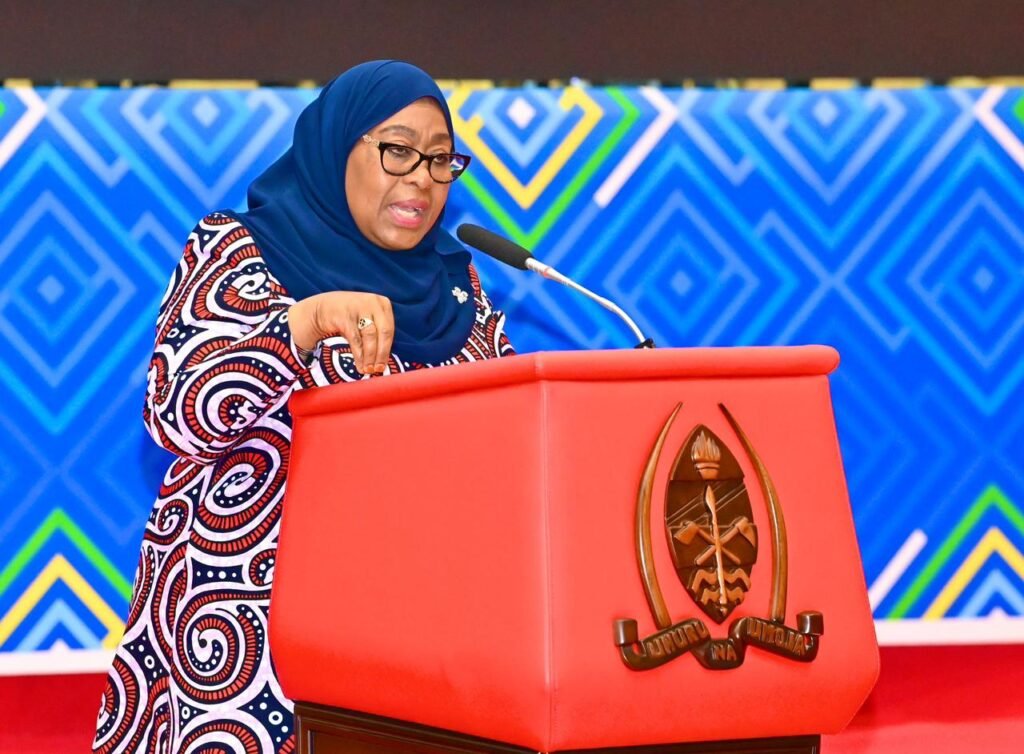
The brutal crackdown orchestrated by the government of President Samia Suluhu Hassan has left lasting scars, both on the country’s citizens and its international reputation. As analysts dissect the unfolding crisis, Tanzania faces a crossroads: will it confront the deep structural flaws exposed by the elections, or will it descend into prolonged instability?
The 2025 elections were initially anticipated as a test of Tanzania’s post-Magufuli political trajectory. President Suluhu, who assumed office in 2021 after the sudden death of John Magufuli, had initially reversed many of her predecessor’s repressive policies. Public rallies were unbanned, opposition figures in exile were invited to return, and limited media freedoms were restored. However, the move turned to be a camouflage. Observers saw the 2025 elections as a litmus test for whether the ruling Chama Cha Mapinduzi (CCM) party would embrace moderation or revert to the authoritarian tendencies that had characterized Magufuli’s tenure.
From the outset, however, the campaign was marred by exclusion and intimidation. Key opposition figures, including Chadema’s Tundu Lissu and Luhaga Mpina of ACT-Wazalendo, were barred from contesting. Lissu faced treason charges, carrying the threat of the death penalty, while Mpina refused to sign an electoral code that omitted constitutional amendments designed to level the playing field. Legal challenges to these barriers were ignored, leaving citizens with little faith in the integrity of the electoral process.
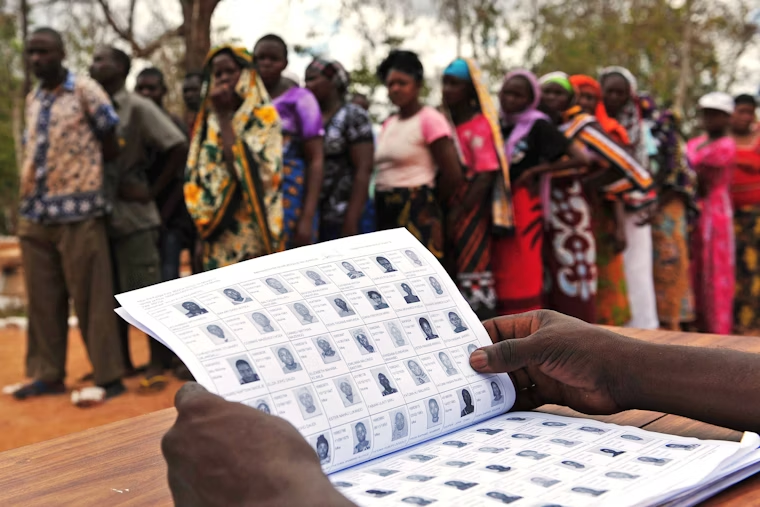
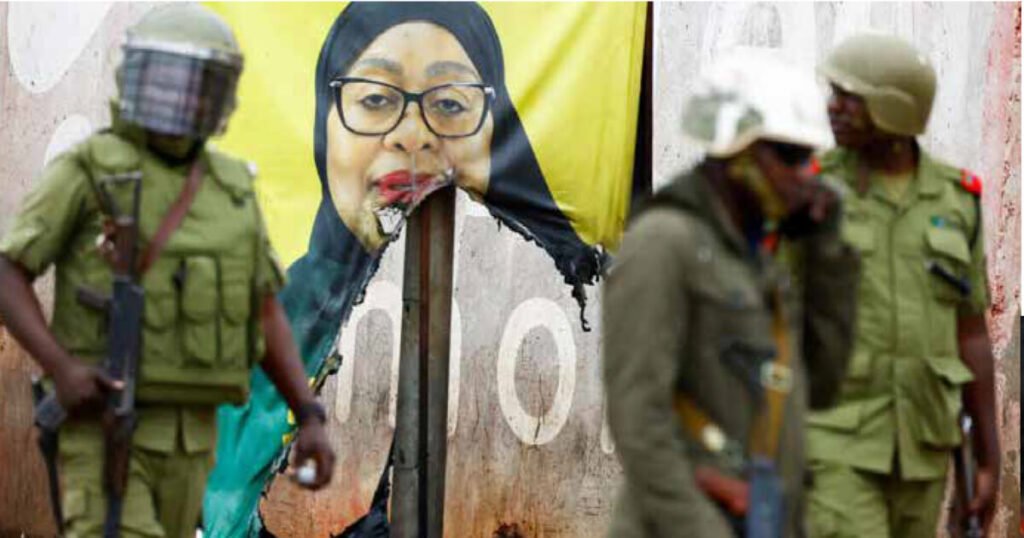
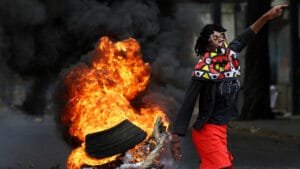
When polls opened, many citizens boycotted the election. In several neighborhoods, markets, and even homes, protesters chanted “Hatutaki CCM” (“we don’t want Chama Cha Mapinduzi”). Security forces responded with a ferocity that shocked observers. Live ammunition was fired into crowds, curfews were imposed, transport and markets were shuttered, and the internet and newspapers were blocked—an unprecedented clampdown in the nation’s post-independence history.
Counting the Human Cost
The human toll has been staggering. The leading opposition party, Chadema, reported that at least 800 people were killed in the first three days alone, while diplomatic and civil society sources privately estimate casualties in the thousands. Videos and images of dead bodies circulated online, often showing scenes reminiscent of wartime carnage rather than the aftermath of a democratic election. Bodies were reportedly piled up in hospitals across Dar es Salaam, the northern and southern regions, and coastal towns, prompting fears that the official death toll may never be fully revealed.
The violence was not limited to citizens alone. Government critics, opposition activists, and even senior party insiders faced abductions and disappearances. Weeks before the polls, former CCM Ambassador to Cuba and party insider Humphrey Polepole was abducted after criticizing Suluhu’s electoral tactics. His mother’s plea—“If he is alive, bring him to me. If he is not, bring his body and let me bury my child myself”—symbolized the national trauma. Polepole and his sister remain missing, further fueling distrust toward the government.
Foreign mercenaries reportedly aided the crackdown, raising questions of regional collusion. Neighboring governments, some activists allege, have tolerated or participated in the targeting of Tanzanian, Kenyan, and Ugandan human rights defenders who supported victims. These developments have intensified suspicions that the region is witnessing a worrying pattern of authoritarian consolidation across national borders.
Election Results and International Condemnation
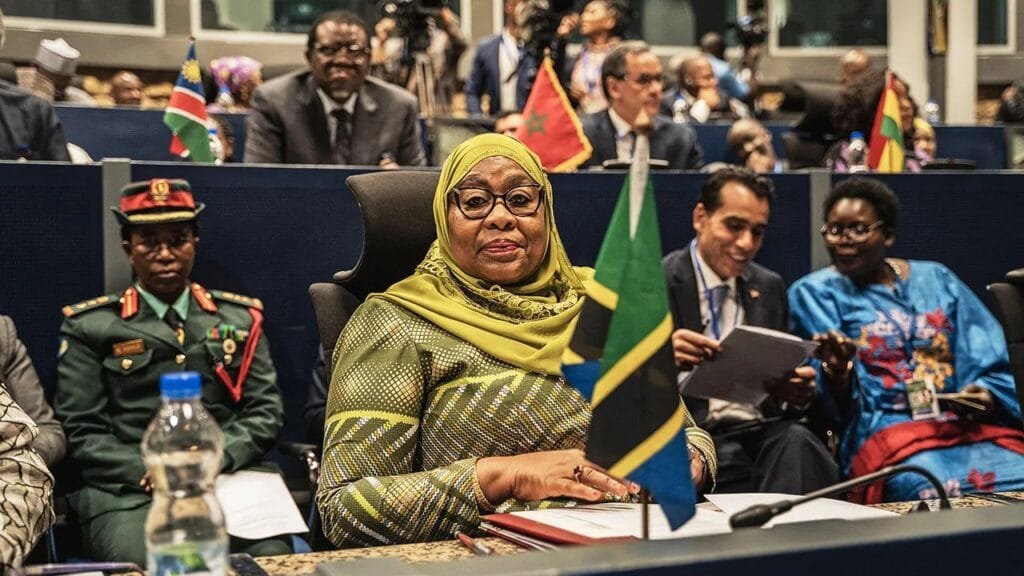
On November 1, Suluhu was declared the winner with 98 percent of the vote and an 88-percent turnout. These figures stand in stark contrast to findings by regional and international observers. The Southern African Development Community (SADC) described turnout as “very low,” citing ballot stuffing, intimidation, and police brutality. Observers were harassed and evidence was deleted. The African Union echoed this assessment, noting pre-election abductions, empty polling stations, and the expulsion of observers during the counting process. The European Union’s election mission concluded the elections were “neither free nor fair.”
Even Tanzania’s allies expressed concern. South Africa’s African National Congress reported being unable to observe the polls due to a communications breakdown. Tanzanians themselves described the events as “Msiba Mkuu ya Taifa letu Tunaiyopenda” (“The Great National Catastrophe that has Befallen the Nation We Dearly Love”), reflecting the depth of public despair.
Suluhu’s inauguration, usually a public ceremony at Dar es Salaam’s Uhuru Stadium, was relocated to the secluded Dodoma military grounds, highlighting the climate of fear. Constitutional provisions preventing election results from being challenged in court have further compounded frustrations, leaving citizens with no legal recourse.
A Long-Building Crisis
The 2025 electoral crisis did not occur in a vacuum. Tanzania’s trajectory toward authoritarianism has been a slow accumulation of structural weaknesses. While the country enjoyed relative stability since independence under Mwalimu Julius Nyerere, the Magufuli era (2016–2020) saw sweeping powers concentrated in the executive, suppression of dissent, and aggressive curtailment of media freedoms. Journalists and activists faced arrests, passports were confiscated, and public rallies were banned. Opposition candidates were targeted, and political violence—including the assassination attempt on Tundu Lissu—became increasingly common.
Under Suluhu, the political space initially expanded. Exiles returned, and limited reforms were introduced. Yet the local elections of 2024, marked by the violent killing of Chadema’s Ali Mohamed Kibao, signaled that the underlying culture of impunity remained. More than 100 abductions have reportedly occurred under her watch, demonstrating the fragility of political liberalization.
The current crisis is thus the result of a long-term erosion of institutional checks on executive power. Internal CCM mechanisms designed to regulate party behavior have been weakened. The once-powerful CCM Elders, who historically held leaders accountable and ensured orderly transitions, have been replaced by smaller committees answerable to the party chairperson—the president. This has stifled internal debate, concentrated authority, and removed constraints on executive action.
See Also

Structural Roots of Public Discontent
Beyond politics, Tanzanians are increasingly frustrated by corruption, inequality, and perceived favoritism in state contracts. Suluhu’s decisions to award key port operations and the Bus Rapid Transit System to Dubai-based companies provoked mass protests, reflecting a broader disillusionment with CCM’s governance. Citizens have long criticized the inefficiency of public transport and the mismanagement of essential services, attributing these failures to systemic corruption.
Security sector divisions have further exacerbated the crisis. While the Tanzania People’s Defence Force (TPDF) has historically maintained professionalism and restraint, the Tanzanian Police Force has become politicized. Reports suggest that the 2025 electoral violence was largely carried out by police units and intelligence operatives, with TPDF units serving as temporary havens for fleeing citizens. The use of irregular forces and foreign mercenaries indicates a dangerous erosion of domestic control over security institutions.
Economic and Diplomatic Fallout
The ramifications extend beyond domestic politics. President Suluhu acknowledged that the unrest has “stained” Tanzania’s global image. For decades, the nation relied on its reputation for stability to secure loans and attract investment. The post-election violence, coupled with widespread reports of human rights violations, now threatens Tanzania’s access to international credit. Suluhu warned that future financial support from global institutions may be constrained, emphasizing the need to mobilize domestic resources.
International actors are beginning to respond. Malawi’s former President Lazarus Chakwera, serving as a Commonwealth envoy, is set to lead reconciliation efforts. South Africa’s former President Thabo Mbeki has been identified as a potential mediator, drawing on his respected standing across the continent. SADC and the African Union may also play crucial roles in facilitating dialogue between the government and opposition groups.
Paths to Reconciliation
Despite the severity of the crisis, Tanzania possesses unique attributes that could facilitate resolution. The country’s political culture is relatively insulated from ethnic conflict, allowing negotiations to focus purely on political and governance issues. The TPDF’s professionalism and impartiality provide a secure environment for dialogue. Moreover, respected Tanzanian figures—including Joseph Butiku of the Mwalimu Nyerere Foundation and former senior officials—can serve as trusted intermediaries. Religious leaders from Christian, Muslim, Hindu, and Bahai communities have historically played crucial roles in brokering peace and could reprise this function.
Tanzania can also draw lessons from regional experiences, such as Kenya’s 2007 post-election crisis, which led to the National Accord following extensive mediation. An inclusive dialogue, combining domestic elders, international mediators, and civil society, could help restore trust and rebuild the legitimacy of national institutions.
A Shadowed Legacy
The post-election bloodbath marks a profound turning point in Tanzania’s political history. Once seen as a model of moderation and political civility in East Africa, the country now confronts an unsettling reality: its institutions, weakened over the past decade, have proven vulnerable to abuse, and the social contract between government and citizens has been fractured.
This crisis, analysts argue, is more than a moment of violence; it reflects a fundamental struggle over the direction of Tanzanian governance. Will the nation revert to authoritarian impulses and disregard political pluralism, or can it harness its unique institutional and cultural strengths to rebuild trust and stability? The stakes could not be higher, not just for Tanzania, but for the region, which has long looked to Dar es Salaam as a model for political tolerance.
President Suluhu’s next term will be defined by her ability to navigate these complex uncertainties. She faces immense pressure: domestically to address grievances, uphold human rights, and restore credibility, and internationally to secure support and investment in an economy now viewed with suspicion. The shadow cast by the October elections will linger, challenging her administration to reconcile the imperatives of political survival with the broader national interest.
For a nation that has long prided itself on ethical governance and national cohesion, the path ahead is uncertain, shadowed by fear, and fraught with challenge. Yet, Tanzania’s historical capacity for reconciliation and its repository of respected elders offer a glimmer of hope. The coming months will determine whether the nation succumbs to authoritarian regression or begins the arduous journey of healing and political renewal.