

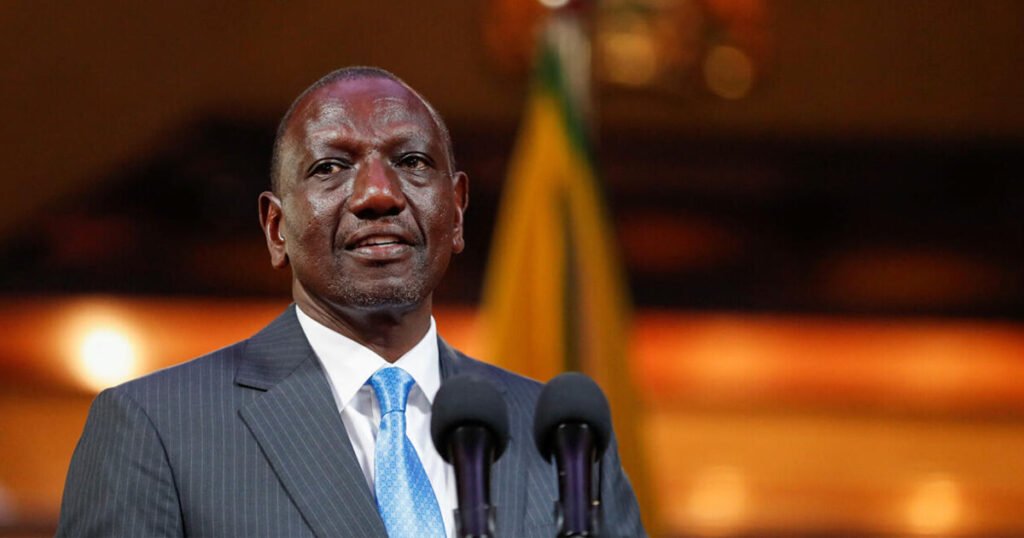
When President William Ruto walked into Parliament for his State of the Nation Address, he arrived armed with a message that was both defiant and triumphant. Kenya, he argued, had not merely survived three punishing years of global and domestic turbulence, it had emerged stronger, more stable, and more confident about its economic future.
At the centre of this narrative was a currency that had stopped its free fall, a stock market that had shaken off years of lethargy, and a government that claimed to have executed one of the most intense economic repair jobs in modern Kenyan history.
The speech was a political moment, but it was also an economic statement. It captured the spirit of a country that has been forced to rethink its place in a shifting global economy where capital flows are unpredictable, debt pressures remain intense, and the consequences of policy mistakes reveal themselves quickly. For most, the central question is not whether progress has been made. The real debate concerns the durability of Kenya’s economic revival and the extent to which the gains are structural rather than cyclical.
The Dark Days of 2022
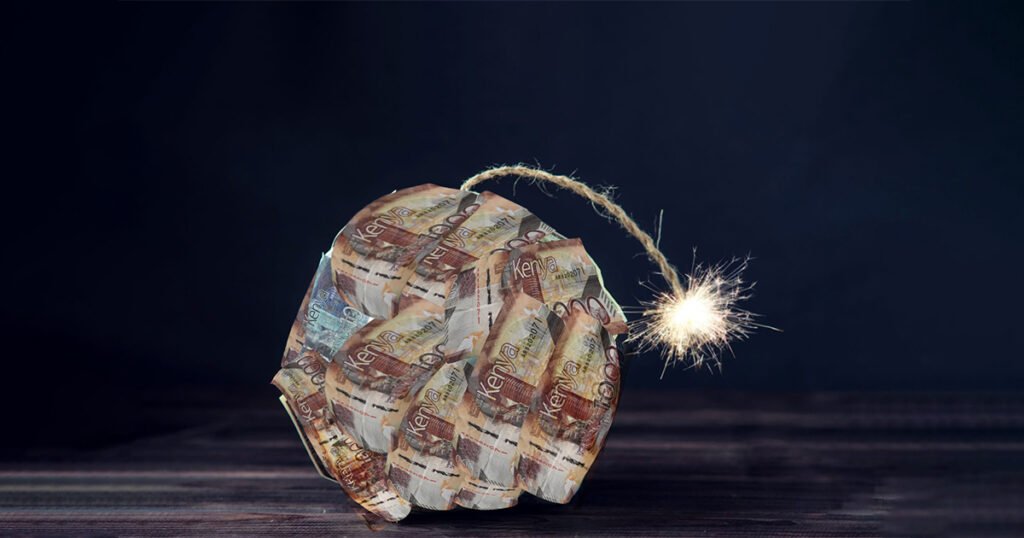
To understand the significance of Kenya’s present stability, one must revisit the turbulent backdrop of 2022. Inflation was surging toward double digits. Fuel queues were stretching across cities as oil marketers struggled to access dollars. The shilling was losing ground so quickly that importers were unable to plan, and foreign reserves had fallen to multi-year lows. Debt service obligations were swallowing more than half of government revenue. Analysts at the time warned that Kenya was drifting toward a potential default.
It was a moment of raw economic anxiety. Businesses were scaling back, households were tightening consumption, and confidence across the financial system was evaporating. Rating agencies flagged rising risks, investors retreated, and the Nairobi Securities Exchange suffered one of its most difficult periods in decades.
This context makes the current turnaround more striking. It also explains why Ruto emphasised a message of decisive action. However, the turnaround is not the product of a single fix. It is the result of a complex mix of fiscal tightening, revenue reforms, monetary policy coordination, international negotiations, and restored investor confidence.
Inflation, Stability and the Fight Against Volatility
One of the most important indicators of Kenya’s recent progress has been the fall in inflation. Prices that were rising at 9.6 percent in 2022 are now rising at 4.6 percent. This has brought relief to millions of households that had been squeezed by rising fuel, food, and transport costs.
Part of this reversal can be credited to monetary tightening by the Central Bank of Kenya, which moved to curb excess liquidity and stabilise expectations. Another factor is the more predictable supply of fuel and imports resulting from improved access to foreign exchange. Fiscal tightening helped dampen demand pressures, although at the cost of public discontent and political friction.
Inflation, however, is not only a story about domestic policy. It is also tied to global commodity cycles. Kenya benefited from moderating global oil prices and improved food supply conditions across East Africa. The key question for policymakers is whether inflation will remain stable amid geopolitical tensions, unpredictable weather patterns, and shifting global interest rates.
The Shilling Finds Its Footing
Perhaps the most symbolic achievement for the Ruto administration has been the stabilisation of the Kenyan shilling. After two years of steady decline, the currency has held at around KSh 129 to the dollar for nearly twenty four months. This level of stability is rare in African currencies that are exposed to global shocks, imported inflation, and large debt repayments.
The stability has been driven by a combination of factors. Stronger foreign reserve accumulation, now above $12 billion, has given the Central Bank more room to manage shocks. The successful Eurobond redemption reassured global investors that Kenya remains committed to meeting its obligations. Export growth and improved formal remittance flows have also added buffers.
What is less often discussed is the darker side of currency stabilisation. It relies heavily on disciplined fiscal policy and sometimes aggressive tax measures that have sparked domestic resistance. Sustaining the shilling at its current level will require continued policy coherence. Any lapse in discipline could quickly undo the progress.
From Eighth to Sixth: Kenya Climbs Africa’s Economic Ladder
Ruto’s most politically potent claim is that Kenya has overtaken peers to become the sixth-largest economy in Africa, up from eighth position two years ago. The shift is grounded in IMF data that shows Kenya’s GDP rising from $115 billion to $136 billion.
Part of this growth reflects a stronger services sector, particularly ICT, financial services, logistics, and creative industries. Another factor is increased agricultural output following improved rains and better market access. Kenya’s diversification has given it a unique resilience compared to commodity-dependent economies across the continent.

However, the improved ranking also reflects weaker performance in some African economies that have struggled with currency depreciation, debt distress, and low growth. Nigeria, Ethiopia, Angola, and Egypt have each faced severe macroeconomic pressures. Kenya’s relatively quicker stabilisation has allowed it to gain ground.
The real test is not the ranking. It is whether growth is broad-based, job-creating, and sustainable. Kenya’s young population is expanding rapidly, and the labour market must absorb over one million young people each year. Rising GDP offers little comfort if it is not accompanied by opportunity.
Fiscal Consolidation: Painful but Necessary
One of the most contentious aspects of Ruto’s economic programme has been fiscal consolidation. This has involved cutting subsidies, rationalising public expenditure, and pushing for higher revenue collection. While these measures have improved Kenya’s debt profile, they have also intensified public frustration due to higher taxes and reduced government support.
The President argues that these measures were unavoidable. Without them, Kenya risked losing access to international capital markets and facing a balance of payments crisis. The return to fiscal discipline also boosted international confidence, reflected in the recent upgrade of Kenya’s sovereign rating from B- to B.
Critics, however, point to the social cost. Higher taxes on essential goods and services have eroded household earnings. Public wage pressures have strained relations with civil servants. Small businesses have complained about the growing cost of compliance. Balancing fiscal discipline with public welfare remains one of the most delicate policy challenges for the administration.
FDI Surge and the New Business Energy
The revival of foreign direct investment has been one of the most positive trends in the last three years. FDI has tripled from $463 million in 2021 to $1.5 billion in 2024. More than 300,000 new businesses have been registered, including 500 foreign companies.
Several factors are driving this surge. Improved macroeconomic stability has reduced uncertainty. Aggressive investment promotion through government agencies has targeted manufacturing, renewable energy, fintech, and logistics. Kenya’s reputation as a regional technology hub continues to attract venture capital.
Large multinationals are eyeing Kenya not only as a consumer market but as a production and distribution hub for East Africa. The government’s industrial parks and special economic zones have begun to see increased activity. Infrastructure investments in ports, energy, and transport have also improved the business environment.
The challenge is ensuring that FDI translates into jobs, local supply chain development, and technology transfer. Without this, foreign investment risks becoming a superficial success rather than a transformative force.
Global Institutions Project Massive Growth in 2026
Ruto proudly cited the fact that fourteen of the world’s largest financial institutions, including Citigroup, Goldman Sachs, Standard Chartered, and J.P. Morgan, project that Kenya will grow between 5 and 5.8 percent in 2026. Ratings agencies and multilateral lenders have also signalled approval for Kenya’s policy direction.
Global interest is driven by three key factors. First, Kenya has proved capable of avoiding a debt crisis at a time when several African countries are restructuring obligations. Second, the economy is diversified and technology driven. Third, Kenya sits at the heart of a region with enormous long term potential.
International confidence, however, can shift quickly. It depends on continued fiscal restraint, predictable regulation, and political stability. The country must also navigate global uncertainties including unpredictable commodity markets, tightening global financial conditions, and geopolitical risks.
Ruto’s speech was not only an economic report, it was also a political message to both his supporters and critics. He accused the opposition of misrepresenting facts and promoting pessimism. He insisted that Kenya’s direction is anchored in clear, verifiable, and indisputable data.
Yet political tensions remain high. Tax reforms have provoked public outcry. Some sectors feel squeezed by austerity. Youth unemployment remains a major source of frustration. While economic indicators are improving, lived experiences at the household level often lag behind macroeconomic data.
Stability Is Only the Beginning
Kenya’s economic revival is significant, but it is also fragile. Sustaining the momentum requires strategic discipline and clear priorities.
Three areas stand out as essential.
First, Kenya must deepen its industrial base. Manufacturing remains below its potential. To become globally competitive, the country needs better energy reliability, lower logistics costs, and more targeted incentives.
Second, agriculture must be transformed from a weather dependent sector into a technology enabled engine of growth. Climate resilience, irrigation expansion, and value addition will be central to food security and export diversification.
Third, Kenya must address structural issues in labour markets. Youth unemployment threatens long term stability. Skills development, vocational training, and MSME support systems are crucial.
Kenya has the talent, innovation capacity, and geographic advantage to become one of Africa’s most dynamic economies. The foundations laid in the past three years have provided a platform. Whether the country can leap from stabilisation to sustained prosperity will depend on choices made in the years ahead.