

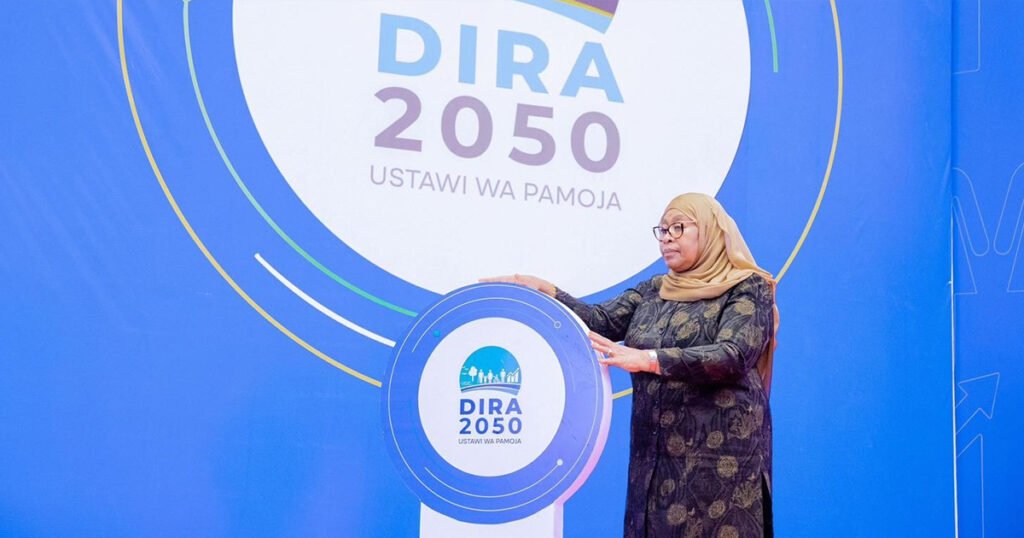
Fresh momentum is reshaping Tanzania’s economy. A combination of economic reforms, infrastructure investment, and rising investor confidence is placing the country on a faster development trajectory. With projected growth of around 6.3 percent in 2026, the East African nation is accelerating its ambitions under the newly launched Tanzania Development Vision 2050.
This bold roadmap aims to transform the country into a competitive, industrialized upper-middle-income economy with a one-trillion-dollar GDP and a per capita income of approximately $7,000 by 2050. The 2026/27 national budget, the first under this vision, signals a strong commitment through strategic investments, private-sector incentives, and a focus on value addition.
Recent performance underscores this momentum. Real GDP growth reached approximately 5.9 percent in 2025 on the mainland, while Zanzibar performed even better at around 7 percent. Key drivers include robust activity in agriculture, mining, construction, tourism, and services.
The Bank of Tanzania forecasts 6.3 percent growth for the mainland in 2026 and 6.6 percent in 2027, supported by public and private investments, as well as rising exports. Inflation remains well contained within the 3 to 5 percent target range, providing a stable foundation for expansion.
A Landmark Budget Sets the Stage
The 2026/27 national budget totals 62.33 trillion Tanzanian shillings, equivalent to roughly US$24 billion. This represents a 10.3 percent increase from the previous year. The theme, “Building a Resilient Economy Through Digital Transformation, Strategic Investment, and Sustainable Fiscal Policies for Inclusive Economic Growth,” aligns directly with the country’s long-term goals.
Approximately 74 percent of financing comes from domestic revenue sources, reflecting a deliberate push for self-reliance as external grants decline sharply by more than 39 percent.
Key macroeconomic targets include increasing domestic revenue to 17.1 percent of GDP and tax revenue to 13.7 percent of GDP. The fiscal deficit is capped at 3 percent of GDP. These measures are designed to maintain debt sustainability while funding critical national priorities. The budget introduces investor-friendly reforms, including a one-year income tax holiday for newly registered businesses, a reduction in the deemed profit distribution tax from 30 percent to 15 percent, and VAT exemptions or deferments on capital goods, electric vehicles, compressed natural gas, and related infrastructure.
These incentives signal a clear shift toward empowering the private sector. Business leaders have welcomed the reforms but emphasize that achieving Vision 2050 will require accelerating growth beyond the targeted 6.3 percent to more than 10 percent annually.
The plan outlines a three-stage pathway of Investment, Infusion, and Innovation to mobilize capital, integrate domestic value chains, and drive technological advancement.
Mining Transformation Fuels Value Addition
One of the most dynamic sectors is mining, where Tanzania is aggressively moving from raw mineral exports to local processing. The sector already contributes more than 10 percent of GDP and continues to expand.
Multiple gold refineries are now operational, including facilities in Mwanza, Geita, and Dodoma, with several achieving high-purity standards suitable for international markets. In recent years, these refineries have processed substantial volumes of gold, adding billions in value and creating hundreds of jobs, many of them for young Tanzanians.
The government has mandated that large-scale mining companies refine and trade a portion of their gold locally. Similar plans are being developed for other minerals, including nickel, copper, graphite, and rare earth elements. Potential steel plants and smelters in regions such as Dodoma are also under consideration.
This value-addition strategy not only boosts government revenues but also strengthens industrial capacity and skills development. Foreign direct investment in mining remains strong, contributing to an overall FDI surge of approximately US$11 billion in new projects in 2025.
Tourism complements these gains by generating foreign exchange earnings and supporting a wide range of related services. Recovery in visitor arrivals has been robust, adding further resilience to the economy. Agriculture, which still employs the majority of the population, is benefiting from modernization efforts, although productivity gaps remain.
Infrastructure Push Powers Connectivity
Infrastructure development forms the backbone of Tanzania’s growth story. The Standard Gauge Railway (SGR) project stands out as a flagship initiative. With phases progressing from Dar es Salaam toward Mwanza and beyond, the SGR will enhance regional connectivity with Rwanda, Uganda, Burundi, and the Democratic Republic of Congo.
The 2026/27 transport budget allocates substantial funding to the project, with more than 1.5 trillion shillings earmarked for SGR construction alone.
The Julius Nyerere Hydropower Project on the Rufiji River represents another major leap forward. Once fully operational, it will significantly expand power generation capacity, reduce reliance on thermal sources, and support industrialization.
Rural electrification programmes continue to expand access to electricity, while upgrades at the Port of Dar es Salaam and the development of logistics hubs are strengthening Tanzania’s position as a regional trade gateway.
Special Economic Zones (SEZs) add another layer to the growth strategy. Five strategic SEZs, including Bagamoyo, Kwala, Nala, Buzwagi, and Benjamin Mkapa, offer incentives for manufacturing, logistics, and technology investments. These zones are expected to attract high-quality foreign direct investment and promote export-oriented industries.
Construction activity associated with these projects is projected to grow by approximately 6.8 percent in 2026, helping to sustain momentum across the broader economy.
Digital transformation also receives dedicated attention in the budget. Initiatives focus on improving tax administration through artificial intelligence and data analytics, enhancing government efficiency, and expanding broadband access. A separate Digital Economy Vision 2050 complements the broader development agenda by promoting innovation-driven growth.
Human Capital and Inclusive Growth Challenges
Despite impressive headline figures, structural challenges remain. Agriculture continues to dominate employment but suffers from low productivity. Meanwhile, manufacturing’s share of GDP has remained around 8 percent for years, underscoring the need for faster industrialization.
A large informal economy, estimated at 46 percent of GDP and employing the majority of workers outside agriculture, limits tax revenues, formal job creation, and productivity gains.
Poverty reduction has made progress, with basic-needs poverty declining over the past decade. However, multidimensional poverty still affects a significant share of the population, particularly in rural areas.
Rapid population growth adds further pressure as job creation struggles to keep pace with the large number of young people entering the labour market each year. Education quality, particularly at the basic level, also requires improvement to develop a workforce capable of supporting higher-value industries.
Public debt stands at approximately 47 to 50 percent of GDP. While most analyses consider the debt burden sustainable and associated with moderate risk, rising domestic debt-servicing costs and declining official development assistance are tightening fiscal space.
External vulnerabilities include climate shocks affecting agriculture and tourism, as well as fluctuations in global commodity prices. The current account deficit will require careful management in light of these risks.
Private Sector Role and Implementation Hurdles
The private sector is increasingly positioned as a key driver of growth. Recent reforms aim to simplify regulations, improve the business environment, and encourage public-private partnerships.
Investors have praised the government’s tax incentives and infrastructure focus but continue to call for faster implementation and reduced bureaucracy. Corruption risks and governance weaknesses could undermine progress if they are not addressed decisively.
Zanzibar presents a parallel success story, with tourism-driven growth projected at around 7.5 percent. Harmonizing economic policies between the mainland and Zanzibar will be important for maintaining national coherence.
Looking ahead, Tanzania must sustain high single-digit growth for decades if it is to achieve the ambitious targets outlined in Vision 2050. This will require not only continued investment in physical infrastructure but also substantial improvements in human capital, technological adoption, and institutional efficiency.
The Long-Term Perspective Plan 2026/27–2050/51 outlines detailed strategies built around four pillars: a competitive economy, enhanced human capabilities, environmental resilience, and good governance.
Recent successes provide grounds for optimism. Mining value addition has already generated significant revenues and employment opportunities. Infrastructure projects are visibly improving connectivity. Stable macroeconomic management has kept inflation low and supported credit growth. Rising FDI inflows reflect growing international confidence in Tanzania’s economic direction.
The Road to a One-Trillion-Dollar Economy
Achieving a one-trillion-dollar economy by 2050 will require sustained growth, structural transformation, and broad-based inclusion.
From a current nominal GDP base of approximately US$87 billion to US$95 billion, reaching the trillion-dollar mark will require growth rates significantly above current projections, supported by favourable demographics and sustained productivity gains.
Improving the tax-to-GDP ratio through formalization and digitalization will be essential for financing national ambitions without excessive borrowing.
Climate resilience must also be integrated across all sectors. Agriculture and tourism, both critical sources of employment and foreign exchange, face increasing risks from droughts, floods, and environmental degradation. Green investments in renewable energy and sustainable development practices could transform these challenges into opportunities.
Regional integration through the East African Community and wider African markets presents another avenue for growth. Improved logistics infrastructure, including the SGR and upgraded ports, will strengthen Tanzania’s position as a trade and investment hub for landlocked neighbouring countries.
For ordinary Tanzanians, however, success must ultimately translate into better jobs, higher incomes, and improved public services. Youth empowerment through skills development aligned with industrial needs will determine whether the country’s demographic advantage becomes a dividend or a burden.
Optimism Tempered by Realism
Tanzania’s economy is indeed exploding with potential. The combination of natural resource wealth, a strategic geographic location, relative political stability, and proactive policy reforms creates a compelling growth narrative.
The 2026 budget and the launch of Vision 2050 mark the beginning of a new chapter defined by ambition and a stronger focus on execution.
Yet the journey will require disciplined implementation, continuous reform, and the ability to adapt to both domestic and global shocks. Private-sector dynamism, efficient public investment, and inclusive development will ultimately determine the outcome.
As Tanzania charts this course, the world is watching with growing interest. A successful transformation would not only uplift millions of Tanzanians but also provide a model for resource-rich African economies seeking sustainable and inclusive prosperity.
With sustained growth above 6 percent and a clear long-term vision guiding policy decisions, Tanzania is well positioned to transform its immense potential into lasting economic power.