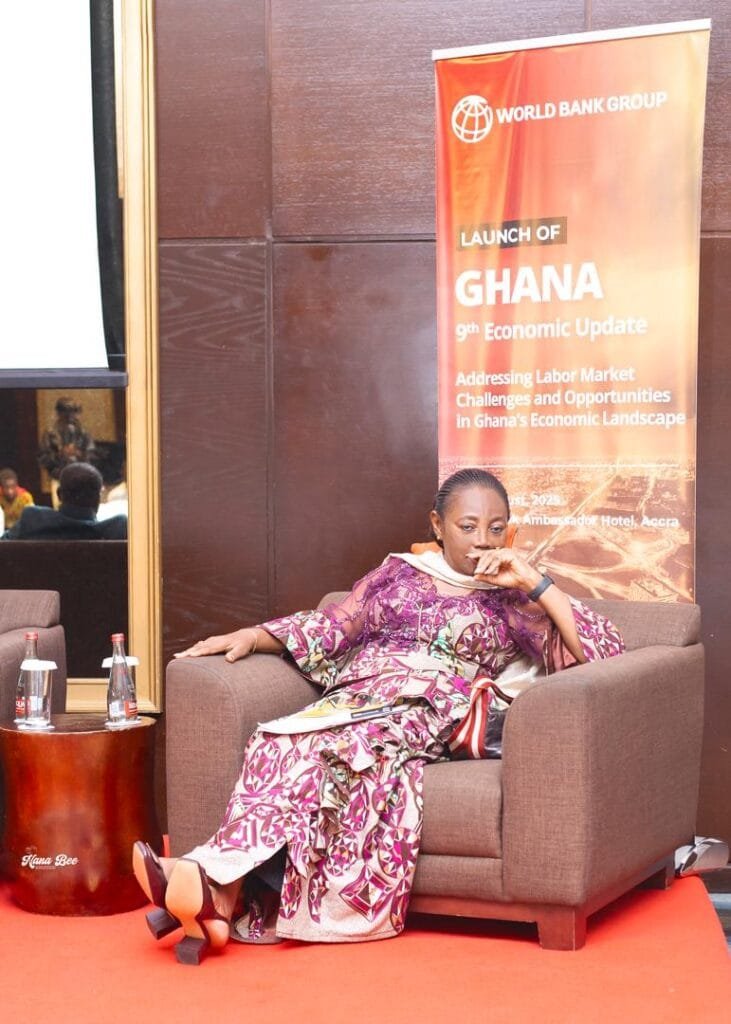
‘WOMEN IN C-SUITE’ FEATURE INTERVIEW With Mrs. Norrender Wordie Debrah, Chief Executive Officer, NSIA Insurance Ghana Ltd
News Team
News Team
INTERVIEW QUESTIONS:
TVA: The global insurance market is forecasted to grow by 2.6% in real terms in 2025-2026, driven by digital transformation, as per Swiss Re’s Sigma May, 2024 Report. However, this projection is lower than the 2024 growth which was 4.6%. From the above, it tells that there are possible causes that may lead to the growth decline. Being an industry leader, what could be the possible cause(s) behind the global insurance growth decline?
NWD: The decline could be associated to a complex interplay of macroeconomic, geopolitical, regulatory, and industry-specific influences. As a leader with the insurance sector, it is important to contextualize this outlook within the broader global environment. Over recent years, we have observed heightened political frictions and conflicts across various key regions, which disrupt international trade flows and undermine economic stability. Global GDP growth projections have moderated, and while this slowdown is somewhat cyclical, it is compounded by persistent inflationary pressures in many markets which diminishes consumers’ disposable income and erodes purchasing power, leading to more conservative spending habits. For the insurance industry specifically, this translates into restrained demand as businesses and individuals prioritize essential expenditures over discretionary coverage. The introduction of Value Added Tax (VAT) on non-life insurance policies in certain countries, such as Ghana, effectively increases the cost of insurance for consumers.This shift does not only challenges insurers to absorb or pass on additional charges but may also reduce affordability and dampen policy uptake.
TVA: In your own view, how do you foresee Ghana’s insurance growth in 2025-2026?
NWD: I am optimistic about the future of Ghana’s insurance market. When I look at the broader landscape, several positive factors give me confidence that this sector is poised for steady and sustained growth in the coming years. First, there is a growing awareness among Ghanaians about the value and importance of insurance, which is foundational to market expansion. Coupled with this is Ghana’s encouraging economic trajectory; as the economy grows and more people and businesses accumulate assets, the natural demand for risk protection tends to rise. Additionally, the rapid penetration of digital technologies is transforming how insurance products are distributed and accessed, making it easier for consumers to engage with insurers and for companies to tailor products to evolving needs. We are already witnessing considerable expansion in non-life insurance segments such as motor, property, and health insurance, supported by a growing middle class that is becoming more conscious of protecting their assets and well-being. Looking ahead to 2026 and beyond, I foresee the Ghanaian insurance market continuing on this upward trajectory. Ghana’s insurance sector can become a vibrant, inclusive, and integral part of the country’s financial services landscape.
TVA: Ghana’s insurance penetration is currently around 1%, significantly below the African average of 3.5% and the 7% average of developed economies. What are the main barriers hindering Ghana’s insurance industry from improving its penetration to date?
NWD: Many Ghanaians harbor concerns about the reliability of insurers, fueled by perceptions that claims are either delayed or denied unfairly. This mistrust is deeply rooted and has been perpetuated over time, making it difficult for consumers to fully embrace insurance products. Furthermore, the relevance of insurance products to the everyday lives of the majority of Ghanaians, particularly those in the informal sector, remains limited. It’s important to recognize that about 80% of the Ghanaian population is engaged in informal economic activities. Unfortunately, many existing insurance offerings are not well-tailored to the needs, income patterns, or risk profiles of this segment. Without developing products that resonate with the realities of informal sector workers, it becomes an uphill task to drive broader adoption. Finally, there is the cultural dimension of how risk and insurance are perceived in Ghana. In many areas, insurance is still viewed with skepticism or considered a low priority relative to other immediate financial needs.
TVA: NSIA Insurance Company Limited started operations in Ghana in the year 2010 as a General Insurer offering non-life insurance products including Motor, Travel, Fire, Marine, General Accident and Engineering. How has the journey been in the last 15 years of operations in Ghana?
NWD: The journey of NSIA in Ghana has been a profound blend of challenges and opportunities, an experience that has truly shaped who we are today. We entered the Ghanaian insurance market back in 2010, a pivotal time when the industry was beginning to evolve significantly, welcoming new players and fresh dynamics. One of the challenges we faced was establishing strong brand recognition and, more importantly, earning the trust of a market that was quite mature and predominantly served by long-established insurers with entrenched reputations.
Building credibility in such a competitive environment required commitment, patience, and consistent demonstration of value to our customers. The country was experiencing growth in its middle class and a surge in vehicle ownership, trends which positively influenced the demand for motor and travel insurance products. This created fertile ground for NSIA to expand our portfolios in these segments. Furthermore, we prioritized innovation in customer service. A key highlight was our commitment to enhancing claims experiences, for example, implementing a policy whereby claims under GHS 2,000 were processed and paid on the same day. Alongside, we expanded our branch network, fostered strong relationships with brokers, and emphasized accessible, responsive customer support.
Our affiliation with the Pan-African NSIA Group played a significant role as well. It allowed us to elevate our brand’s credibility, particularly appealing to multinational clients seeking reliable regional partners. In 2019, the National Insurance Commission (NIC) issued directives on capital recapitalization, requiring all insurers to increase their minimum capital thresholds. This regulatory shift led to a degree of market consolidation. I am proud to say that NSIA not only met but exceeded these requirements, thereby reinforcing our financial stability and positioning us strongly among our peers.
Since 2023, we have entered what I would describe as a modernization and growth phase. The passage of the Insurance Act of 2021 created new regulatory frameworks and growth opportunities, particularly the introduction of compulsory insurance segments like professional indemnity and marine cargo insurance. We embraced these reforms early to broaden our product suite and deepen our market penetration. Looking back over these years, our journey in Ghana epitomizes NSIA’s resilience, adaptability, and long-term vision.
TVA: What defining moments have shaped the company’s path over these periods?
NWD: Reflecting on NSIA Ghana’s remarkable journey since its inception in 2010, one of the defining milestones in our evolution has been the deliberate and strategic expansion of our agency network. This has enabled us to broaden our footprint, bringing our insurance solutions closer to a wider cross-section of the Ghanaian market, thereby increasing accessibility and customer engagement. Another pivotal development has been our early and continued adoption of cutting-edge digital tools, exemplified by the implementation of NSIABiz.
This innovation not only enhances the customer experience but also improves efficiency and responsiveness, which are critical in today’s fast-paced business environment. Our growth trajectory has also been significantly bolstered through strategic partnerships that have enhanced our capability to deliver superior service and extend our market reach effectively. These collaborations, coupled with our Pan-African heritage as part of the NSIA Group, have provided the foundational strength and credibility needed to evolve from a new market entrant into what is now a respected mid-tier insurer in Ghana.
TVA: In the last 15 years of operating in Ghana, what has distinguished NSIA Insurance Ghana from the plethora of insurance companies in Ghana?
NWD: At NSIA Insurance Ghana, our journey over the past decade has been marked by a relentless commitment to our core values and that sets us apart in the competitive insurance landscape. Being part of the larger Pan-African NSIA Group, which operates across twelve countries, provides us with a significant advantage in terms of access to extensive resources and deep cross-border expertise. This presence allows us to infuse global best practices into our operations, while at the same time remaining acutely sensitive to the unique cultural and economic contexts of the Ghanaian market.
We maintain a strong capital adequacy ratio comfortably above regulatory requirements, which reflects our prudent risk management. Also, we have earned an accreditation from Global Credit Rating, often referred to as GCR, which is a highly respected and independent rating agency. This accreditation, with a stable outlook of A-, is a testament to the strength of our financial health, operational stability, and overall risk management practices. Our defining strengths also stem from our firm commitment to regulatory compliance and proven ability to adapt and innovate in the face of adversity.
TVA: You are currently the Chief Executive Officer of NSIA Insurance Ghana, a subsidiary of Groupe NSIA, a Pan-African Financial Service Group which, currently operates in 12 countries in Western and Central Africa. How would you describe yourself beyond the name and the portfolio you occupy?
NWD: As a leader, I view myself primarily as a committed and resilient individual who deeply values collaboration and the collective strength of teamwork. Throughout my career, I have embraced the importance of looking beyond the immediate challenges and focusing on the long-term vision. In the context of the insurance industry, Innovation is at the heart of everything I do. I am passionate about fostering a culture where new ideas can flourish, not just for the sake of change, but to create tangible value for both our customers and our organization.
Equally important to me is people development. I believe that investing in the growth and potential of our teams is fundamental to achieving lasting success. By nurturing talent, encouraging diverse perspectives, and instilling a sense of ownership and purpose, we build a strong foundation that supports continuous improvement. Beyond the formal responsibilities that come with the CEO title, I embrace a servant leadership philosophy. For me, leadership is not about authority, but about service, creating value for our customers, empowering our teams to excel, and stewarding an organization that grows sustainably over time. I am committed to leading with empathy, humility, and accountability, always striving to align our business goals with the broader impact we can make on society.
Norrender Wordie Debrah, Managing Director of NSIA Insurance Ghana
TVA: What defining moments or principles shaped your journey to becoming a high-level C-suite Executive?
NWD: Throughout my career, one of the most significant milestones was breaking through entrenched leadership barriers within an industry traditionally dominated by male counterparts. This experience underscored the imperative of cultivating an environment where diversity and inclusivity are not just values on paper but integral to organizational success. Another defining chapter came during my tenure at NSIA, where I had the responsibility of guiding the organization through some of the most challenging economic conditions in recent memory.
In times of uncertainty, I found that maintaining a calm and focused demeanor was critical not only for making sound strategic decisions but also for inspiring confidence across the teams I led. These moments reinforced my belief that resilience, paired with a clear and forward-looking vision, enables organizations to not just weather storms but emerge stronger and more agile. Moreover, my journey would not have been complete without the invaluable support of strong mentorship networks. Building and nurturing relationships with mentors has been instrumental in providing guidance, insight, and sometimes constructive challenge, all of which have contributed to my growth as a leader.
TVA: Being the current Chief Executive Officer of NSIA Insurance Ghana, how would you describe your journey to this executive position that is seen to be male biased?
NWD; In fact, I stand on the shoulders of a couple of remarkable women who have impressively paved the way before me. Their leadership and achievements have been truly inspiring, and they have demonstrated that women have long been capable of excelling at the highest levels of this organization. Having said that, my own journey to becoming Managing Director has been characterized by perseverance, dedication, and a deeply held conviction that leadership roles should be earned through merit, expertise, and consistent value creation. Entering and advancing within a male-dominated industry, I’ve always believed that the key to overcoming stereotypes and barriers lies in focusing on what truly matters that is, delivering measurable results, fostering innovation, and creating sustainable business value. By maintaining this focus, I was able to demonstrate my capabilities clearly and consistently, which in turn helped challenge preconceived notions and opened doors for more inclusive leadership.
TVA: What is the impact of women in leadership positions?
NWD: Women leaders often lead with a distinct sense of empathy, an ability to connect deeply with people, understand different viewpoints, and cultivate collaboration that drives meaningful and sustainable business outcomes. Historically, women have faced systemic barriers and implicit biases that have hindered their career progression. In my experience, businesses that prioritize these values not only enhance their performance but also create more fulfilling and purpose-driven workplaces where everyone can excel.
TVA: What are the biggest challenges for women in leadership?
NWD: One of the most significant challenges I’ve encountered throughout my career has been navigating and overcoming deeply entrenched biases in the workplace. These biases, often systemic and subtle, can create barriers that are not always immediately visible but have a profound impact on opportunities and perceptions. Addressing these requires a combination of resilience, awareness, and a strategic approach to fostering an inclusive environment where diverse voices are valued.
In addition, balancing multiple gender roles presents its own unique complexities. For many women, especially those in leadership positions, there is often an implicit expectation to seamlessly manage professional responsibilities alongside family and personal commitments. Furthermore, adjusting to the evolving landscape of gender equity means continually advocating for fair treatment while recognizing that progress is a journey, not a destination. Throughout this process, I have often faced heightened scrutiny compared to many of my male peers whether it’s in decision-making, leadership style, or simply the expectations placed upon me. Such scrutiny can be demanding, but it has also reinforced the importance of authenticity, confidence, and unwavering commitment to excellence.
TVA: In your own view, how can this male blueprint be neutralized to establish gender equity in the C-suite?
NWD: From my perspective, neutralizing this blueprint to foster true gender equity requires a multi-dimensional approach that is, one that engages culture, policy, leadership mindset, and systemic reform. First, it’s important to recognize that the male blueprint isn’t just about numbers or representation; it’s a reflection of longstanding norms, behaviors, and expectations that have defined leadership for decades. These include unconscious biases about leadership styles, risk tolerance, communication, and even work-life balance all of which tend to favor traditionally masculine traits or career paths.
To start, organizations must invest in transformational leadership development that encourages self-awareness and inclusive management practices. This isn’t just about offering unconscious bias training; it’s about embedding inclusivity into the leadership ‘DNA’. Creating forums for open dialogue, mentoring programs, and sponsorship initiatives that elevate diverse talent can help disrupt traditional pipelines that favor men. Secondly, tangible policies and structural changes are essential. This includes re-evaluating recruitment, performance metrics, and promotion criteria through a gender-lens to ensure they don’t inadvertently perpetuate inequities. Moreover, diversifying the boards of directors is crucial because boards set the tone and expectations for the C-suite.
TVA: Being a woman in the C-suite often comes with heightened scrutiny and expectations. Leadership at the top comes with pressure. What internal qualities or habits help you stay grounded and navigate the demands of such an executive position?
NWD: There’s an undeniable pressure that comes with occupying such a visible and influential position, and what has helped me stay grounded and effectively manage these demands is a blend of deeply personal qualities and a conscious leadership mindset. Over the years, I’ve learned the importance of embracing setbacks as opportunities to grow rather than as failures. It’s about maintaining confidence in my vision and decisions, even when facing criticism or doubt, and using those moments as fuel to push forward with even greater clarity and determination.
Another critical internal quality is self-awareness. Knowing my strengths and limitations and understanding my triggers allows me to lead authentically. Discipline in maintaining a strong support network is also vital. Lastly, a habit I consciously cultivate every day is focus on purpose. I remind myself why I am here not just what I do, but the impact I want to have. This sense of purpose keeps me aligned with the bigger picture and sustains my motivation through the highs and lows. Together, these enable me to navigate the unique demands of being a woman leader with strength, authenticity, and grace.
TVA: Women in the corporate world, often face an uphill journey, navigating bias while proving their capabilities. You’ve worked your way up in this complex business environment where women are often under looked. What do you think young females should do differently to earn a place in the executive office?
NWD: The world around us is evolving at an unprecedented pace. As a CEO, it’s not enough to rest on past achievements or prior knowledge; one must be curious, adaptable, and always willing to expand their understanding. This commitment to lifelong learning isn’t just about acquiring new skills or information, it’s about developing the mindset to question assumptions, embrace new perspectives, and remain agile in the face of change. By fostering this approach personally and cultivating it within the leadership team, we ensure that the organization remains forward-looking and resilient. Strong relationships with colleagues, industry peers, mentors, and even competitors provide rich sources of insight, support, and opportunity.
Over the years, I’ve invested considerable effort in cultivating meaningful connections that transcend transactional interactions. These relationships create collaboration that drive innovation, open doors to strategic partnerships, and empower talent development. Finally, consistent demonstration of impact is what ultimately differentiates great leaders. Impact, in my view, is not just measured in quarterly results or headline achievements, but in the tangible, positive transformations delivered to customers, employees, and stakeholders over time. It’s about translating vision into execution and ensuring that every initiative contributes to the broader mission and values of the organization.