

On paper, everything looks like progress. Economic indicators are edging upward, inflation projections are beginning to soften, and international observers are cautiously revising their outlook on Nigeria’s medium-term prospects.
To policymakers and analysts working with spreadsheets and quarterly reports, the narrative appears to be shifting from crisis to recovery. But step outside those reports, and the story changes quickly.
In bustling markets, transport parks, and small shops scattered across cities and rural communities, the idea of recovery feels distant. Prices are still climbing, wages remain stuck, and everyday survival has become a constant negotiation between needs and affordability. For millions of people, the so-called recovery is difficult to recognize.
This is where Nigeria’s central economic contradiction lies. The country appears to be recovering in data, but struggling in daily life. It is a recovery that passes macroeconomic tests but fails the people test.
The Illusion of Progress in Economic Indicators
Recent figures suggest that Nigeria’s economy is expanding at a steady pace, with growth projected to improve gradually over the next few years. The financial system shows signs of stability, oil output has regained some consistency, and foreign exchange volatility has reduced compared to earlier periods of sharp instability.
These developments matter. They reflect policy adjustments, structural reforms, and efforts to restore investor confidence. In technical terms, the foundations of macroeconomic stability are being rebuilt.
Yet there is a growing disconnect between this statistical recovery and the lived reality of citizens. The problem is not whether growth exists, but what kind of growth it is and who it actually benefits.
Much of the expansion is concentrated in sectors that are capital intensive and narrowly distributed in terms of employment. This means that while national output increases, job creation does not rise at the same pace. The economy grows in value, but not necessarily in opportunity.
Growth Without Jobs, and Jobs Without Security
One of the defining features of Nigeria’s current economic phase is what economists often refer to as jobless growth.
Sectors such as oil, finance, and digital services continue to perform strongly. They attract investment and contribute significantly to national earnings. However, they do not absorb large portions of the labour force.
Meanwhile, sectors that traditionally employ millions, such as agriculture, manufacturing, and small-scale trade, are struggling under pressure from insecurity, rising costs, and weak infrastructure.
The result is a widening imbalance. The economy expands, but employment does not keep pace. For young people entering the workforce each year, this translates into frustration, underemployment, or prolonged job searches that yield little stability.
In practical terms, growth is happening in places where most people cannot access it.
The Silent Pressure of Rising Prices
If jobless growth limits opportunity, inflation limits survival.
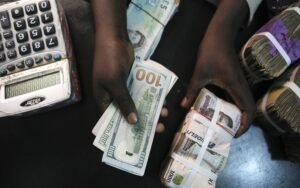
Even as inflation projections suggest gradual moderation in the coming years, the reality of recent price increases continues to shape everyday life. The removal of long-standing subsidies, combined with exchange rate adjustments and higher energy costs, has created a ripple effect across the economy.

Transportation has become more expensive. Food prices have risen sharply. Basic household items now require significantly more income than before. For many families, the change has been abrupt and difficult to absorb.
This is not just an economic adjustment on paper. It is a lived experience that reshapes daily decisions. Households are forced to reduce meal portions, delay healthcare, cut education expenses, or postpone small investments that once helped sustain informal livelihoods.
Inflation, in this context, is not an abstract figure. It is a daily constraint that quietly reshapes dignity and comfort.
When Reform Becomes Pressure Before Relief
Economic reforms are often necessary, especially in systems burdened by inefficiencies and fiscal strain. Nigeria’s recent policy shifts aim to address long-standing distortions and improve long-term sustainability. These include adjustments in fuel pricing mechanisms and efforts to unify exchange rates.
In theory, such reforms should strengthen the economy over time. They are designed to reduce fiscal pressure, improve transparency, and attract investment.
However, the transition period has proven difficult. The immediate impact of these reforms has been felt most sharply by ordinary citizens. Higher transportation costs, increased production expenses, and elevated import prices have combined to push living costs upward.
The challenge lies in timing. While the long-term benefits of reform may be real, they remain distant. The short-term pain, however, is immediate and widespread.
Without strong cushioning mechanisms, many households are left to absorb the shock alone. This creates a situation where policy success in macroeconomic terms does not translate into social relief.
The Missing Link Between Growth and Welfare
A major weakness in the current economic structure is the weak transmission between national growth and household welfare.
Nigeria’s GDP growth is projected to rise from 3.5% in 2024 to 3.9% in 2025 and 4.2% in 2026. At first glance, these figures suggest steady progress. But a closer look at which sectors are driving growth paints a less encouraging picture.
In a well-balanced economy, growth should lead to better incomes, improved services, and expanded opportunities. But in Nigeria’s case, that link appears fragile.
One reason is structural imbalance. The economy relies heavily on sectors that generate revenue but do not distribute income widely. Another reason is productivity constraints in labour-intensive sectors.
Agriculture, for example, remains a major employer, yet it operates under significant pressure. Insecurity in farming regions reduces output, disrupts supply chains, and contributes to rising food prices. Infrastructure gaps make it difficult to transport and store goods efficiently, increasing post-harvest losses and reducing profitability for farmers.
Manufacturing faces its own challenges, including unreliable electricity supply, high operating costs, and limited access to affordable financing. These constraints reduce competitiveness and limit job creation.
As a result, the sectors that could lift large portions of the population remain underdeveloped.
The Poverty Paradox Deepens
Perhaps the most troubling aspect of the current economic situation is the direction of poverty trends.
Despite macroeconomic improvements, poverty levels have risen significantly in recent years. More households are falling below the poverty threshold, and income inequality is becoming more visible.
This creates a paradox. The economy is growing, yet more people are becoming poor.
The consequences of these dynamics are visible in Nigeria’s poverty and income statistics. Recent estimates suggest that poverty has surged, pushing more than 63% of the population below the poverty line, a dramatic increase from roughly 40% prior to the reforms. Meanwhile, wage growth has failed to keep pace with inflation, effectively eroding real incomes.
The explanation lies in distribution. When growth is concentrated in narrow segments of the economy, its benefits do not reach the wider population. Instead, income gains accumulate in limited areas, while the majority experience stagnation or decline in real purchasing power.
For households already living close to the margin, even small increases in living costs can push them into deeper financial distress.
Everyday Life in an Uneven Economy
To understand the economy beyond statistics, one only needs to observe daily routines.
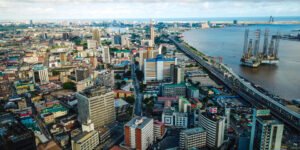
In urban centres, transport fares fluctuate frequently, forcing commuters to adjust budgets constantly. In markets, traders struggle to maintain stable prices as supply costs change unpredictably. In rural areas, farmers face uncertainty from both environmental pressures and security concerns.
For many families, financial planning has become short term. Long-term savings are rare. Investment decisions are delayed. Even basic consumption is carefully rationed.
This is what an uneven recovery looks like. It does not announce itself loudly. Instead, it shows up in small compromises repeated every day.
Signs of Resilience, Not Yet Relief
Despite the challenges, there are still signs that the economy is attempting to stabilise.
Agricultural output has shown early improvement in some areas, which could help ease food inflation if sustained. Foreign investor sentiment has improved slightly compared to previous periods of heightened uncertainty. Policy direction appears more focused on long-term stability.
These are important developments, but they remain fragile. They represent potential rather than guaranteed improvement. For now, they have not yet translated into meaningful relief for the average household.
The Policy Challenge Ahead
Nigeria’s economic challenge is no longer only about growth; it is about inclusion. The central question is not whether the economy is expanding, but whether that expansion is improving lives. That requires a shift in focus from macroeconomic stability alone to inclusive development.
Investment in labour-intensive sectors is critical. Agriculture and manufacturing must be strengthened not only as production bases but as employment engines. Infrastructure gaps must be addressed to reduce costs and improve efficiency for small businesses.
Equally important is the need for social protection systems that can cushion vulnerable households during periods of adjustment. Without these supports, reforms risk deepening inequality even when they succeed in stabilising macroeconomic indicators.
Recovery Must Prove Itself
Nigeria’s current economic story is still being written, but its early chapters reveal a clear tension. The numbers suggest progress, yet the streets tell a different story.
A recovery that cannot be felt by the majority of citizens remains incomplete. Growth that does not translate into jobs, stability that does not reduce hardship, and reforms that increase short-term suffering without visible relief all raise a fundamental question about what economic success truly means.
Until the benefits of growth reach ordinary people in tangible ways, Nigeria’s recovery will continue to struggle on the most important test of all, the people test.