

When news of major offshore oil discoveries broke in 2007, Ghanaians dared to dream of transformation. The Jubilee Field, heralded as a game-changer, sparked visions of economic prosperity on a scale that could rival or even exceed the contributions of cocoa and gold.
Some optimistic projections and public discourse floated figures suggesting potential values reaching into the hundreds of billions of dollars over several decades, framing oil as the ticket to middle-income status and beyond.
Yet more than 15 years after first oil flowed in 2010, the question persists: has Ghana unlocked a $200 billion bonanza, or is this grand vision an illusion shaped by hype, geological limits, governance hurdles, and global energy shifts?
The Discovery That Ignited Hope
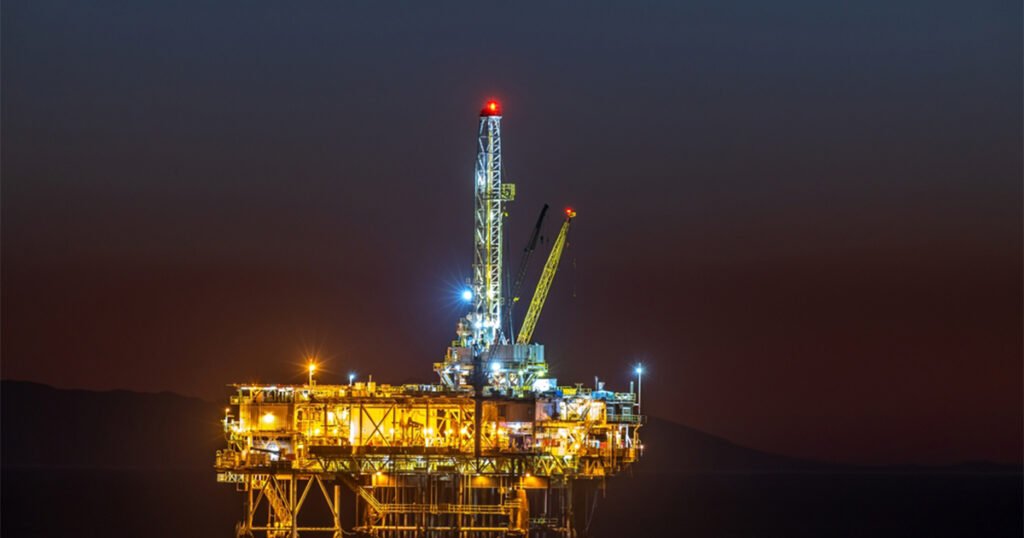
In June 2007, Kosmos Energy and its partners struck commercial quantities of oil in the Deepwater Tano and West Cape Three Points blocks. The Jubilee Field, named to mark Ghana’s 50th independence anniversary, was estimated to hold up to one billion barrels or more of high-quality light sweet crude. Tullow Oil, as operator, fast-tracked development. Production began in December 2010 from the FPSO Kwame Nkrumah, an impressive engineering feat located in deep waters approximately 60 kilometres offshore.
Subsequent developments followed. The Tweneboa-Enyenra-Ntomme (TEN) cluster commenced production in 2016, while the Sankofa-Gye Nyame (OCTP) project, developed by Eni, brought gas online to support electricity generation and reduce flaring. By the early 2020s, Ghana had three major producing areas. Proven reserves stand at approximately 1.1 billion barrels of oil and 2.1 trillion cubic feet of gas, with additional potential through future exploration.
Public excitement was palpable. Politicians promised infrastructure booms, job creation, and reduced dependence on foreign aid. Some analyses and promotional narratives extrapolated long-term values, factoring in higher production scenarios, gas monetisation, and multiplier effects, occasionally referencing cumulative economic potential worth hundreds of billions of dollars.
Ghana’s entry into the oil-producing club was contrasted favourably with that of neighbours plagued by conflict or mismanagement, positioning the country as a model for transparent resource governance in Africa.
Production Peaks and Declining Realities
Initial optimism translated into tangible output. Jubilee reached production peaks exceeding 100,000 barrels per day (bpd) during its early years. Combined with TEN and Sankofa, national production hovered between 150,000 and 200,000 bpd during stronger periods. However, the realities of field maturity emerged quickly. Natural decline rates in offshore fields can be steep without sustained investment and intervention.
By the mid-2020s, production faced significant headwinds. Jubilee output declined to approximately 75,000–90,000 bpd amid technical challenges such as sand production and well-performance issues. Overall national production figures reflected a maturing basin. The Public Interest and Accountability Committee (PIAC) identified 2019 as a peak production year, with subsequent declines becoming evident.
New projects such as Pecan aim to add capacity, targeting tens of thousands of barrels per day, but timelines have slipped and costs have increased. Cumulative production since 2010 has exceeded 600 million barrels. Yet forecasts for sustained high output remain cautious. Long-term projections suggest potential peaks of approximately 200,000–236,000 bpd under optimistic development scenarios, far below the levels achieved by major producers such as Nigeria and Angola.
Without major new discoveries and successful appraisal programmes, Ghana’s fields may struggle to sustain the production volumes required for transformative wealth generation.
Exploration continues across basins such as the Voltaian, with GNPC Explorco assuming a more active role. Discoveries in areas such as Cape Three Points Block 4 show promise, but converting resources in place into proven and producing reserves requires billions of dollars in investment amid a volatile global climate for fossil fuels.
Revenue Flows: Billions Collected, Modest Impact
From 2011 through the early 2020s, Ghana earned an estimated US$8–12 billion in total petroleum revenues, depending on the reporting period and the inclusion of taxes, royalties, and other receipts. Carried and participating interests accounted for the largest share, followed by royalties and corporate taxes. PIAC reports highlight years such as 2022 as particularly strong performers, although volatility remains evident, with sharp declines in 2025 linked to lower production levels and weaker prices.
The Petroleum Revenue Management Act (PRMA) of 2011 established a framework for transparency and accountability. Revenues flow into the Petroleum Holding Fund and are subsequently allocated to the Annual Budget Funding Amount (ABFA), the Ghana Stabilisation Fund, and the Ghana Heritage Fund.
These funds have supported roads, power projects, agriculture, and education. However, critics argue that allocations often become absorbed into broader budgetary expenditures, limiting their transformative impact. Discretionary spending powers and transfers to consolidated funds have also raised accountability concerns.

While Ghana has largely avoided the worst excesses witnessed in some resource-rich nations, petroleum revenues have not fundamentally transformed the country’s fiscal landscape. Oil income represents a meaningful but not dominant share of government revenue and contributes only modestly to overall GDP.
At prevailing production levels and oil prices, annual revenues fluctuate between several hundred million dollars and more than a billion dollars during particularly favourable years. Reaching cumulative revenues of US$200 billion would require sustained high production, elevated oil prices, successful gas commercialisation, and decades of uninterrupted operations—assumptions that remain highly uncertain given geological realities and market dynamics.
Governance Strengths and Persistent Risks
Ghana has earned praise for its institutional response to petroleum development. The PRMA, compliance with the Extractive Industries Transparency Initiative (EITI), and strong civil society oversight have distinguished the country within Africa’s extractive sector. Parliament ratifies petroleum agreements, while local-content policies seek to build domestic expertise and participation. The Ghana National Petroleum Corporation (GNPC) has also expanded its ambitions, pursuing operatorship in selected blocks.
Nevertheless, challenges persist. Contract transparency, cost-recovery disputes, and the enforcement of local-content requirements remain imperfect. Environmental and social oversight has also faced criticism.
Fishermen in the Western Region have reported restricted access zones, declining fish catches, and pollution incidents, including oil slicks and tar-ball contamination. Compensation mechanisms have often proven inadequate, exacerbating livelihood challenges for coastal communities that depend heavily on fishing and farming.
Broader governance concerns include corruption risks and the potential for elite capture. While Ghana has not experienced civil conflict or outright resource plunder, the oil era has coincided with fiscal pressures, rising debt levels, and uneven development outcomes.
The resource curse debate remains relevant. Elements of Dutch disease can be observed through agriculture’s declining share of GDP and challenges faced by non-oil exports during periods when the cedi strengthens. Labour and capital may shift toward oil-related activities, potentially crowding out investment in other productive sectors.
Environmental and Social Trade-Offs
Offshore oil production carries environmental risks. Seismic surveys, drilling activities, and offshore operations can affect marine ecosystems. Gas flaring, although reduced through projects such as Sankofa, has left a historical environmental footprint.
Climate vulnerability adds another layer of complexity. Ghana faces rising sea levels and changing rainfall patterns that threaten agriculture, which remains the backbone of the economy and a source of livelihood for millions.
Socially, expectations often exceeded reality. Young people in oil-producing regions anticipated significant employment opportunities, yet many positions were filled by skilled expatriates or generated only limited local employment. Inequality remains a concern, with urban centres and political elites often perceived as capturing a disproportionate share of benefits.
Gender dimensions are equally important. Women involved in fishing, fish processing, and related economic activities often bear indirect economic costs resulting from disruptions to coastal livelihoods.
Positive outcomes should also be acknowledged. Associated gas production has strengthened electricity generation, reduced power shortages, and lowered dependence on imported fuels. Refining ambitions, including investments at facilities such as Sentuo, seek to capture greater value domestically rather than exporting crude oil and importing refined petroleum products.
Global Context and Energy Transition Pressures
Timing has complicated Ghana’s oil story. The country’s major discoveries coincided with a period when the global economy was beginning to accelerate its transition toward lower-carbon energy systems. Investors increasingly scrutinise emissions profiles, while financing for new upstream oil projects has become more constrained.
Major international oil companies are divesting from certain assets or adopting more cautious investment strategies, leaving independent operators and national oil companies to fill emerging gaps. Ghana must therefore compete with more prolific hydrocarbon basins and increasingly attractive renewable energy opportunities for investment capital.
Oil prices remain highly volatile. Geopolitical disruptions can temporarily boost revenues, but long-term uncertainty surrounding global demand continues to cloud future prospects. Natural gas offers a transitional opportunity through domestic power generation and potential LNG exports, although infrastructure limitations remain significant.
New opportunities, including deeper-water exploration and the Pecan development, present upside potential. Aker Energy and its partners have proposed phased investments that could add substantial production volumes. Government efforts to increase participation in projects, including Jubilee extensions, are intended to capture greater value for the state. Success, however, will depend on execution, technological capability, and strong partnerships.
Pathways Forward: Diversification or Dependence?
To convert potential into sustainable prosperity, Ghana must address several fundamental challenges. Enhanced exploration, supported by improved seismic data and stronger GNPC capacity, can help de-risk prospective basins. Aggressive local-content implementation, skills development, and investments in supporting infrastructure such as pipelines and refineries can strengthen linkages across the economy.
Strict adherence to the PRMA and stronger sovereign wealth management practices will be essential to safeguard revenues against market volatility.
Economic diversification remains non-negotiable. Investing oil revenues in agricultural modernisation, manufacturing, tourism, and the digital economy can reduce dependence on hydrocarbons. Greater investments in education and healthcare will strengthen human capital and prepare the country for a post-oil future.
Targeted regional development programmes in communities across the Western Region can also help address longstanding grievances and ensure broader benefit-sharing.
Regional cooperation through frameworks such as ECOWAS and the AfCFTA could strengthen value chains and create new opportunities for industrial growth. Gas monetisation strategies supporting regional electricity exports also offer promising synergies.
Balancing Optimism with Pragmatism
Ghana’s oil sector has delivered billions of dollars in revenue, strengthened energy security, and provided valuable lessons in resource governance. It has diversified exports and supported economic growth during challenging periods. Yet proven reserves and production trajectories suggest that it is not the instant US$200 billion saviour once imagined.
The cumulative value generated over the next 20 to 30 years will depend heavily on oil prices, new discoveries, cost management, and prudent resource allocation. Under current trajectories, the sector is likely to deliver meaningful but incremental gains rather than revolutionary wealth.
The dream remains alive through ongoing exploration and policy reforms, but expectations of effortless riches have largely faded. Reality demands disciplined management, transparency, environmental stewardship, and bold economic diversification.
Ghana’s democratic institutions and active civil society provide a foundation that many resource-rich peers lack. Ultimately, success will be measured not by the number of barrels extracted but by tangible improvements in livelihoods, economic resilience, and sustainable development long after production declines.
Whether Ghana’s oil story becomes a genuine success narrative or a cautionary tale of missed opportunity will depend on the decisions made today. With pragmatic strategies and effective governance, the country can use its hydrocarbon window to build a more prosperous and diversified future.
The US$200 billion vision may be more aspirational than realistic, but significant and achievable gains remain within reach. The coming decade will reveal whether Ghana successfully shapes its own oil narrative or allows geology and global market forces to dictate a far more modest outcome.