


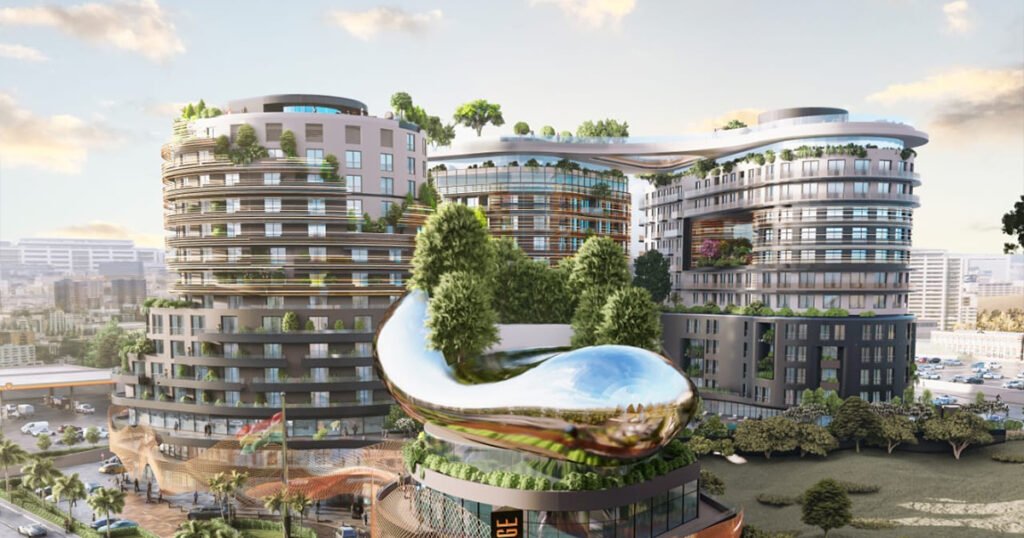
Ghana stands at the cusp of a transformative moment in its real estate sector. With a confirmed housing deficit exceeding 1.8 million units, the country faces both a profound challenge and one of the most compelling investment opport unities in West Africa today.
This gap between supply and demand, driven by rapid urbanisation and a growing population, creates fertile ground for developers, local buyers, and diaspora investors alike.
As macroeconomic conditions stabilise in 2026, the stage is set for what many experts describe as the next real estate explosion.
Understanding the Scale of the Housing Crisis
The 1.8 million-unit deficit represents one of Ghana’s most persistent developmental challenges. The Minister for Works, Housing and Water Resources, Kenneth Gilbert Adjei, publicly confirmed this figure in January 2026, highlighting rapid urbanisation as the primary driver. Projections indicate that by 2050, as much as 72 percent of Ghana’s population could be living in urban areas, intensifying pressure on housing stock.
This deficit has narrowed from approximately 2.8 million units in 2010, thanks to increased private-sector activity. Yet the annual requirement of roughly 100,000 new housing units continues to far exceed current delivery rates, which hover at about one-third of that target. The mismatch is not merely quantitative but also qualitative. While luxury properties in prime areas of Accra often remain vacant, acute shortages persist within the affordable and middle-market segments where most Ghanaians seek housing.
Urbanisation trends tell a compelling story. Greater Accra, Ashanti, and several other regions continue to experience population surges that traditional housing delivery models struggle to accommodate. Young professionals, growing families, and rural-to-urban migrants are flocking to cities such as Accra, Kumasi, and Tamale in search of economic opportunities. This demographic shift is creating sustained demand that savvy investors can capitalise on.
The paradox of vacant luxury units existing alongside widespread housing shortages underscores a significant market failure. Approximately 1.3 million dwellings remain unoccupied, largely because they target high-end buyers beyond the reach of the average Ghanaian household. This reality shifts attention toward middle-market gated communities and affordable housing developments as the true engines of future growth.
Macroeconomic Tailwinds Supporting Recovery
Ghana’s real estate prospects in 2026 are supported by a remarkable economic turnaround. After navigating inflation that peaked at 54 percent in 2022 and significant cedi depreciation, the country has achieved notable macroeconomic stabilisation. Inflation declined to a 25-year low of approximately 5.4 percent by late 2025, while the Bank of Ghana reduced its policy rate to around 14 percent by March 2026.
The cedi appreciated by 21 percent in 2025, emerging as one of Africa’s strongest-performing currencies during the year. Gross domestic product growth reached 6.3 percent in 2024, with projections ranging between 4.8 and 5.8 percent through 2026. These improvements create a more predictable environment for long-term investment in property.
Lower borrowing costs are gradually improving affordability, although mortgage penetration remains extremely low at less than 0.5 percent of GDP. Most housing transactions continue to occur through cash purchases or incremental self-building. Nevertheless, the improved financing environment opens opportunities for more structured developments and attracts greater institutional interest.
Construction costs, while still elevated compared to previous years, are showing signs of moderation. Combined with government incentives for affordable housing projects, these factors support attractive returns for developers targeting the right market segments. Investors who align with these macroeconomic realities are well positioned to benefit from both rental income and capital appreciation.
The Diaspora Powerhouse Driving Demand
Remittances from Ghanaians abroad reached a record US$6.65 billion in 2024, approximately four times the level of foreign direct investment. A significant portion of these funds flows directly into real estate, reshaping market dynamics.
Diaspora buyers enjoy distinct advantages. Earning in stronger currencies such as the US dollar, British pound, or euro enables them to acquire properties at favourable effective exchange rates. Specialised mortgage products denominated in foreign currencies, offered by institutions such as Republic Bank and others, further facilitate purchases while reducing exposure to cedi volatility.
Virtual purchasing tools and proptech platforms now enable seamless property transactions from overseas. Diaspora investors no longer require a physical presence for every stage of the process, thanks to high-quality virtual tours, digital documentation, and reliable local partners. Initiatives such as the Beyond the Return programme and international property expos continue to strengthen these connections.
Popular destinations for diaspora capital include gated estates in Airport Residential Area, Cantonments, and East Legon in Accra. Emerging opportunities in Kumasi are also attracting attention due to lower entry prices and infrastructure improvements, including airport expansion. Many diaspora investors purchase properties for retirement, family use, or rental income targeted at expatriates and professionals.

This steady inflow of capital provides a price floor in prime locations and injects liquidity that benefits the broader market. As more overseas Ghanaians look homeward for stable investment opportunities, their participation continues to accelerate development in both established and secondary cities.
Segment-Specific Opportunities and Performance
Ghana’s real estate market in 2026 displays clear segmentation, with varying levels of performance across property types and locations. Middle-market gated townhouses have emerged as standout performers, offering strong capital growth potential of between 10 and 15 percent annually in cedi terms. These properties combine security, amenities, and accessibility, making them highly attractive to young professionals and families.
Executive apartments within gated communities continue to deliver attractive rental yields of between 8 and 12 percent. Short-let options in high-demand locations can push returns even higher. Studio and one-bedroom apartments frequently generate yields ranging from 9 to 13 percent, particularly when located near business districts or transport corridors suitable for Airbnb-style accommodation.
Luxury villas priced above US$500,000 face softer demand and longer sales cycles due to oversupply. While these properties continue to appeal to specific high-net-worth buyers, broader market momentum favours more accessible price points between US$40,000 and US$150,000, where the housing deficit is most pronounced.
Secondary cities present compelling value propositions. Kumasi offers entry prices that are often three to six times lower than those in prime areas of Accra, while benefiting from infrastructure projects and growing commercial activity. Takoradi and other regional centres are similarly attracting investor attention for land banking and phased residential developments. Investors who diversify beyond the capital can benefit from lower competition and stronger long-term growth potential.
Rental yields across well-selected assets typically range from 6 to 13 percent gross, depending on location, asset quality, and management standards. These figures compare favourably with those of many international markets, particularly when combined with expected capital appreciation in high-demand corridors.
Government Initiatives and the Affordable Housing Push
Government authorities recognise the urgency of addressing the housing deficit. Programmes such as My Home, My Peace and various district housing initiatives target affordable housing units, with prices starting at approximately US$13,000 for studio apartments. These efforts seek to bridge the affordability gap for middle- and lower-income households.
The Tema Development Company is advancing significant projects, including plans to deliver 800 two-bedroom housing units in Kpone by early 2026 as part of broader affordable housing initiatives. Partnerships involving banks and real estate investment trusts are facilitating rent-to-own schemes, particularly for public-sector workers such as teachers and nurses.
Broader ambitions include the delivery of thousands of additional units through public-private partnerships. Although current delivery volumes remain modest relative to overall demand, these projects demonstrate policy commitment and help de-risk certain opportunities for private-sector investors.
Zoning reforms and infrastructure investments, including road expansions and improved market connectivity, further support housing delivery across peri-urban and secondary growth areas. Investors who align their projects with these initiatives stand to benefit from favourable policy support and improved local amenities.
Challenges That Demand Careful Navigation
Despite the optimism, significant structural challenges remain. Land title disputes and documentation irregularities can complicate transactions and delay project implementation. Thorough due diligence remains essential, and professional legal support is strongly recommended.
Limited mortgage access continues to constrain the pool of local buyers, reinforcing the dominance of cash-based transactions. Although construction material costs are easing, they still pose challenges to achieving affordable pricing targets. Regulatory efforts aimed at professionalising the sector, including crackdowns on unlicensed agents, are helping to reduce fraud but require adaptation from market participants.
Liquidity varies considerably across market segments. Prime properties with clear title documentation generally move more quickly than assets in less desirable locations. Investors who overpay in saturated luxury markets risk generating subdued returns. Successful investors prioritise location, title security, infrastructure access, and alignment with genuine housing demand.
Success Stories and Emerging Trends
Real-world examples continue to demonstrate the sector’s potential. Gated communities along the East Legon and Spintex corridors attract consistent demand from professionals and expatriates. Developers incorporating sustainable features and smart-home technologies often command premium pricing and achieve faster occupancy rates.
In Kumasi, airport-linked developments are benefiting from enhanced connectivity and expanding commercial activity. Smaller-scale projects in suburban Accra locations such as Adenta and Pokuase are delivering steady appreciation as infrastructure development catches up with residential expansion.
Proptech adoption is accelerating, with digital platforms streamlining property listings, virtual viewings, and transactions. This modernisation broadens participation in the market, particularly among diaspora and first-time investors.
Sustainability is also gaining traction. Climate-resilient designs and green-building practices are increasingly appealing to forward-thinking buyers and aligning local developments with international standards.
Strategic Outlook for 2026 and Beyond
The convergence of macroeconomic stability, demographic pressure, diaspora capital, and supportive government policies points toward robust growth in Ghana’s real estate sector. Middle-market and affordable housing segments offer the most compelling risk-adjusted opportunities, while strategic land acquisitions in growth corridors provide significant long-term upside.
Forecasts suggest nominal property price appreciation of between 5 and 10 percent in healthy market segments, with stronger-performing assets potentially exceeding that range. Rental demand is expected to remain resilient given the ongoing supply shortage, supporting reliable income streams.
Investors should focus on comprehensive due diligence, diversification across locations and property categories, and engagement with reputable partners. Those who act decisively during the current favourable window stand to benefit substantially as the market continues to mature.
Why Ghana Represents Africa’s Next Real Estate Frontier
The 1.8 million-unit housing deficit is more than a statistic. It represents untapped potential and the promise of transformative returns for those who understand the nuances of the market. Ghana combines political stability, economic recovery, youthful demographics, and strong cultural ties that resonate with global investors, particularly within the diaspora.
As urbanisation accelerates and infrastructure improves, well-positioned real estate assets are likely to appreciate in both monetary and social value. The anticipated real estate boom may not occur overnight, but the underlying fundamentals are firmly in place.
For local families seeking homes, developers building communities, and investors pursuing attractive yields, 2026 represents a compelling entry point. The housing deficit, once viewed solely as a national challenge, is increasingly revealing itself as a catalyst for Ghana’s real estate renaissance.
Those who engage thoughtfully today will not only benefit from the opportunities ahead but will also help shape the vibrant and inclusive housing market of tomorrow.