


By any measure, Kenya stands at a defining economic moment. The language of stability has returned to official briefings. Inflation has moderated into the Central Bank’s target band. Growth projections remain cautiously positive. The currency has shown signs of resilience. On the surface, the economy appears to be navigating turbulence with discipline.
Yet beneath these reassuring indicators lies a tightening fiscal reality that could reshape the future of public services. Kenya’s challenge is no longer only about growth rates or inflation numbers. It is about the state’s shrinking room to manoeuvre. It is about the rising share of public revenue devoted to debt servicing. It is about the uneasy balance between taxation and economic expansion. Most of all, it is about what these pressures mean for classrooms, clinics, roads, and jobs.
The stakes could not be higher for a country where more than seventy percent of the population is under 35.
Debt Burden No Longer Abstract
According to recent data from the Kenya National Treasury and assessments by the International Monetary Fund, Kenya’s public debt now hovers near 69 percent of GDP. That figure places the country in a high risk category for debt distress. Numbers of this magnitude are often discussed in policy circles with technical detachment. On the ground, however, they translate into very real trade-offs.
Debt in itself is not inherently destructive. Nations borrow to finance infrastructure, energy projects, transport corridors, and social investment. Kenya has done precisely that over the past decade. Highways have expanded. Ports have been upgraded. Energy generation capacity has improved. These investments carry the potential to unlock productivity and regional competitiveness.
The problem arises when the cost of servicing debt begins to consume the very revenues that would otherwise finance development. Interest payments are now absorbing a substantial portion of ordinary government revenue. Economists describe this dynamic as crowding out. In simpler terms, money that could build hospitals or hire teachers is redirected to meet obligations to domestic and external creditors.
In Nairobi’s business districts and university lecture halls, this concern is increasingly voiced in sober tones rather than partisan rhetoric. Scholars at the University of Nairobi point to a troubling ratio. When nearly half of ordinary revenue is directed toward servicing debt, fiscal flexibility narrows sharply. Over time, the state’s capacity to respond to new challenges weakens.
Taxation as a Double-Edged Sword
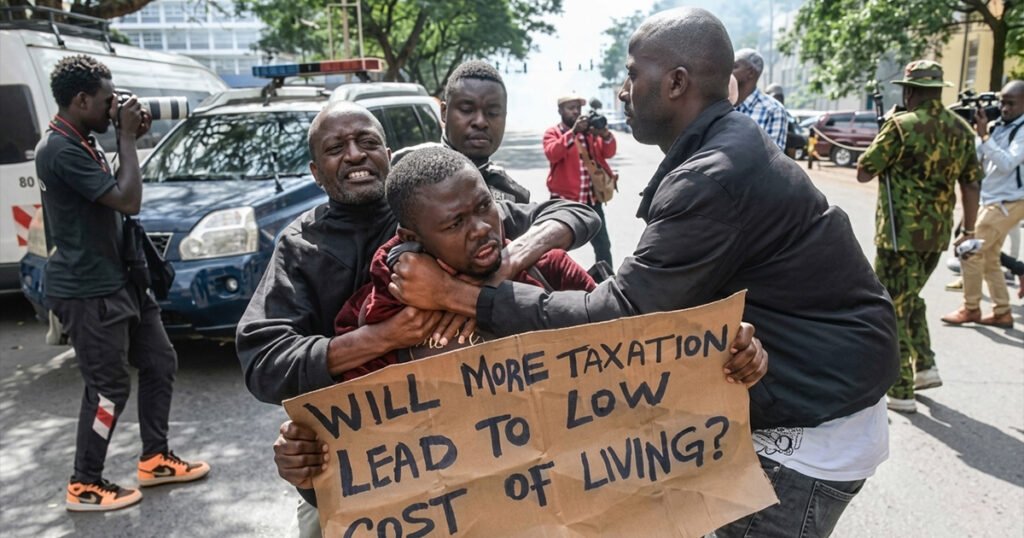
To contain widening deficits and maintain commitments under IMF supported programmes, the administration has implemented successive Finance Acts that introduced aggressive tax measures. Value Added Tax adjustments on fuel and essential goods, expanded digital taxation, housing levies, and changes to Pay As You Earn have significantly increased the tax burden.
The intention behind these policies is fiscal consolidation. Government officials argue that improved revenue mobilisation is essential to restore credibility and stabilise the macroeconomic framework. There is logic to this argument. Without sufficient revenue, deficits balloon and borrowing accelerates.
Yet taxation during periods of economic strain carries risks. While headline inflation has moderated to between three and five percent, households continue to feel the pinch of elevated living costs relative to wage growth. For many families, relief at the petrol pump has not translated into meaningful increases in disposable income.
The World Bank in its Kenya Economic Update highlights a structural concern. Fiscal consolidation that relies heavily on taxation without a parallel expansion in productive sectors risks dampening private sector investment and consumer demand. For small and medium sized enterprises, which account for the majority of employment, higher compliance costs reduce margins and constrain expansion plans.
In markets from Kisumu to Mombasa, traders describe a familiar dilemma. Operating costs have risen. Energy bills remain high. Borrowing costs have been elevated due to tight monetary conditions. When margins shrink, hiring slows. When hiring slows, income growth stalls. When income growth stalls, tax revenues struggle to expand organically.
This cycle poses a deeper risk. Higher taxes suppress growth. Slower growth limits revenue expansion. Debt obligations remain fixed. The fiscal arithmetic becomes unforgiving.
Youth Employment and the Demographic Question
Official statistics from the Kenya National Bureau of Statistics indicate that unemployment has remained relatively stable at around five to six percent. On paper, this appears manageable. Yet these aggregate figures mask a more complex reality.
Youth unemployment and underemployment remain widespread. Much of Kenya’s job creation occurs in the informal sector, where productivity and income security are limited. Formal sector employment growth has been sluggish, particularly in manufacturing and high value services.
For a country with a youthful demographic profile, this presents both an opportunity and a vulnerability. A large working age population can be a powerful engine of growth if adequately employed. Without sufficient job creation, however, demographic advantage can morph into social strain.
Fiscal stability and employment are directly linked. Sustained deficits often require heavy domestic borrowing, which elevates interest rates. High interest rates crowd out private investment, particularly for small businesses seeking expansion capital. When private sector dynamism weakens, job creation slows.
In this context, public goods such as education and vocational training become even more critical. They equip young people with skills aligned to evolving labour markets. Yet these very sectors depend on sustained public investment. If debt servicing absorbs an increasing share of revenue, education budgets risk stagnation at a time when digital transformation demands more resources, not fewer.
Infrastructure and the Question of Returns
Kenya’s infrastructure drive has been one of the most visible aspects of its development strategy. Roads, rail, ports, and energy facilities have reshaped the economic landscape. These investments carry long term potential to enhance trade integration within the East African region.
The IMF has repeatedly emphasised that debt sustainability depends not only on the level of borrowing but on the returns generated by borrowed funds. If infrastructure projects yield productivity gains that stimulate growth above six percent annually, the debt to GDP ratio can stabilise and eventually decline.
However, if future borrowing is primarily directed toward plugging budget gaps rather than financing high return projects, infrastructure momentum may stall. Maintenance costs alone require fiscal commitment. Without adequate funding, assets deteriorate and anticipated multiplier effects diminish.
Climate change introduces another layer of complexity. Droughts and floods have become more frequent and severe. Agricultural disruptions threaten rural livelihoods and food security. Adaptation measures demand investment in irrigation, resilient crop varieties, and disaster response systems. These are not optional expenditures. They are necessary safeguards.
Yet fiscal rigidity limits the state’s capacity to respond swiftly. When debt obligations are fixed and revenue growth is constrained, flexibility evaporates.
Public Services at a Crossroads
Healthcare expansion, including universal health coverage initiatives, requires predictable funding streams. Education reform, particularly digital infrastructure and teacher recruitment, depends on stable budget allocations. Security modernisation and regional peacekeeping commitments draw from the same fiscal pool.
In Kenya, as in many emerging economies, the quality of public services shapes citizen trust in institutions. When clinics lack equipment, when classrooms are overcrowded, when roads deteriorate, public confidence erodes. The fiscal squeeze therefore carries not only economic consequences but political ones.
The period leading up to the 2027 general election introduces additional pressures. Political competition often intensifies spending promises. Campaign rhetoric can amplify expectations even as fiscal constraints tighten. The challenge for policymakers is to balance immediate political considerations with long term sustainability.
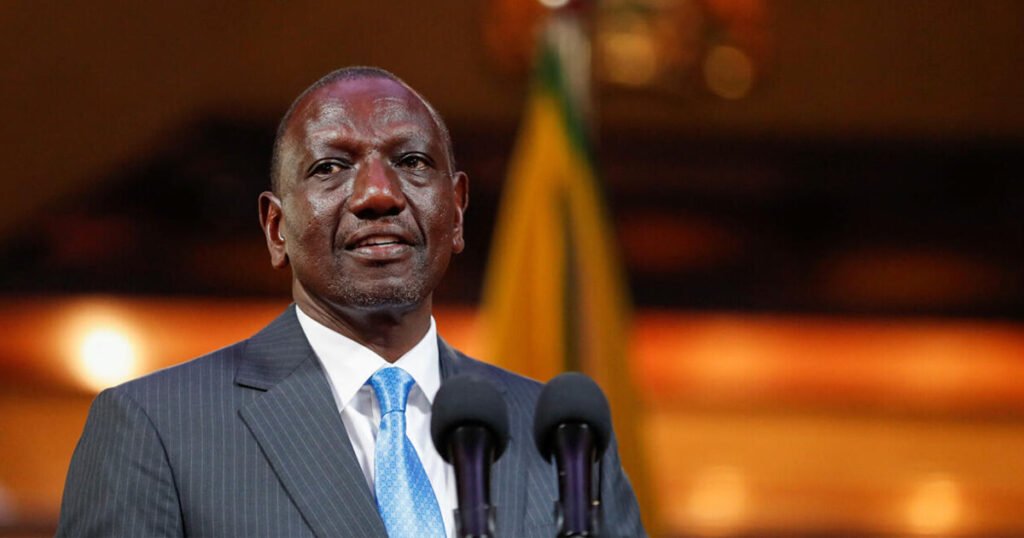
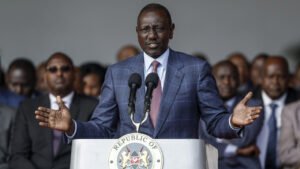
President William Ruto inherited a complex fiscal position shaped by global shocks, pandemic recovery, and previous borrowing cycles. Stabilisation efforts have yielded some progress in moderating inflation and maintaining currency stability. These achievements deserve acknowledgement.
However, stabilisation alone cannot secure prosperity. The central question is whether Kenya can transition from debt dependent financing toward growth driven revenue expansion.
The Path Toward Sustainable Growth
Several structural reforms emerge as essential.
First, domestic revenue administration must improve without disproportionately burdening small enterprises. Enhancing compliance through digital systems, reducing leakages, and broadening the tax base organically can generate revenue without stifling entrepreneurship.
Second, public investment must prioritise high return projects. Manufacturing, agro processing, and digital innovation hold significant potential. By supporting job rich sectors, the state can stimulate employment, expand incomes, and ultimately widen the tax base.
Third, transparency in debt management is crucial. Clear reporting on borrowing terms, repayment schedules, and project outcomes builds public trust and strengthens investor confidence. Transparency also facilitates informed debate about fiscal choices.
Fourth, export competitiveness must improve. Expanding foreign exchange earnings reduces vulnerability to external shocks and supports currency stability. Leveraging regional trade agreements and strategic infrastructure can unlock new markets.
Underlying all these reforms is the principle of predictability. Businesses invest when policy environments are stable. Entrepreneurs hire when regulatory frameworks are consistent. Growth flourishes when confidence is sustained.
A Defining Chapter
Kenya’s fiscal trajectory over the next three years will shape the nation’s development path for a generation. Borrowing can finance opportunity when aligned with productivity. Taxation can stabilise finances when balanced with growth incentives. But misalignment carries consequences.
The warning signs are visible. High debt levels, constrained fiscal space, and persistent employment challenges create vulnerabilities that cannot be ignored. For Kenya’s Gen Z, who will inherit the outcomes of today’s policy decisions, the debate is not abstract. It is personal.
The coming years represent more than an economic adjustment phase. They constitute a defining chapter in the sustainability of Kenya’s public sector and the wellbeing of its citizens. Disciplined fiscal management combined with inclusive expansion is not a technocratic aspiration, it is a national imperative.
If Kenya succeeds in aligning growth with sustainability, it can harness its entrepreneurial spirit, regional trade links, and strategic infrastructure to secure long term prosperity. If it fails to recalibrate, the fiscal squeeze will intensify, and the competition between debt servicing and public goods will grow sharper.
Economic policy is ultimately about choices. The balance Kenya strikes today will determine whether classrooms are built, clinics are staffed, and young graduates find meaningful work tomorrow.