

Stock markets around the globe have delivered remarkable gains in recent years. Investors have celebrated new highs driven by technological innovation and economic resilience. Yet beneath the surface, warning signs are flashing brighter than ever.
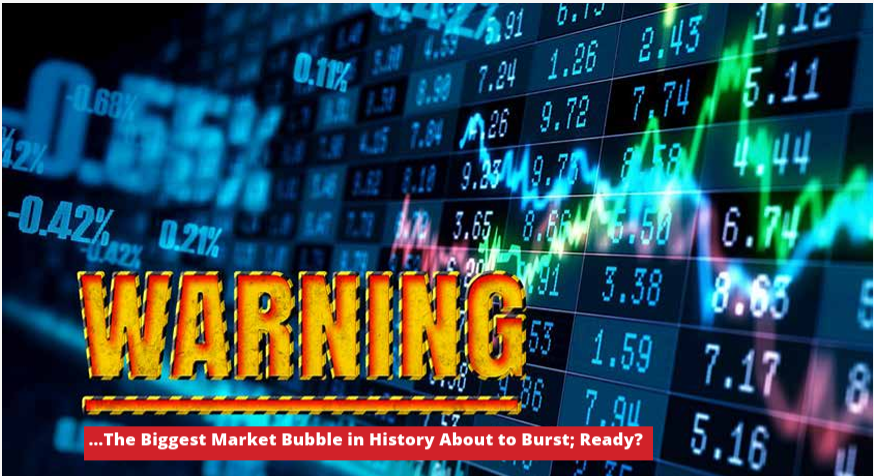
Many experts now believe the current market environment represents one of the most extreme valuations in modern financial history. With key indicators approaching levels last seen before major collapses, the question on the minds of millions is simple: is the biggest market bubble in history about to burst?
While no one can predict the exact timing with certainty, ignoring these signals could prove costly. Preparation today may separate those who weather the storm from those who suffer significant losses.
Understanding Market Bubbles
A market bubble occurs when asset prices rise far beyond their underlying fundamental value. This disconnect often stems from a combination of easy money, widespread optimism, and herd behavior. Investors pile into popular sectors, pushing valuations higher regardless of earnings or cash flow realities.
History shows bubbles follow a predictable pattern. They begin with a genuine innovation or economic shift that sparks legitimate excitement. Then speculation takes over as more participants join the frenzy. Prices detach from fundamentals. Eventually, reality sets in, often triggered by rising interest rates, disappointing results, or external shocks. The result is a sharp correction or crash that erases years of gains.
Classic examples include the Dutch Tulip Mania of the 1630s, where bulb prices soared to absurd levels before collapsing. In more modern times, the dot-com bubble of the late 1990s saw technology stocks trade at hundreds of times earnings. Many companies with no profits commanded massive market capitalizations. When the bubble burst in 2000, the Nasdaq lost over 75 percent of its value.
The housing bubble leading to the 2008 financial crisis followed a similar script. Low interest rates and lax lending standards fueled a surge in real estate prices. When defaults rose and credit markets froze, the bubble popped with devastating global consequences.
Today, similar dynamics appear at play. Record high valuations across major indexes, concentrated gains in a handful of technology leaders, and massive capital expenditures in emerging technologies raise familiar concerns.
Current Warning Signs: Valuation Metrics at Extreme Levels
Several long-established indicators currently signal significant overvaluation in the US stock market.
The Shiller CAPE ratio, also known as the cyclically adjusted price-to-earnings ratio, stands out as particularly concerning. This metric, developed by Nobel laureate Robert Shiller, averages earnings over ten years to smooth out business cycle fluctuations. As of early 2026, the Shiller CAPE has hovered near or above 39. This level matches or exceeds readings just before the dot-com bubble burst in 2000. The long-term historical average sits around 17, meaning current valuations appear more than double the norm.
The Buffett Indicator provides another sobering perspective. Named after legendary investor Warren Buffett, this ratio compares total US stock market capitalization to gross domestic product. Buffett once called it probably the best single measure of market valuations. In recent months, the indicator has climbed above 200 percent and even reached levels near 230 percent in some calculations. Such readings place the market in territory Buffett himself described as “playing with fire”. Historically, levels well above 100 to 120 percent have preceded weaker future returns or outright declines.
These metrics do not guarantee an immediate crash. Markets can remain overvalued for extended periods, especially when supported by strong corporate earnings growth or favorable economic conditions. However, they have a strong track record of forecasting below-average long-term returns and heightened risk of corrections.
Concentration risk adds another layer of vulnerability. A small group of technology giants, often referred to as the Magnificent Seven or similar groupings, has driven the majority of recent market gains.
Investor sentiment also shows signs of excess. Institutional allocations to equities have reached multi-year highs. Margin debt levels remain elevated in many periods of speculation. When optimism peaks and complacency sets in, markets become more susceptible to sudden reversals.
The Role of AI: Innovation or Speculative Frenzy?
Artificial intelligence stands at the center of the current market narrative. Massive investments in data centers, chips, and related infrastructure have fueled optimism about transformative productivity gains. Hyperscale cloud providers plan to spend hundreds of billions on AI-related capital expenditures in 2026 alone. This build-out exceeds the GDP of most countries and has propelled suppliers like Nvidia to extraordinary valuations.

Proponents argue that AI represents a genuine paradigm shift comparable to the internet or electricity. Early adopters could capture enormous economic value through efficiency improvements, new products, and competitive advantages. Corporate earnings in the technology sector have shown impressive growth, supporting higher multiples to some degree.
Yet skeptics see parallels to past technology bubbles. During the dot-com era, the internet was also a revolutionary technology. Many visionary companies survived and thrived long-term. However, countless others with weak business models collapsed, and even strong players saw their stock prices drop 80 percent or more before recovering years later.
Today, questions swirl around the sustainability of AI spending. If returns on these massive investments disappoint or if adoption slows, companies may cut back on capital expenditures. Debt issuance to fund these projects has already increased among major players. When spending peaks or reverses, the impact could ripple through the supply chain.
Lessons from Past Bubbles: What History Teaches Us
Examining previous bubbles offers valuable insights for navigating the current environment.
In the dot-com bubble, the Nasdaq Composite index rose nearly 400 percent from 1995 to its peak in March 2000. Valuations reached extreme levels, with many companies trading at price-to-sales ratios far removed from historical norms. When interest rates rose and earnings failed to materialize as hoped, the index plunged. Recovery for the broader index took over a decade in some cases, though individual quality companies eventually rebounded strongly.
The 1929 crash followed a period of rapid credit expansion and speculative buying on margin. Stock prices had climbed dramatically in the 1920s. When the bubble burst, it triggered a severe economic downturn. The Dow Jones Industrial Average lost nearly 90 percent of its value at its lowest point.
More recently, the 2022 bear market served as a reminder that even strong companies can suffer significant drawdowns when valuations reset. Rising interest rates played a key role then, pressuring high-multiple growth stocks.
Importantly, not every participant loses equally. Those who maintain discipline, avoid excessive leverage, and focus on underlying business quality tend to fare better both during and after the correction.
Potential Triggers for the Burst
No single event usually causes a bubble to pop. Instead, a confluence of factors erodes confidence.
Rising interest rates or a less accommodative Federal Reserve policy could increase borrowing costs and make speculative investments less attractive. Even if rates remain stable, any signal of tighter policy might prompt selling.
Disappointing earnings or forward guidance from key AI-related companies could serve as a catalyst. If hyperscalers signal slower capital spending due to lower-than-expected returns, suppliers across the ecosystem may face pressure.
Geopolitical tensions, trade disruptions, or unexpected economic data could amplify volatility. Labor market softening, persistent inflation, or energy price shocks might shift investor focus from growth to defense.
Technical factors also matter. A break below key moving averages or increased volatility could trigger algorithmic selling and margin calls, accelerating a downturn. Psychological shifts play a role too. Once fear replaces greed, selling can become self-reinforcing as investors rush to preserve capital.
How Severe Could the Correction Be?
Predicting the magnitude of any decline is challenging. Historical precedents vary widely.
In the dot-com bust, the S&P 500 fell about 49 percent from peak to trough, while the Nasdaq dropped over 75 percent. The 2008 crisis saw the S&P 500 decline roughly 57 percent. The 2020 COVID crash was sharp but short-lived, with a recovery fueled by massive policy support.
A bubble burst in the current environment might involve a 30 to 50 percent drop in major indexes over months or even a couple of years. Concentrated sectors could suffer more severe losses. However, broader economic fundamentals, such as corporate balance sheets or consumer strength, will influence the depth and duration.
Not all bubbles lead to recessions. Some corrections remain contained within financial markets. The key variable is whether underlying economic conditions deteriorate alongside the market decline.
Protecting Your Portfolio: Practical Steps for Investors
Preparation does not mean attempting to time the market perfectly. Few succeed consistently at that game. Instead, focus on building resilience.
First, review valuations within your holdings. High-multiple growth stocks may warrant trimming if they dominate your allocation. Rebalance toward more reasonably valued sectors such as value stocks, energy, or certain defensive areas.
Diversification remains essential. Spread risk across asset classes including bonds, international equities, commodities, or real assets. While stocks have delivered strong long-term returns, mixing in lower-volatility holdings can reduce drawdowns.
Consider quality and fundamentals. Companies with strong balance sheets, consistent cash flows, reasonable valuations, and durable competitive advantages tend to weather storms better. Avoid excessive leverage in your personal investments.
Maintain cash reserves for opportunistic buying during weakness. Market corrections often create attractive entry points for long-term investors.
Dollar-cost averaging into broad index funds can help mitigate timing risk, though in highly valued markets, some investors prefer to slow new contributions until better opportunities emerge.
Risk management tools such as stop-loss orders or options strategies may appeal to more active investors, though they come with their own costs and complexities.
Finally, manage emotions. Bubbles thrive on FOMO (Fear of Missing Out), while busts feed on panic. A disciplined, rules-based approach helps avoid knee-jerk reactions.
Opportunities That May Emerge After the Burst
History shows that periods following major corrections often present some of the best buying opportunities. Valuations reset to more attractive levels. Quality businesses become available at discounts. Long-term investors who stayed patient or deployed capital strategically have generated substantial wealth in subsequent recoveries.
The survivors of the dot-com bust, for example, included companies that went on to dominate the digital economy. Similar dynamics could play out with genuine AI leaders once speculative excess clears.
Post-bubble environments frequently favor active selection over passive index exposure, as dispersion between winners and losers increases.
Stay Vigilant and Position Wisely
The evidence suggests the US stock market currently carries elevated risks. Extreme valuations, sector concentration, and speculative fervor in transformative technologies echo patterns seen before previous major declines. While the bull market has rewarded patience and optimism, the biggest market bubble in history may be approaching a critical inflection point.
No forecast is certain. Innovation could continue driving growth and justify current prices for longer than skeptics expect. Policy support or positive economic surprises might extend the cycle. Yet prudent investors recognize that ignoring clear warning signs has rarely ended well.
Assess your risk tolerance, review your portfolio allocation, and prepare for increased volatility. Those who approach the coming period with caution, diversification, and a focus on long-term fundamentals stand the best chance of preserving capital and potentially capitalizing on future opportunities.
The bubble may not burst tomorrow or even this year. But when it does, readiness will make all the difference. Are you prepared?