

South Africa finds itself at a defining moment. At the centre of an increasingly heated national debate lies a single question with far-reaching consequences: should the country continue taxing carbon emissions, or should it pause the policy to protect economic growth?
What appears at first glance to be a technical fiscal issue has evolved into a full-blown confrontation between economic survival and environmental responsibility. On one side stand policymakers and climate scientists who argue that the carbon tax is essential for the country’s long-term sustainability. On the other, are industry players and political voices warning that the tax risks choking an already fragile economy.
At the heart of this debate is Kgosientsho Ramokgopa, who has suggested suspending the carbon tax amid mounting pressure from fossil fuel interests. His position has ignited strong reactions, exposing deep divisions across government, business, and civil society.
This is more than a policy disagreement; it is a test of South Africa’s priorities in a world that is rapidly changing.
A Tax Born from Compromise
South Africa’s carbon tax did not emerge overnight. It was the product of more than a decade of negotiations involving government officials, business leaders, and environmental advocates. When it was finally introduced in 2019 under the Carbon Tax Act, it was seen as a cautious but important step toward aligning the country with global climate commitments.
The principle behind the tax is simple. Polluters should pay for the environmental damage they cause. By putting a price on carbon emissions, the government aimed to encourage companies to reduce their reliance on fossil fuels and invest in cleaner technologies.
The initial rate was set at R120 per tonne of carbon dioxide. However, extensive allowances and exemptions meant that many companies paid far less, sometimes as low as R6 to R48 per tonne. This compromise was designed to ease the transition for businesses while still sending a signal that change was coming.
Even in its softened form, the tax marked a significant shift. For the first time, carbon emissions carried a direct financial cost in South Africa.
The Push to Pause
Fast forward to today, and the carbon tax is entering its second phase. This phase is expected to bring higher rates and fewer exemptions, increasing the financial pressure on high-emitting industries such as mining, energy, and manufacturing.
It is precisely this escalation that has triggered calls for a suspension.
Critics argue that South Africa’s economy is not in a position to absorb additional costs. Growth has been sluggish, unemployment remains high, and key sectors are struggling with structural challenges. Adding a heavier carbon tax, they say, could push some industries to the brink.
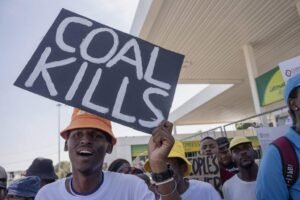
Business groups have been particularly vocal. They warn that higher production costs will reduce competitiveness, discourage investment, and ultimately lead to job losses. In an economy where millions are already out of work, such risks carry enormous weight.
For these stakeholders, the carbon tax is not just an environmental policy, it is a potential economic burden at a time when the country can least afford it.

The Case for Keeping the Tax
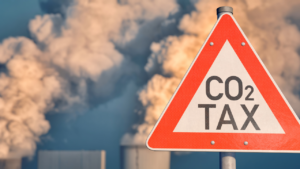
Yet, climate scientists and policy experts see the situation differently. For them, suspending the carbon tax would be a step backward at a time when decisive action is urgently needed.
They point out that South Africa is one of the most carbon-intensive economies in the world, largely due to its heavy reliance on coal. Without strong policy measures, emissions are unlikely to decline at the pace required to meet international climate targets.
Carbon taxes, they argue, are among the most effective tools available. By making pollution more expensive, they create incentives for companies to innovate and transition to cleaner energy sources.
Globally, this approach is gaining traction. Roughly one-fifth of global emissions are now subject to some form of carbon pricing. Countries that have embraced these policies are already seeing shifts in investment patterns, with capital flowing toward renewable energy and low-carbon technologies.
For South Africa, maintaining the carbon tax is about more than reducing emissions; it is about positioning the economy for the future.
Revenue, Reality, and Rising Pressure
Beyond its environmental goals, the carbon tax also plays a role in government finances. Annual revenue from the tax is estimated at around R1.5 billion. While this may seem modest compared to the country’s overall budget, it contributes to funding essential public services.
South Africa’s fiscal situation adds another layer of complexity to the debate. Revenue collection has fallen short of expectations in recent years, reflecting broader economic challenges. The tax-to-GDP ratio is expected to rise only marginally, from 24.5 percent to 24.7 percent, highlighting limited room for maneuver.
In response, the government has introduced a range of measures to boost revenue. These include planned increases in value-added tax, adjustments to personal income tax thresholds, and higher excise duties on alcohol and tobacco.
Against this backdrop, removing or suspending the carbon tax could create additional fiscal pressure. It would mean forfeiting a source of revenue at a time when every rand counts.
At the same time, the government faces the delicate task of balancing revenue generation with social equity. Tax increases tend to hit lower-income households hardest, prompting efforts to cushion the impact through social grants and targeted support.
The carbon tax, in theory, offers a way to raise revenue while also addressing environmental concerns. But its real-world effects are far more complicated.
Industry Fears and Economic Fragility
For many businesses, the concern is not theoretical; it is immediate and practical.
Energy-intensive industries operate on thin margins and face intense global competition. Even small increases in costs can have significant consequences. A higher carbon tax could make South African exports less competitive, particularly in markets where similar policies are not in place.
There is also the risk of carbon leakage, where companies shift production to countries with less stringent regulations. This would undermine the environmental goals of the tax while harming the domestic economy.
Job losses are another major concern. Sectors such as coal mining and heavy manufacturing employ large numbers of workers, often in regions with limited alternative opportunities. Any policy that threatens these jobs is bound to face strong resistance.
For these industries, the carbon tax feels less like an incentive for change and more like an added burden in an already challenging environment.
A Question of Timing
One of the central issues in the debate is timing. Even those who support carbon pricing acknowledge that the transition to a low-carbon economy must be carefully managed. Moving too quickly could disrupt industries and communities, while moving too slowly could leave the country unprepared for global shifts.
South Africa’s energy crisis adds to the urgency. Frequent power shortages and infrastructure challenges have already constrained economic activity. Businesses argue that imposing additional costs during such a period is counterproductive.
At the same time, delaying action on emissions could have long-term consequences. As global markets increasingly prioritize sustainability, countries that fail to adapt risk being left behind.
The challenge lies in finding a balance between immediate economic needs and long-term strategic goals.
The Global Context
South Africa’s carbon tax debate does not exist in isolation. Around the world, governments are grappling with similar questions.
In Europe, carbon pricing has become a central pillar of climate policy. The European Union’s emissions trading system has helped drive significant reductions in greenhouse gas emissions, although not without controversy.
At the same time, new mechanisms such as carbon border taxes are beginning to reshape global trade. These policies impose tariffs on imports based on their carbon footprint, effectively penalizing countries with weaker climate policies.
For South Africa, this creates both a risk and an opportunity. Maintaining a credible carbon pricing system could help protect access to key export markets. Conversely, abandoning the tax could expose exporters to additional costs abroad.
In this sense, the carbon tax is not just a domestic issue. It is part of a broader global transition that is already underway.
Social Equity and the Just Transition
Perhaps the most sensitive aspect of the carbon tax debate is its social impact. South Africa is one of the most unequal societies in the world. Any policy that affects prices, jobs, or economic opportunities must be carefully assessed through this lens.
Proponents of the carbon tax emphasize the concept of a “just transition.” This involves ensuring that the shift to a low-carbon economy does not leave vulnerable communities behind. It includes retraining workers, investing in new industries, and providing social support where needed.
Critics, however, remain skeptical. They question whether the necessary safeguards are in place and whether the government has the capacity to implement them effectively.
The success of the carbon tax may ultimately depend on how well these concerns are addressed. Without broad public support, even the most well-designed policy can falter.
No Easy Answers
As the debate continues, one thing is clear: There are no easy answers.
Suspending the carbon tax could provide short-term relief for businesses and ease political pressure. But it could also delay the transition to a more sustainable economy and weaken South Africa’s position in global markets. Maintaining the tax, on the other hand, signals a commitment to climate action and long-term resilience. Yet it comes with real economic costs that cannot be ignored.
The path forward will likely involve compromise. Policymakers may need to adjust the pace of implementation, refine exemptions, and strengthen support for affected industries and communities.
What is at stake goes beyond a single policy. It is about the kind of economy South Africa wants to build and the legacy it hopes to leave for future generations.
A Defining Choice
In many ways, the carbon tax showdown reflects a broader tension that is playing out across the world. How do nations balance growth with sustainability in an era of mounting environmental challenges?
For South Africa, the stakes are particularly high. The country’s economic structure, social realities, and energy landscape make the transition both necessary and difficult.
The debate is unlikely to be resolved quickly. But it has already achieved something important. It has forced a national conversation about priorities, trade-offs, and the future.
Whether the carbon tax is ultimately strengthened, adjusted, or suspended, the decisions made now will shape South Africa’s trajectory for years to come.
In the end, the question is not simply whether to tax pollution or protect growth. It is how to do both in a way that is fair, effective, and sustainable.