

In late May 2026, a flight carrying nearly 300 Ghanaians touched down in Accra. The atmosphere was not one of celebration but of profound relief. These men, women, and children had fled South Africa amid a surge of anti-migrant protests and violence. Many left behind businesses, homes, and lives they had spent years building.
Ghana’s High Commissioner to South Africa, Benjamin Quashie, captured the desperation of the moment, explaining that the Ghanaian government had responded to citizens who felt their lives were under threat, their economic activities disrupted, and their presence increasingly unwelcome.
This episode represents the latest chapter in a recurring tragedy. South Africa, a nation that often presents itself as a beacon of pan-African solidarity, continues to grapple with deep-seated xenophobia that erupts with disturbing regularity. The contradiction is striking: a country whose leaders frequently invoke African unity and solidarity has become a place where many African migrants live in fear for their safety and livelihoods.
The Latest Wave of Violence
Reports of attacks in the KwaZulu-Natal and Eastern Cape provinces during April and May 2026 prompted a response from United Nations Secretary-General António Guterres, who expressed deep concern over xenophobic attacks, harassment, and intimidation directed at migrants and foreign nationals. The United Nations condemned criminal acts perpetrated by individuals exploiting socio-economic hardships to target vulnerable communities.
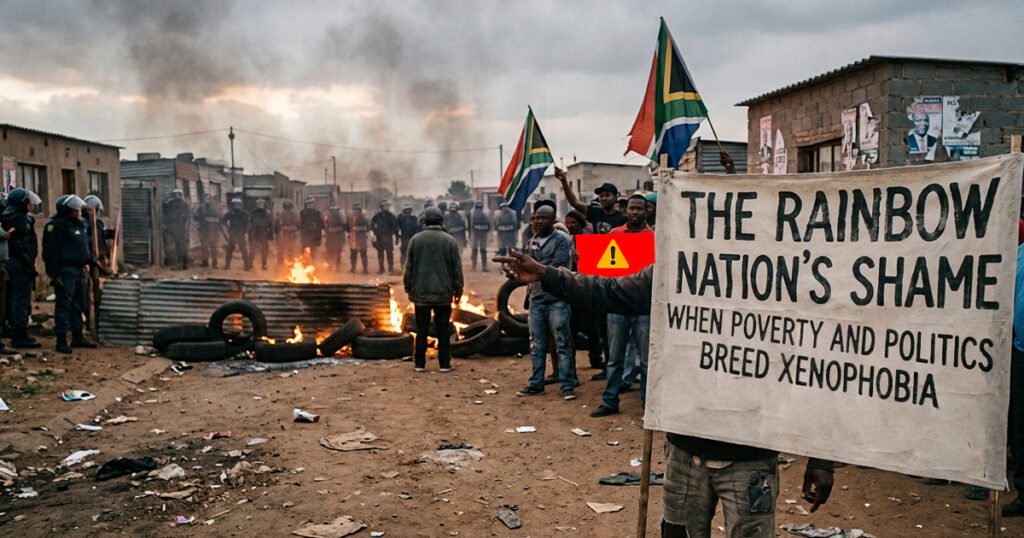
Human Rights Watch documented vigilante actions against African and Asian migrants, often citing inadequate police intervention. While verifying all reported deaths proved difficult, credible accounts included the death of a Malawian at the hands of law enforcement officers. Foreign-owned businesses, particularly spaza shops, were looted, vandalized, and threatened. Activist groups disrupted commercial activities and issued ultimatums to migrant communities.
By early June, thousands of Malawians were reportedly sheltering in open fields around Durban after fleeing threats and intimidation. Nigeria repatriated approximately 260 citizens, while more than 1,000 others registered for voluntary return. Ghana, Mozambique, and several other countries initiated similar evacuation efforts. Estimates suggest that several thousand foreign nationals had either left South Africa or were preparing to do so by mid-June.
Compounding fears was a self-imposed 30th June deadline issued by the March and March movement for undocumented migrants to leave the country, raising concerns about potential nationwide disruptions and further violence.
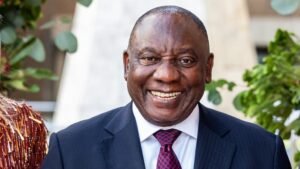
South African authorities characterized many incidents as isolated confrontations and highlighted arrests made in connection with the unrest. Officials rejected claims of widespread killings of Ghanaians or Nigerians by security forces and emphasized their commitment to maintaining law and order. President Cyril Ramaphosa condemned vigilantism and pledged decisive action against groups exploiting migration concerns for political or criminal purposes.
Nevertheless, critics, including international observers and human rights organizations, pointed to delayed responses, inadequate protection for vulnerable communities, and what they viewed as insufficient accountability for instigators.
A Nation of Contradictions
South Africa is home to an estimated three million migrants, roughly 90 percent of whom originate from other African countries. Many arrived seeking refuge from conflict, persecution, or economic hardship in countries such as Zimbabwe, Nigeria, Ghana, Somalia, the Democratic Republic of Congo, and Malawi.
These migrants contribute significantly to the economy. They drive ride-hailing services, work as domestic employees, operate small businesses, and fill critical labour gaps. For many middle-class and affluent South Africans, daily life would be difficult to imagine without migrant labour.
Yet in poorer townships and informal settlements, resentment continues to simmer. Foreign nationals are often portrayed as competitors for scarce jobs, housing, and public services. Migrant-owned spaza shops frequently offer lower prices, longer operating hours, and more efficient supply chains, enabling them to outperform some local businesses. While consumers benefit from this competition, it also fuels perceptions of unfair advantage among struggling locals.
The legacy of apartheid remains deeply intertwined with these tensions. Decades of racial segregation created highly unequal communities marked by poverty, limited economic opportunities, and social fragmentation. Following the democratic transition in 1994, successive governments led by the African National Congress promised broad-based transformation. Yet many of the structural challenges inherited from apartheid remain unresolved.
Corruption scandals, ‘state capture’ during the Jacob Zuma era, and persistent governance failures have eroded public trust. Economic growth has remained too weak to absorb a rapidly expanding labour force, leaving millions trapped in poverty and frustration.
The Economic Roots of Resentment
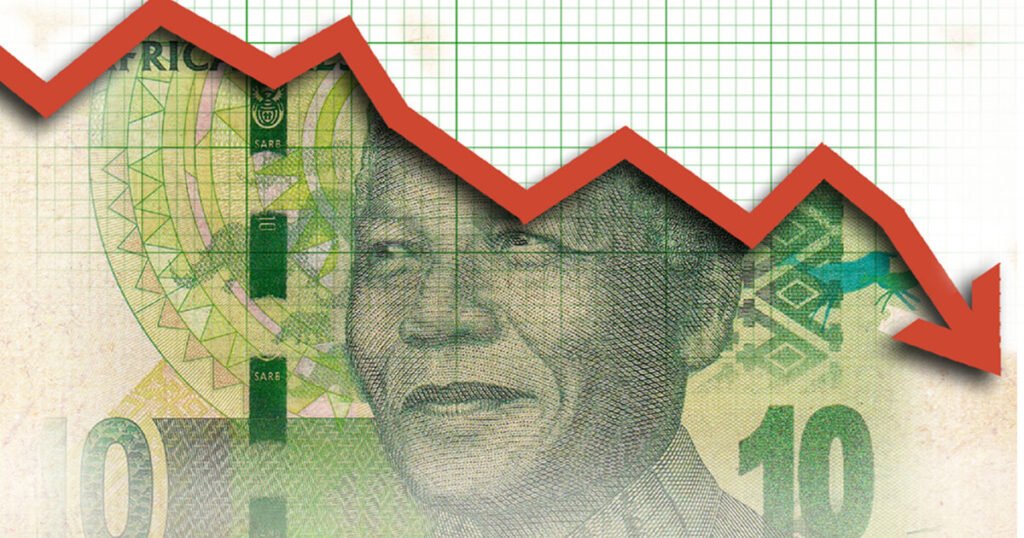
South Africa’s unemployment rate remains between 32 and 33 percent, while youth unemployment is significantly higher. According to assessments by the World Bank and the IMF, economic growth remains far too weak to meaningfully reduce joblessness. Growth projections for 2025 and 2026 range between 1 and 1.8 percent annually, well below the levels required to address the country’s structural economic challenges.

Real per capita income has stagnated and, in some cases, declined in recent years. Poverty continues to affect millions, particularly within Black African communities, while inequality remains among the highest in the world.
In such an environment, migrants often become convenient scapegoats. Politicians and activists argue that undocumented foreigners strain public services, suppress wages, and contribute to crime. While some foreign nationals have indeed been implicated in criminal activities, evidence consistently shows that migrants are also disproportionately victims of crime, violence, and exploitation.
A dysfunctional Department of Home Affairs further complicates the situation. Chronic backlogs in permit processing, corruption at border points, and weak migration management systems have left many migrants trapped in legal uncertainty. Unable to regularize their status, they become vulnerable to abuse and exploitation.
Government reform initiatives, including Operation Vulindlela, seek to improve governance, infrastructure, and economic competitiveness. However, progress has been slow, constrained by lingering post-pandemic challenges, energy shortages, logistical bottlenecks, and broader global economic pressures.
The Rise of Anti-Migrant Movements
Groups such as Operation Dudula, which emerged around 2021 in Soweto, popularized aggressive anti-immigrant activism under the banner of putting South Africans first. Members conducted raids on businesses suspected of employing undocumented migrants and targeted locations they associated with criminal activity.
March and March, a newer movement established in 2025 and associated with figures such as Jacinta Ngobese-Zuma, has expanded these campaigns through larger demonstrations in Pretoria, Johannesburg, Durban, and other urban centres. The movement advocates stricter immigration enforcement, mass deportations of undocumented migrants, and prioritization of South Africans in employment and public services.
Its leaders reject accusations of xenophobia, insisting that their focus is legality, sovereignty, and economic justice. They point to legitimate concerns, including competition in the informal economy, pressure on public infrastructure, and alleged links between illegal migration and crime.
However, critics argue that such movements frequently rely on inflammatory rhetoric, exaggerated migration figures, and misinformation. Human Rights Watch and local advocacy organizations have documented cases where demonstrations escalated into intimidation, looting, property destruction, and physical assaults.
These movements tap into genuine frustrations but often channel them toward destructive outcomes. The pattern is familiar. Similar outbreaks in 2008, 2015, and 2019 left dozens dead and thousands displaced. Each cycle follows the same trajectory: rising tensions, violent attacks, official condemnation, repatriations, and a temporary return to calm before the next eruption.
The Political Dimension
The ANC-led government faces a difficult balancing act. It must respond to legitimate public concerns about illegal immigration while upholding constitutional principles, human rights, and international obligations.
President Ramaphosa has repeatedly emphasized that South Africans are not inherently xenophobic and has reminded citizens of the solidarity shown by African nations during the anti-apartheid struggle. His administration has pledged stronger border management, accelerated deportation processes, and stricter legal enforcement while rejecting vigilantism.
Yet political opportunism remains a persistent problem. Opposition parties and even factions within the ANC have occasionally exploited anti-foreigner sentiments, particularly during election periods. Populist narratives blaming migrants for unemployment, crime, and failing public services often divert attention from deeper governance failures, including corruption, electricity shortages, water crises, and weak service delivery.
The diplomatic consequences are equally significant. Ghana has called for greater discussion of the issue at the African Union level. Nigeria and other countries have summoned South African envoys and organized repatriation exercises for affected citizens. As these incidents continue, South Africa’s image as a continental leader suffers, undermining both its soft power and its attractiveness as an investment destination.
Paths Toward Resolution
Combating xenophobia requires more than public condemnation. Sustainable solutions must address the underlying causes driving hostility and insecurity.
Accelerating economic growth is essential. Structural reforms aimed at improving the business environment, strengthening governance, reforming labour markets, and modernizing infrastructure can create jobs and reduce the perception that opportunities are a zero-sum game.
Comprehensive immigration reform is equally critical. Streamlining legal migration pathways, reducing permit backlogs, strengthening border management, and improving administrative efficiency would help restore public confidence while protecting migrants’ rights.
Efforts to integrate documented migrants through language programmes, skills recognition initiatives, and community engagement projects could also strengthen social cohesion and reduce tensions.
Law enforcement agencies must act decisively against violence and intimidation. Police accountability, swift prosecution of vigilantes, and effective protection for victims are essential. Civil society organizations and the media also have an important role to play in challenging misinformation and fostering informed public debate about migration.
Education and leadership remain central to any lasting solution. School curricula that emphasize South Africa’s interconnected African history, the philosophy of ubuntu, and the contributions migrants make to society can help reshape public attitudes. Political leaders, meanwhile, must resist the temptation to scapegoat foreigners and instead promote inclusive, responsible narratives.
South Africa is not alone in facing migration-related tensions during periods of economic hardship. Many nations confront similar challenges. However, South Africa’s unique history of exclusion, inequality, and social division makes it particularly vulnerable.
The promise of the Rainbow Nation remains unrealized for millions of citizens living in poverty. Until economic opportunity is more broadly shared, the temptation to blame outsiders for systemic failures will remain strong.
A Call to Conscience
As the deadline approaches, anxiety continues to grip migrant communities. Thousands remain in temporary shelters, while others prepare to abandon lives they spent years building.
The weeks ahead will test South Africa’s commitment to its founding ideals. Will the country drift further into division and hostility, or seize this moment to pursue meaningful reform?
The shame of xenophobia is neither inevitable nor unavoidable. It is the product of policy failures, economic stagnation, weak institutions, and political choices. By committing to inclusive growth, fixing broken systems, enforcing laws fairly, and protecting the rights of all residents, South Africa can honour the values that inspired its liberation struggle.
Failure to do so risks tarnishing the legacy of one of Africa’s most celebrated democracies and weakening its relationship with the continent it often seeks to lead.
The world is watching. Fellow Africans remember the solidarity extended to South Africa during the darkest years of apartheid. South Africans must now demonstrate that same spirit of humanity and solidarity at home.
Only then can the Rainbow Nation move beyond the shame of xenophobia and toward the promise of genuine reconciliation, shared prosperity, and a truly inclusive future.