

After years of economic turbulence, Ghana is beginning to show convincing signs of a turnaround that few thought possible just a short time ago. The country has emerged from one of its most challenging economic periods with remarkable resilience, marking a pivotal moment in its history.
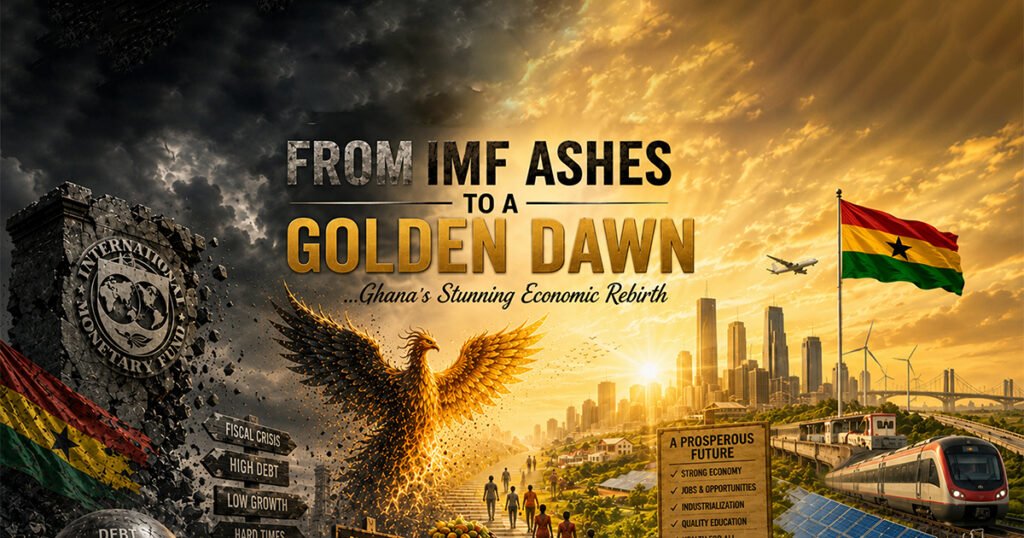
In May 2026, the West African nation successfully completed its Extended Credit Facility programme with the International Monetary Fund, transitioning to a non-financial Policy Coordination Instrument (PCI). This milestone signals not just the end of a bailout era but the dawn of what many analysts describe as a golden economic renaissance. With strong GDP growth, declining inflation, robust foreign reserves, and renewed investor confidence, Ghana stands poised to redefine its role as a dynamic force in Africa.
The journey to this point was arduous. Ghana entered the IMF programme amid soaring inflation that peaked above 50 percent, a depreciating cedi, mounting public debt exceeding 80 percent of GDP, and widespread economic hardship. Fiscal slippages in late 2024 tested the programme, but decisive actions under President John Dramani Mahama’s administration in 2025 recalibrated the economy through aggressive fiscal consolidation, expenditure rationalisation, and structural reforms. These efforts delivered results that exceeded expectations, setting the stage for sustainable growth beyond external assistance.
From Crisis to Stability
The road to exiting the IMF programme began with painful adjustments. Households and businesses faced higher costs as the government prioritised macroeconomic stability over short-term relief. However, these sacrifices yielded tangible gains. Inflation, once a runaway threat, has plummeted to single-digit levels, hovering around less than 4 percent in recent months. The cedi has strengthened markedly against major currencies, restoring purchasing power and easing import pressures.
Public debt as a share of GDP has declined sharply from its peak, supported by successful restructuring with domestic and external creditors. Gross international reserves reached approximately US$14.5 billion by early 2026, providing nearly six months of import cover. This buffer equips Ghana to weather external shocks more effectively than in previous years. Sovereign credit ratings improved significantly, moving from restricted default status to B with a positive outlook following multiple upgrades. These improvements lower borrowing costs and open the door to more favourable financing terms.
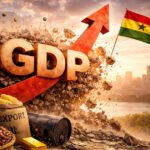
Economic growth rebounded strongly. Real GDP expanded by approximately 6.0 percent in 2025, with quarterly growth reaching 6.4 percent in the first quarter of 2026. Non-oil GDP growth has been even more impressive during several periods, highlighting a broad-based recovery across key sectors. Services, industry, and agriculture have all contributed meaningfully, demonstrating the economy’s increasing resilience.
Fiscal Discipline and Reform Impact
Central to this turnaround was unwavering fiscal discipline. The government implemented front-loaded consolidation measures, rationalising expenditure while protecting critical social spending. Revenue mobilisation improved through digital taxation initiatives, enhanced compliance, and efficiency gains. These measures helped achieve primary surpluses and narrow the overall fiscal deficit well below initial targets in several programme reviews.
Structural reforms complemented these fiscal efforts. Improvements in public financial management, governance of state-owned enterprises, and the business environment enhanced efficiency and transparency. The Bank of Ghana maintained a tight monetary policy stance initially before gradually easing as conditions stabilised, supporting credit growth without reigniting inflation. These coordinated policies restored market confidence and normalised relations with global creditors.
The Policy Coordination Instrument now replaces the bailout programme. This framework provides technical assistance and policy guidance without new loans, underscoring Ghana’s commitment to home-grown solutions while retaining access to IMF expertise. It signals greater maturity in economic management and is expected to further boost investor sentiment.
GoldBod and Resource-Led Revival
A standout feature of Ghana’s renaissance is the innovative Ghana Gold Board (GoldBod) initiative. Launched to formalise gold flows from the artisanal and small-scale mining sector, GoldBod has delivered substantial macroeconomic benefits. By purchasing and exporting gold directly, it has generated significant foreign exchange inflows, reduced smuggling, and strengthened reserves.
Independent assessments indicate that GoldBod’s benefits far outweigh its associated costs. Formalised gold exports have surged, contributing billions of dollars in additional foreign exchange earnings. This has supported cedi stability, helped lower inflation, and reduced reliance on external borrowing. Analysts estimate benefit-to-cost ratios as high as 18:1 in some evaluations, highlighting its strategic value. Gold production remains robust, with Ghana retaining its position as Africa’s leading gold producer. Higher global prices have amplified these gains.
Beyond gold, the extractive sector, including oil, has contributed significantly to growth. New fields and improved management have supported export earnings. Moreover, the government continues to emphasise value addition and sustainability to ensure long-term benefits. Initiatives aimed at refining gold locally and promoting linkages with other sectors are gaining traction, with the objective of creating jobs and diversifying revenue streams.
Sectoral Drivers of Growth
Services have been the largest contributor to recent economic expansion, accounting for a significant share of GDP. Information and communication technology (ICT), transport, trade, and finance have thrived amid ongoing digital transformation efforts. Investments in telecommunications infrastructure have propelled ICT growth rates above 20 percent in some quarters. Fintech innovation and improved digital public services are enhancing efficiency and inclusion.
Agriculture, which employs a substantial portion of the population, has also rebounded. Favourable weather conditions, improved disease control in the cocoa sector, and increased support for farmers have lifted output. Cocoa remains a key export commodity, although challenges such as smuggling persist. Diversification into other crops, value addition, and investment in storage infrastructure remain priorities for building resilience against climate variability.
Industry, particularly mining and quarrying, has benefited from strong commodity demand. Oil and gas production has recovered, adding further momentum. Manufacturing and construction are expected to accelerate as investor confidence strengthens and infrastructure projects advance. Public-private partnerships in energy, roads, and ports are unlocking new opportunities for growth.
Investor Inflows and the Business Environment
The post-IMF era has attracted renewed global interest. Foreign Direct Investments (FDIs) inflows have risen, driven by improved credit ratings, policy predictability, and abundant natural resources. Ghana’s strategic location, youthful population, and commitment to reforms position it favourably within the framework of the African Continental Free Trade Area (AfCFTA). Efforts to create an investor-friendly environment include streamlining regulations, enhancing transparency, and supporting micro, small, and medium-sized enterprises.
Credit-rating upgrades are facilitating access to cheaper capital for both the government and the private sector. Infrastructure financing, once constrained by high risk premiums, is becoming increasingly accessible. Projects in renewable energy, the digital economy, and agro-processing are expected to benefit significantly. Tourism, leveraging Ghana’s cultural heritage and natural attractions, also presents strong growth potential.
Challenges remain. Youth unemployment, infrastructure deficits, and inequality continue to require sustained attention. Climate change impacts on agriculture and energy also demand prudent adaptation strategies. Debt sustainability requires ongoing vigilance to prevent a reversal of recent gains. Nevertheless, the current trajectory suggests these issues can be managed through disciplined policymaking and inclusive growth.
Social Dimensions and Human Development
Economic renaissance must translate into improved livelihoods. Poverty reduction has resumed as growth broadens and inflation eases. Social protection programmes, though strained during the crisis, are being strengthened. Continued investment in education, healthcare, and skills development will be essential to harnessing the country’s demographic dividend.
Women and youth entrepreneurs are receiving targeted support through various initiatives. Financial inclusion efforts, including digital payments and microfinance programmes, are empowering previously marginalised groups. Job creation in formal sectors, particularly through industrialisation and value addition, will be critical to absorbing the growing labour force.
Public sentiment reflects cautious optimism. Many Ghanaians endured significant hardships during the crisis but are now seeing signs of recovery through stable prices, a stronger currency, and expanding opportunities. Government messaging continues to emphasise shared sacrifice and collective progress toward prosperity.
Medium-Term Outlook and Prospects
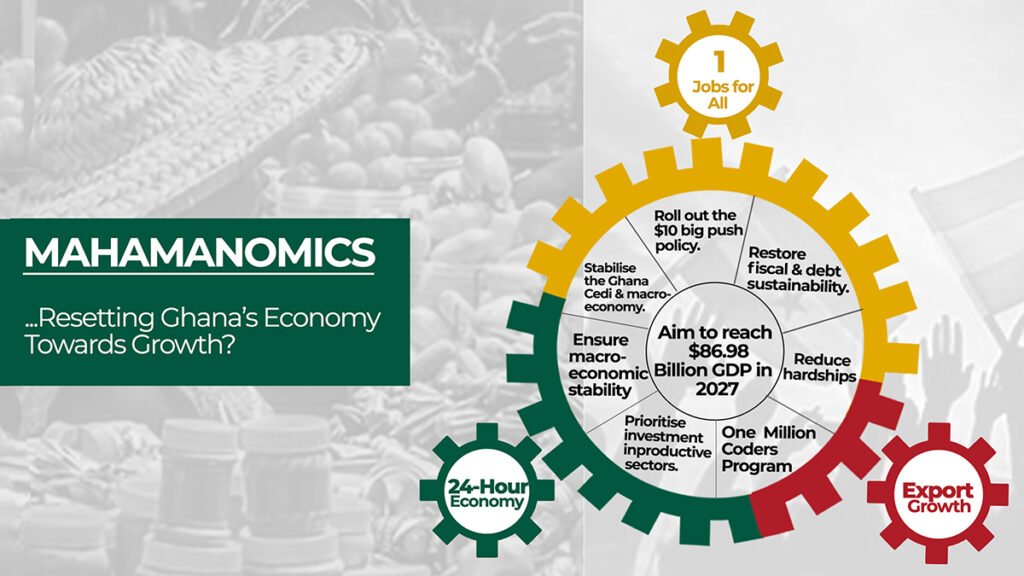
Projections for the coming years remain encouraging. GDP growth is expected to stabilise at around 5.5 percent or higher, supported by ongoing reforms and favourable economic fundamentals. Inflation is projected to remain within target ranges, creating room for further monetary easing to stimulate private-sector investment. Fiscal balances are expected to remain sustainable, with the debt-to-GDP ratio continuing its downward trajectory.
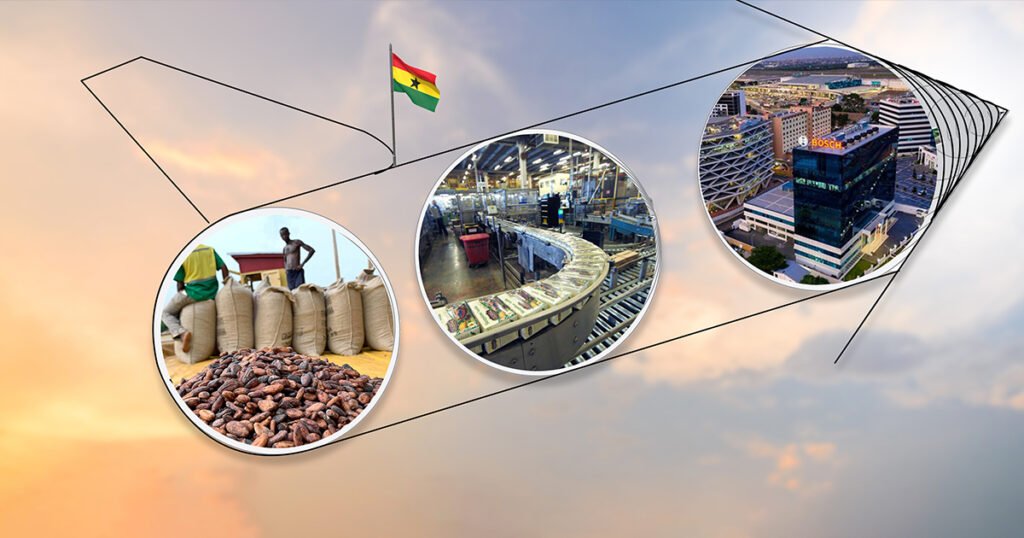
Export diversification, domestic resource mobilisation, and technological adoption will drive structural transformation. The digital economy policy aims to improve connectivity, e-governance, and innovation. Energy sector reforms seek to ensure a reliable power supply to support industrial growth. Cocoa and gold value chains present significant opportunities for downstream processing industries capable of generating higher returns and employment.
Regional integration under AfCFTA presents substantial opportunities. Ghana is well-positioned to serve as a hub for trade, logistics, and investment in West Africa. Strengthened partnerships with both traditional and emerging allies, including through technical cooperation under the PCI framework, will support capacity building while preserving national sovereignty.
Risks remain, including global commodity-price volatility, geopolitical tensions affecting supply chains, and potential domestic policy slippages. Climate-related events and energy-sector challenges also warrant attention. Addressing these risks proactively through diversified growth strategies and strong institutions will be essential.
A Model for African Recovery
Ghana’s experience offers valuable lessons for other nations navigating debt distress and economic recovery. It demonstrates that a combination of fiscal prudence, innovative resource management initiatives such as GoldBod, structural reforms, and political commitment can yield impressive results. The successful exit from the IMF programme without major disruption underscores the importance of national ownership in programme implementation.
As Ghana enters this renaissance era, the focus shifts from stabilisation to transformation. Building productive capacity, fostering inclusion, and ensuring environmental sustainability will define long-term success. With its abundant resources, vibrant population, and proven adaptability, the country is well-positioned to achieve stronger and more equitable growth.
The golden era is not guaranteed; rather, it is being actively shaped by the policy choices made today. Sustained commitment to discipline, innovation, and people-centred development can propel Ghana toward upper-middle-income status and greater influence on the continental stage. Investors, development partners, and citizens alike are watching with anticipation as this promising chapter unfolds.