


Ghana’s financial markets are making serious waves, drawing keen interest from investors both at home and abroad.
As of late May 2026, the Ghana Stock Exchange (GSE) has delivered one of its most dynamic performances in recent memory. Robust gains in key indices, explosive trading volumes, and a surging fixed-income segment signal deepening investor confidence amid broader economic stabilization. This resurgence comes after years of macroeconomic challenges, including debt restructuring and inflationary pressures, positioning Ghana’s capital markets as a standout story on the continent.
What makes this moment particularly exciting is the palpable shift in sentiment on the trading floor and among investors. After navigating turbulent times, everyday Ghanaian investors—from salaried workers using mobile trading apps to seasoned institutional fund managers—are showing renewed faith in the local bourse.
This growing participation, combined with the selective return of foreign investors testing the waters once again, is creating a virtuous cycle of higher liquidity, improved price discovery, and contagious optimism that is breathing fresh life into the Ghana Stock Exchange.
Composite and Financial Indices Power Ahead
The GSE Composite Index (GSE-CI) and the GSE Financial Stock Index (GSE-FSI) have been the engines of this rally. By the end of May 2026, the Composite Index had posted a year-to-date return of 63.67%, while the Financial Stock Index climbed an even stronger 68.99%. These figures reflect not just a rebound, but a structural shift in how investors perceive Ghanaian equities.
Market analysts point to several drivers. Declining inflation—recently nearing historic lows of around 3–5% in early 2026—has eased pressure on businesses and households alike. Lower interest rates, following aggressive monetary policy easing by the Bank of Ghana, have made fixed-income alternatives less dominant, channelling capital toward equities in search of higher returns. Improved corporate earnings expectations, particularly in the banking and energy sectors, have further fuelled optimism.
This performance places the GSE among Africa’s top-performing markets in 2026. The index has, at times, surpassed 15,000 points earlier in the year, with market capitalization expanding significantly. Foreign investors, once wary after the 2022 debt default, are showing renewed interest, attracted by relative currency stability and undervalued assets following restructuring. Domestic retail and institutional participation have also surged, supported by growing financial literacy and digital trading platforms.
Trading Activity Explodes: A 347% Surge in Transactions
Perhaps the clearest sign of renewed vitality is the explosion in trading activity. In May 2026 alone, the Exchange recorded 89,945 transactions—a staggering 347.09% increase from the same period in 2025. Monthly trading volume reached approximately 92.74 million shares, valued at GHS 247.61 million, marking substantial year-on-year gains.
Year-to-date through May, the cumulative figures are even more impressive: over 716 million shares traded, valued at GHS 3.41 billion. This represents a 503.15% jump in volume and a 323.59% increase in value compared to the previous year. Such liquidity growth enhances market depth and efficiency, making the GSE a more attractive venue for capital raising and wealth creation.
Experts attribute this boom to a virtuous cycle: macroeconomic stability breeds confidence, which encourages participation, further improving liquidity and price discovery. The introduction of new listing rules in early 2026 and ongoing capital market reforms under the Securities and Exchange Commission (SEC) have also played a role in modernizing the ecosystem.
ZEN Petroleum: The Breakout Star of 2026
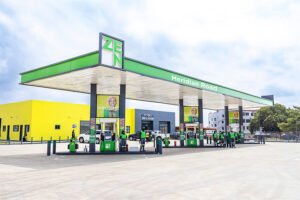
No single stock captured the market’s imagination in May 2026 quite like ZEN Petroleum Holdings PLC. The indigenous energy company’s shares surged 86.81% during the month, securing its position as the top gainer. This performance came on the heels of a highly successful IPO in April 2026, during which 128 million shares were offered at GH¢5.00 each. The offer was oversubscribed by approximately 94%, raising GH¢640 million amid strong demand from Ghanaian investors.
Founded around 2010, ZEN Petroleum has grown into a significant player in the downstream petroleum sector, with operations spanning fuel supply, logistics, storage terminals, and a focus on the energy needs of the mining industry. As a wholly Ghanaian-owned entity, its listing resonated with themes of local content, economic nationalism, and sector growth amid stable commodity prices, particularly gold. By late May, the stock had more than doubled from its IPO price in secondary trading, boosting overall market sentiment and highlighting investor appetite for fresh, high-quality listings.
Other notable performers included Intravenous Infusions PLC (+60%), which benefited from healthcare demand and pharmaceutical-sector tailwinds; Clydestone Ghana PLC (+27.50%); Fan Milk PLC (+15.83%), reflecting resilience in consumer staples; Hords PLC (+10%); Atlantic Lithium Limited (+5.13%); and Societe Generale Ghana PLC (+3.17%). These gains across diverse sectors—from energy and industrials to consumer goods and resources—demonstrate selective yet broad-based investor optimism.
Twelve Stocks Close the Month in Negative Territory
Even in a bullish market, not all equities share equally in the gains. Twelve stocks ended May 2026 in negative territory, serving as a reminder of the importance of company-specific fundamentals and sector dynamics.
Leading the decliners was Ecobank Transnational Inc., with a 36.24% drop, followed by CalBank PLC (-18.89%), Ghana Commercial Bank PLC (-15.16%), SIC Insurance Company PLC, Access Bank Ghana PLC, Enterprise Group PLC, Republic Bank Ghana PLC, Scancom PLC (MTN Ghana), TotalEnergies Marketing Ghana PLC, Ecobank Ghana PLC, Unilever Ghana PLC, and Guinness Ghana Breweries PLC. Many of these companies operate in the banking, insurance, telecommunications, and fast-moving consumer goods sectors, which continue to face margin compression, competitive pressures, or slower post-crisis recovery.

This divergence underscores a maturing market in which investors increasingly differentiate based on earnings quality, management execution, and growth prospects rather than broad macroeconomic tailwinds alone. It also highlights risks such as currency exposure, regulatory changes, and global commodity-price volatility that continue to influence certain segments.
Fixed Income Market
Equities often steal the headlines, but Ghana’s Fixed Income Market (GFIM) provides crucial stability and depth. In May 2026, trading volume reached GHS 26.56 billion, up 39.30% year-on-year. Government notes and bonds dominated, accounting for 53.38% of volume, followed closely by Treasury bills at 46.54%, while corporate bonds contributed a modest 0.08%.

This expansion reflects sustained investor appetite for predictable yields in a lower-interest-rate environment while also indicating improving secondary market liquidity. Government securities remain the backbone of the market, supporting fiscal operations and providing benchmarks for corporate issuance. As the economy stabilizes, expectations are growing for a gradual increase in corporate bond activity, which would further diversify funding sources for businesses.
The coexistence of booming equities and a robust fixed-income segment points to a maturing capital market—one capable of serving both growth-oriented and income-seeking investors.
Broader Economic Backdrop
Ghana’s market rally is not occurring in isolation. After navigating debt challenges and high inflation in previous years, the economy has demonstrated remarkable resilience. Real GDP growth projections for 2026 range between 4.8% and 6.1%, according to the IMF, World Bank, AfDB, and other forecasters. Growth is being driven by services, agricultural recovery, gold exports, and anticipated oil production from fields such as Pecan.
Inflation has declined sharply, the cedi has exhibited periods of relative stability, and fiscal discipline under the IMF programme has helped rebuild credibility. Lower borrowing costs are stimulating domestic demand and investment. The gold and cocoa sectors, alongside emerging oil output, continue to provide important external buffers.
Challenges persist, including geopolitical risks, commodity-price volatility, and the need for structural reforms in the energy and export sectors. Nevertheless, the trajectory supports continued capital market deepening. Initiatives such as the Capital Market Master Plan and updated listing rules aim to attract more issuers and investors, fostering long-term growth.
Outlook for the Second Half of 2026
As Ghana enters the latter half of 2026, market sentiment remains largely positive. Sustained macroeconomic stability, strong corporate earnings, and continued improvements in liquidity could extend the rally. However, valuations in some high-performing stocks warrant caution, and global risks—from interest-rate movements to geopolitical tensions—could introduce volatility.
For retail investors, the environment offers unprecedented access but demands due diligence and diversification. Institutional investors, including local pension funds and returning foreign investors, are likely to increase allocations as market infrastructure continues to strengthen. The fixed-income market’s role as an anchor will remain crucial, particularly for conservative portfolios.
The extraordinary performance of May 2026, marked by soaring indices, explosive trading volumes, standout listings such as ZEN Petroleum, and a robust fixed-income market, tells a story of resilience. Ghana’s capital markets are transitioning from crisis-response mechanisms into platforms for long-term growth and innovation.
This momentum, if nurtured through sound policy, strong corporate governance, and continued market development, could position Ghana as a regional financial hub. For investors, the message is clear: despite selective pressures and lingering risks, the broader trend points toward deepening liquidity, expanding opportunities, and growing relevance on both the African and global stages.
The data from the first half of 2026 paints an optimistic yet realistic picture. Ghana’s financial markets are booming not despite challenges, but because stakeholders are actively addressing them. The coming months will test whether this momentum can be sustained and broadened, but the foundation laid so far inspires confidence in the country’s economic journey.