
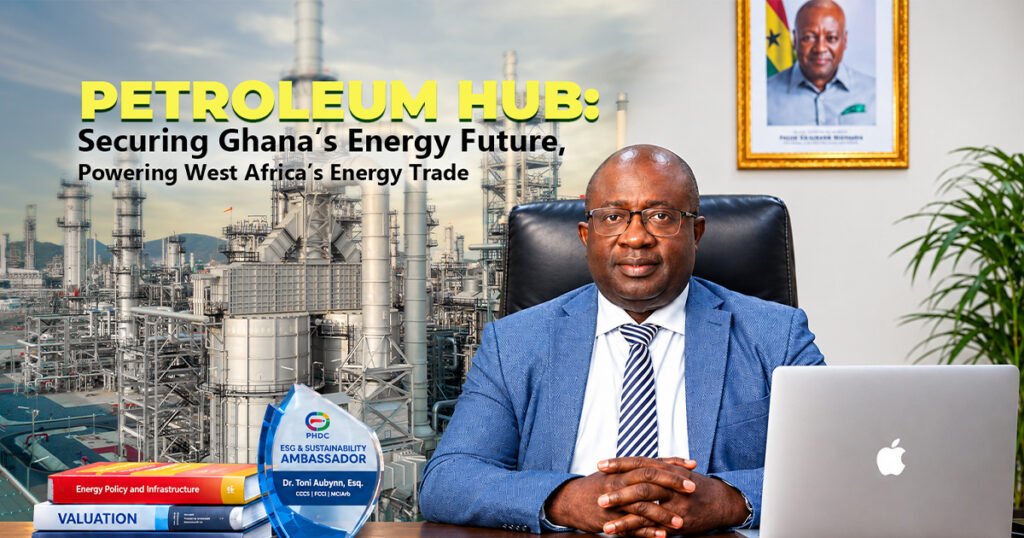
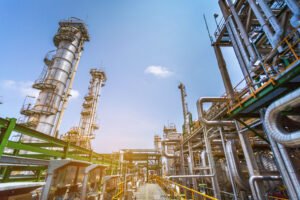
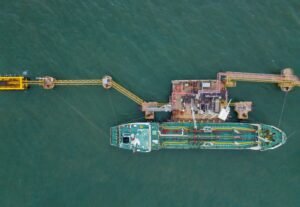
The Petroleum Hub Development Corporation (PHDC), established under the Petroleum Hub Development Corporation Act, 2020 (Act 1053), is spearheading Ghana’s ambition to become a leading energy and petrochemical hub in Africa. The US$60 billion project in Jomoro, Western Region, spans over 12,350 acres and will feature three refineries with a combined capacity of 900,000 barrels per stream day, five petrochemical plants, storage facilities, dedicated jetties and modern port infrastructure.
The integrated hub aims to reduce dependence on imported refined petroleum products, strengthen energy security, attract foreign investment, create jobs and position Ghana as a strategic gateway for West Africa’s energy trade.
Leading this ambitious vision is Dr. Toni Aubynn (DTA), a seasoned corporate executive, lawyer and sustainability expert with nearly three decades of experience across the extractive industries, petroleum, banking, policy and corporate affairs.
INDUSTRY AND COMPANY FOCUS
TVA: The Petroleum Hub Development Corporation (PHDC) aims to transform Ghana into a world-class integrated petroleum and petrochemical hub, positioning the country as Africa’s petroleum powerhouse. What is the strategic roadmap for achieving this vision?
DTA: Our ambition is to position Ghana as the energy hub of the sub-region, secure a sustainable energy future and create employment opportunities for our youth. Under the initial plan, the project was scheduled for full development and operationalisation by 2030. However, delays in land acquisition have necessitated an adjustment to the timeline. Nevertheless, we remain confident that once the land is secured, implementation will progress expeditiously. Our investors are ready to commence operations and are awaiting confirmation of the land acquisition. Once this is secured, they will mobilise immediately and proceed without delay.
TVA: What impact will the Petroleum Hub have on Ghana’s economy?
DTA: The project is a pivotal catalyst for Ghana’s economic transformation. The construction phase alone is projected to inject more than US$60 billion into the national economy. With Ghana’s GDP currently estimated at US$114.2 billion, one can imagine the potential impact of an additional US$60 billion in investment.
Beyond the capital investment, our estimates indicate that the project will generate more than 780,000 direct and indirect jobs for Ghanaians. Furthermore, it is expected to reduce the country’s dependence on imported petroleum products and establish fully operational tank farms. These developments will strengthen energy security, and a country with a secure and reliable energy sector is better positioned to achieve sustained economic development.
TVA: The Petroleum Hub is one of Ghana’s largest infrastructure projects, with an estimated value of US$60 billion. It has also been reported to cover more than 20,000 acres. How far has implementation progressed, and what key milestones have been achieved?
DTA: First, I wish to clarify that the land designated for the project measures 12,356 acres, not the 20,000 acres previously reported.
Since assuming leadership of the Petroleum Hub Development Corporation in 2025, we have made significant progress. One of the principal challenges we identified at the outset was the limited awareness among Ghanaians and the investment community of the project’s scale and potential benefits.
In response, and in line with our statutory mandate to promote and facilitate the development of a petroleum and petrochemical hub in Ghana, we dedicated 2025 to a comprehensive nationwide and international promotional campaign. I am pleased to report that we have made considerable progress in achieving this objective, with stakeholders across the country and beyond becoming increasingly aware of the project and its pivotal role in Ghana’s economic transformation.
Another major challenge concerned the precise land area required and its acquisition. This matter was addressed by His Excellency President John Dramani Mahama, who, in December 2025, directed the Ministry of Lands and Natural Resources to secure 5,000 hectares, equivalent to 12,356 acres, for the project.
To date, the Declaration of Intent to Acquire the designated land has been issued. Mapping, pillar demarcation and valuation works have also been completed, and we remain confident that the Executive Instrument will be issued soon.
On the investment front, we inherited an existing partnership between the Corporation and Touchstone Capital Partners upon assuming office. Although the arrangement faced several significant challenges, extensive engagements have helped resolve these issues and strengthen the collaboration. Touchstone Capital Partners is ready to commence operations once the land acquisition is confirmed. We also have about seven credible investors who are ready to invest in various facilities.
TVA: With 2026 declared the Year of Action, what key developments should Ghanaians expect to see by the end of the year?
DTA: The designation of this period as the “Year of Action” was inspired by our expectation that significant on-site activities would commence before the end of the year, and several preparatory activities have already been undertaken. As previously indicated, the Lands Commission has completed substantial work in support of the land acquisition process. In addition, officials from China Harbour Engineering Company conducted site assessments last month in preparation for the construction of the port and jetties. I remain confident that the land acquisition will be finalised by the close of the year.
TVA: Ghana continues to experience periodic fuel supply challenges and high import bills for refined petroleum products, despite being an oil-producing country. How will the Petroleum Hub reduce dependence on imported products, strengthen supply-chain resilience and improve energy security amid global market volatility?
DTA: This is an important question. In 2025 alone, Ghana consumed over 6.2 million metric tonnes of petroleum products, more than 80 percent of which were imported. Across the wider West African sub-region, consumption reached 46.5 million metric tonnes, with over 80 percent similarly dependent on imports. The Petroleum Hub is specifically designed to address this structural vulnerability.
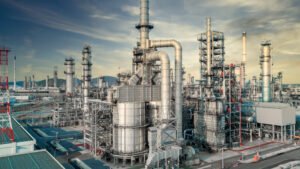
We are developing tank farms with a total storage capacity of 10 million metric tonnes, alongside three refineries with a combined refining capacity of 900,000 barrels per stream day (bpsd). Once operational, these facilities are expected to significantly reduce Ghana’s reliance on imported petroleum products by providing the infrastructure and capacity to refine and store petroleum products domestically.
Had the Petroleum Hub been fully operational, the economic effects of recent geopolitical tensions involving Iran, the United States and Israel would have been substantially mitigated.
TVA: How will domestic refining reduce dependence on imported fuel, cushion consumers against global price volatility and improve price stability?
DTA: Domestic refining will help ease pressure on the Ghanaian cedi by reducing the need for market participants to convert local currency into US dollars to procure imported finished petroleum products.
Furthermore, the importation of petroleum products attracts taxes and levies that contribute to the final retail price. By developing domestic refining capacity, Ghana can reduce its exposure to the costs and risks associated with importing finished products.
With a combined refining capacity of 900,000 barrels per stream day, the country will be better positioned to withstand volatility and uncertainty in the global petroleum market. Domestic refining and storage infrastructure will also provide greater flexibility in managing supply and pricing within the local market.
TVA: You have described the Petroleum Hub as “the bridge to Ghana’s energy future”. What does this mean to you?
DTA: I envision a future in which Ghana no longer depends on imported finished petroleum products. A future in which the nation maintains a strategic fuel reserve capable of meeting at least three months of demand at all times.
I also envision a future in which industrialisation thrives, supported by petrochemical plants that supply the essential feedstock required for domestic manufacturing. Ultimately, I see a Ghana in which our energy needs are met to a far greater extent by companies and organisations operating within our borders.
TVA: What strategies are being implemented to realise this vision?
DTA: The most critical strategy is the full development and operationalisation of the Petroleum Hub. To achieve this objective, we have put in place a comprehensive package of incentives designed to attract investors.
The Petroleum Hub area has been designated as a Free Zones enclave. This provides for a 100 per cent exemption from duties and levies during the construction phase, a ten-year corporate income tax holiday followed by a reduced rate of 15 per cent, unrestricted repatriation of funds and exemption from tax on dividends arising from the project.
TVA: The project encompasses refineries, petrochemical plants, storage facilities, jetties and port infrastructure designed to strengthen Ghana’s control over its energy supply chain. How will these integrated facilities guarantee a reliable energy supply?
DTA: The Petroleum Hub and its associated infrastructure are expected to ensure the consistent availability of petroleum products to support power generation and other essential economic activities across the country. By integrating refining, storage, transportation and related industrial facilities, the Hub will strengthen the reliability and resilience of Ghana’s energy supply chain.
TVA: What infrastructure is being prioritised to establish Ghana as West Africa’s energy trade gateway?
DTA: The Petroleum Hub remains one of Ghana’s most promising pathways towards becoming West Africa’s energy gateway. As a nation, we have always prided ourselves on being the gateway to the continent, and this project presents another opportunity to strengthen that position. Geographically, we are strategically positioned, we enjoy a thriving democracy and a business environment conducive to investment. We should therefore seize these advantages to develop this monumental infrastructure.
TVA: PHDC has strengthened its collaboration with institutions such as the Ghana National Petroleum Corporation (GNPC). What are the principal objectives of the PHDC–GNPC partnership?
DTA: As you may be aware, GNPC is responsible for exploration and related upstream petroleum activities in Ghana. It is the state institution operating in the upstream segment of the petroleum industry, while, by virtue of its establishing Act, PHDC operates within the midstream and downstream segments.
We have established a joint committee to explore opportunities for collaboration that will advance Ghana’s petroleum sector and serve the national interest.
As a relatively young institution, PHDC also benefits from the experience and support of more established organisations such as GNPC, the National Petroleum Authority (NPA) and other relevant agencies. These partnerships enable us to draw on their institutional knowledge and expertise as we pursue our mandate.
TVA: How will these partnerships integrate Ghana’s upstream and downstream petroleum sectors and enhance long-term energy security, including price stability?
DTA: GNPC is not the only institution with which we are engaging. We have also held discussions with sister agencies, including the NPA, Bulk Oil Storage and Transportation Company (BOST), Tema Oil Refinery (TOR), Ghana Gas and the Petroleum Commission, with a view to establishing partnerships and aligning our respective objectives.
Our ultimate goal is to deliver value to Ghanaians and secure the country’s energy future. By strengthening institutional cooperation and aligning activities across the petroleum value chain, we are working towards a more coordinated and resilient sector.
TVA: Every transformational project carries significant risks. What are the biggest challenges that could hinder the Petroleum Hub, and how is PHDC positioning itself to overcome them?
DTA: I recently came across a statement by a Nigerian professor who observed that Ghana could have established its Petroleum Hub well before the Dangote Refinery had the project been prioritised earlier. That observation is a cause for concern.
The most significant challenge currently facing us is the delay in land acquisition. Further delays could allow other countries to overtake us in developing comparable infrastructure. Uganda, Kenya and Côte d’Ivoire are also known to have similar ambitions, so we must act with urgency.
Ghana possesses considerable advantages, and our responsibility is to translate those advantages into tangible results. Securing the land is the critical next step towards unlocking investment and accelerating implementation.
TVA: Given the global energy transition, how confident are you that PHDC can secure the required US$60 billion investment?
DTA: That is an interesting question. Although the world is gradually shifting towards cleaner energy, studies suggest that fossil fuels will remain part of the global energy mix for decades to come. Some countries that previously championed the green energy agenda are also reassessing their energy strategies in recognition of the continuing role of fossil fuels in meeting domestic and industrial energy needs.
Consequently, I am confident about the prospects for the Petroleum Hub. We have engaged a considerable number of investors from different parts of the world who have expressed their willingness to invest in the project.
Once we overcome the challenge of land acquisition, I believe we will attract further investment. I have no doubt that we can mobilise the capital required for the development and operationalisation of the Hub.
TVA: As the world pursues cleaner energy, what environmental, social and governance (ESG) measures are guiding the project’s development?
DTA: You know we are an agency under the Ministry of Energy and Green Transition, so we are very much conscious of our energy transition commitments. That is why in the mapping of our site earmarked for the project, we used trees for the major boundaries instead of cement blocks. Also, the core infrastructure at the hub will be gas-powered while the ancillary projects will be solar-powered.
TVA: How is PHDC balancing large-scale petroleum investment with global net-zero ambitions and a just energy transition?
DTA: PHDC is a progressive and dynamic institution.
As the project develops, we intend to integrate additional clean-energy initiatives in line with technological advancements, Ghana’s energy transition commitments and the evolving needs of the industry.
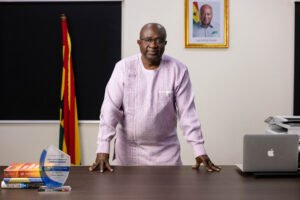
PERSONALITY PROFILE
TVA: You have had a distinguished career spanning several decades and now lead one of Ghana’s most ambitious and strategically significant infrastructure projects. Beyond the boardroom, who is Dr Toni Aubynn?
DTA: Toni Aubynn is a highly motivated, hardworking, determined and engaging individual who is uncompromising in his commitment to honesty, integrity and transparency. Having played amateur football and being an avid football enthusiast, I thrive in team environments.
TVA: Looking back at your upbringing in Damang-Wassa, which childhood experiences had the greatest influence on the person and leader you have become?
DTA: I was raised as a typical village child, although my late father was the Divisional Chief of Damang-Wassa. I worked on the farm, carried water on my head, walked to school and played football barefoot.
My father, whom we affectionately called the “Oldman”, was uncompromising in his principles of honesty, truth, respect and integrity. Every child of his had to uphold these values before he would even begin to question whether the child was indeed his own.
Growing up among children from diverse backgrounds also taught me tolerance and the importance of working with others. These experiences have played a significant role in shaping my character and leadership philosophy.
TVA: Growing up with limited resources, how did those early experiences shape your resilience, ambition and outlook on life?
DTA: My father had the greatest influence on me. He was a strong and principled leader who was always fair, truthful and just, even towards his adversaries.
We did not have many material resources, particularly when compared with our counterparts in the cities, but we never felt poor. The village was our world and our reality, and we found contentment in the life we shared.
As I grew older, I began to question whether poverty was sometimes an imposition shaped by external circumstances and comparisons with others. We did not have electricity or potable water, and the roofs of our school buildings sometimes leaked. Yet, those conditions did not make me feel poor. They were simply part of the reality of village life as I knew it.
What mattered most was the happiness, security and sense of community we enjoyed in Damang. Every good man was a father or uncle to every child, and every good woman was a mother or aunt. That communal spirit was far more meaningful to me than the sense of deprivation I only came to appreciate later in life.
The key lesson is that a lack of resources should not deprive anyone of happiness or contentment. Neither should it extinguish one’s dreams, even when one’s circumstances impose a responsibility to work towards changing them.
TVA: Your academic journey spans geography, environmental studies, international relations, law and executive education across some of the world’s leading institutions. How has this diverse educational background shaped your leadership style and decision-making?
DTA: My educational journey has taken me across three continents: Africa, Europe and Asia, as well as North America. I have studied in Ghana, Finland, Norway, Denmark, the United Kingdom, Japan and the United States. My academic background also spans geography, economics, development, international relations, business and law.
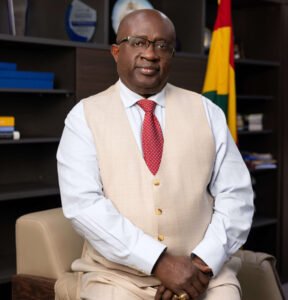
The cultures and values of the countries in which I have lived have shaped and reinforced my personal principles, particularly honesty, integrity, hard work and respect for established processes.
Perhaps Finland and Norway have had the greatest cultural influence on me after Ghana. While studying in Finland, I served as President of the Helsinki International Students Association (HISA) and, for a period, as General Secretary of the National Union of Foreign Students of Finland (NUFSOF).
Beyond enduring some very harsh winter weather, I learnt a great deal from these experiences. Finland and Norway are known for their well-developed educational systems and technological innovation. Yet, their people are often unassuming, hardworking and respectful of the law. Their appreciation of punctuality is particularly remarkable.
These are qualities I have sought to imbibe throughout my life and career, and they continue to influence how I lead, make decisions and work with others.
TVA: What is the greatest lesson education has taught you beyond the classroom?
DTA: Leading and working with others, irrespective of their geography. If I must be a little philosophical here: I believe that there is no one omnibus perspective. There are multi-perspectives. Yet these multi-perspectives provide rich ingredients for societal consensus. We can always reach one common outcome which embodies these multi-perspectives.
TVA: Few leaders have navigated the mining, petroleum, policy, banking and corporate sectors as you have. Looking back, which experiences have best prepared you for your current role as CEO of PHDC?
DTA: I am so grateful to God for the unique background and experience. I have been exceptionally blessed. I have had opportunity to work in many consequential places–Gold Fields Ghana, Tullow Oil, the Chamber of Mines, the Minerals Commission, some Banking, teaching/lecturing and sports. I have been so fortunate that wherever I have been, I have made my energies felt. I have made perceptible impacts. Perhaps, these experiences, coupled with my knowledge and leadership in the natural resource sector may have been considered by His Excellency President John Dramani Mahama in his choice of me. I cannot be certain.
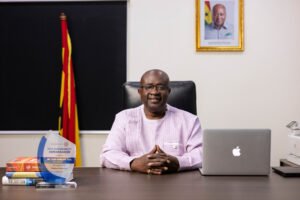
TVA: How has your work across Africa influenced your vision of positioning Ghana as a regional energy and petrochemical powerhouse?
DTA: The continuous situation of Africa still being raw material producers and selling them at cheap prices for more expensive manufactured products from Europe and elsewhere, continues to give credence to Africa as hewers of wood and drawers of water. We remain poor in the midst of plenty. This is simply unacceptable any longer. We must change the narrative. The imperative to change the narrative continues to drive me.
As President Mahama has always highlighted, Africa needs to process its raw materials into furnished goods, to ensure maximum benefit for our people and I strongly share in it. PHDC provides me with an opportunity to contribute to this change in my own modest way. How can Africa import 85% of its petroleum product needs from Europe and Asia and trade only 15% among us amidst increasing internal demand? That is not on!
The task for PHDC is to help reverse this trend within the West Africa sub region—by promoting and facilitating the construction of refineries to refine crude, construction of storage facilities (tank farms to store petroleum products), and use ancillary hydrocarbon feedstock to develop petrochemical industries. This way, Ghana and Africa will be securing their own energy future. Thousands of jobs would be created, our economy would be boosted and forex would be conserved. This would be a game changer for Ghana and Africa. It is doable!
TVA: The Petroleum Hub represents one of Ghana’s most ambitious industrial projects. What inspired your decision to declare 2026 the Year of Action, and what tangible progress should Ghanaians expect?
DTA: A vision remains intangible if just kept in fine prints and locked away in boardrooms. The President has not sent me here to sit in the office and read about his vision. He expects me to facilitate and promote the actual development of the Hub. So, ’the year of action’ which was the clarion declaration by me and my colleagues at PHDC is for the team to work with other relevant ministries, agencies and community stakeholders to secure the land for the project. It was also a call to engage investors to convince them that the Hub project is a viable project worth putting their dollars in. In all fronts, I can say unequivocally that my team has done creditably well.
TVA: Beyond infrastructure, what lasting transformation do you hope the Petroleum Hub will bring to Ghana’s economy and energy security?
DTA: Infrastructure construction is only a means and not an end. The end goal is transformation: enhanced energy security, employment of our teaming youth, physical and economic transformation of the Jomoro and its surrounding areas, a boost to the economy by over 70% and foreign exchange stability, among others.
TVA: As a longstanding advocate of sustainable resource development, how do you see the Petroleum Hub balancing economic growth with environmental responsibility?
DTA: I am an ESG expert and a sustainability advocate, and these commitments have been consistent throughout my career. Environmental and socioeconomic sustainability are central to the Petroleum Hub project. The entire construction will use climate and environmentally friendly inputs. For example, the main source of energy for the Hub will be gas which is much superior to liquid fuel in terms of its impact on climate dynamics and the environment in general. We intend to employ solar for all the ancillary infrastructure and explore the possibility of the use of blue and green hydrogen. We will use trees, and not metals or concrete, as buffers.
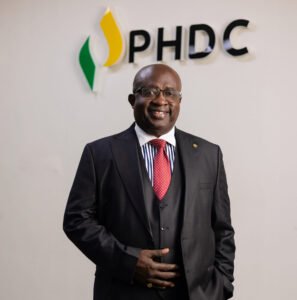
TVA: Leading a project of this magnitude inevitably attracts public scrutiny, competing interests and difficult decisions. How do you navigate these pressures while maintaining the confidence of investors, government and host communities?
DTA: Leading a transformative, multi-billion-dollar megaproject like the Petroleum Hub—where industrial scale, strict public governance, heavy capital outlay, and grassroots community expectations intersect—requires balancing very different, often competing pressures. But navigating these pressures while maintaining stakeholder confidence depends on a leadership approach rooted in strategic alignment, institutional integrity, and authentic engagement. Megaprojects often carry immense political and public expectations. The key to managing internal pressure is establishing clear, unassailable operational milestones. Shifting the organizational culture toward disciplined execution (moving from strategic planning to “on-the-ground action”) lowers anxiety and creates momentum.
I have always tried to build an executive leadership team with distinct, specialized portfolios (legal, technical, finance etc.). When high-pressure situations arise—whether regulatory delays, or land logistics—a robust corporate structure ensures problems are addressed systematically rather than reactively.
Similarly, investors gain confidence when they see a promoter that respects institutional governance and international standards. We try to exhibit that and always try never to hide execution risks from investors. We need to always demonstrate consistent engagement—bring reputable international consortia, technical partners, and others to the table—this way, we have tried to create a crowd-in effect that validates investor trust and confidence.
Hmm, about the Community? Their pushback is often the single biggest risk to large-scale land and energy projects. Securing a genuine “social license to operate” requires moving beyond basic compliance to mutual respect and inclusion. It is always the best to engage traditional authorities, local leaders, the youth and host communities before major groundwork begins. I take this seriously. Since my appointment a year and half ago, I have had no less than 10 direct engagements with the traditional leadership of Jomoro or the Western Nzema Traditional area. I have indeed exhibited deep respect for traditional governance structures and customary leadership. The magic is that it has helped bridge the gap between our work and local trust. I have tried to make communities see how the project will directly benefit them. We have established permanent, accessible grievance and dialogue channels on the ground.
TVA: Leadership can be demanding. What keeps you motivated, grounded, and focused despite the pressures that come with leading a nationally significant project?
DTA: Prayers, people and believe in the dream project. When I believe in what I am doing, I get passionate and self-motivated.
TVA: Outside work, what passions or interests help you recharge?
DTA: I love football. I watch football when I am home and not reading. I also love beautiful conversations with my friends and like spending time with my family. I love music, all kinds of music—from traditional to country, hip-hop to dancehall, reggae to church hymns.
TVA: When history is written, what impact do you hope the Petroleum Hub will have on Ghana and the wider African continent?
DTA: Let me reiterate what I said at Kempinski, Accra recently at the Agreement signing ceremony of the $28 billion investment with Global Sphere. The significance of the Hub project extends far beyond the infrastructure and capital commitment. Behind every refinery, storage facility, petrochemical plant, and jetty are opportunities for Ghanaian engineers, technicians, artisans, entrepreneurs, contractors, and small businesses. The project promises close to 800,000 direct and indirect jobs when fully functional. There are opportunities for skills development, technology transfer, job creation, and industrial growth. Again, the project is not merely about refining petroleum products. It is about positioning Ghana as a strategic centre for energy, manufacturing, logistics, and industrial development in West Africa and beyond. It is expected to boost Ghana’s GDP by about 70% within 10 years and contribute to the conservation of foreign exchange.
TVA: More personally, what legacy do you hope Dr Toni Aubynn leaves behind?
DTA: For me, a true legacy isn’t about personal accolades; it’s about institutional durability and human capacity development. I want to leave behind systems that are fairer, more efficient, and resilient structures that continue to create opportunities long after I am gone. More importantly, I hope my legacy is measured by the people I have mentored, the leaders I have helped shape, and the doors I’ve kept open for others to excel.
I want to be remembered as a faithful steward of the responsibilities entrusted to me—someone who took complex, high-stakes challenges and helped transform them into sustainable foundations for growth. If the industries and communities I’ve worked within are more transparent, progressive, and equitable because I passed through them, then I will have achieved what I set out to do.
All told, I want my legacy to be simple: that I left places better than I found them, built systems that endure, and inspired people to believe in their own capacity to drive meaningful change.