
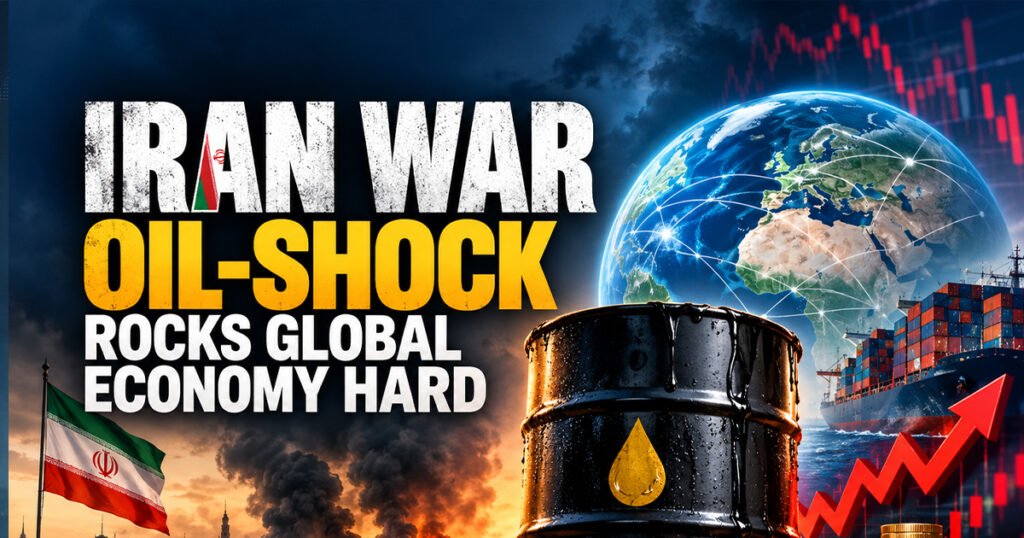
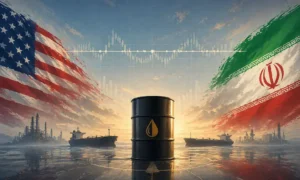
The conflict that erupted in late February 2026 between the United States, Israel and Iran has triggered a major disruption to global energy markets, exposing the vulnerability of international commerce to geopolitical instability. What began as a regional military confrontation has evolved into a wider economic crisis, as attacks on shipping and energy infrastructure disrupted flows through the Strait of Hormuz, one of the world’s most strategically important maritime corridors. Through this waterway normally passes approximately one-fifth of global oil consumption and a substantial share of internationally traded liquefied natural gas (LNG).
Eight months into the conflict, the economic consequences remain far-reaching. Elevated oil prices, renewed inflationary pressures, rising transportation costs and weakening growth prospects have placed governments, businesses and households under considerable strain. Although emergency stock releases, alternative supplies and reduced consumption have helped contain the immediate damage, the crisis continues to test the resilience of the global economic system.
Before the conflict intensified, approximately 20 million barrels of crude oil and petroleum products passed through the Strait of Hormuz daily, accounting for roughly one-quarter of global seaborne oil trade. The waterway was also critical to international LNG supplies, particularly shipments originating from Gulf producers.
The disruption of these flows created a significant supply shortfall. Even after accounting for alternative export routes, emergency inventory releases and reduced consumption, estimates suggest the net supply gap approached 12 million barrels per day at the height of the crisis.
The situation was worsened by damage to Middle Eastern refining infrastructure. Assessments cited in the report indicate that more than one-fifth of the region’s refining capacity, estimated at 9.6 million barrels per day, was taken offline. Consequently, markets faced a double shock: reduced crude availability and an even more acute shortage of refined products, particularly diesel and gasoline.
Prices That Refuse to Retreat
Brent crude, the global benchmark, has spent much of the past several months trading above $100 a barrel. By early October 2026 it remained roughly 40 percent higher than levels recorded when the conflict began. Physical crude markets and refined product prices told an even starker story. Dated Brent and various fuel benchmarks stayed elevated longer and rose further than futures contracts, reflecting genuine shortages rather than pure speculation.
Diesel margins expanded dramatically. European diesel cracks more than tripled while United States diesel prices reached record territory earlier in the year. Gasoline prices in the United States climbed more than a dollar a gallon from pre-war levels in some periods, landing around 4 dollars or higher. These product price spikes mattered more to households and businesses than the headline crude number because they directly raised transportation, logistics and heating costs.
Inventory buffers absorbed part of the initial shock. Global crude and product stocks fell by hundreds of millions of barrels. Strategic petroleum reserves were released in coordinated fashion. China, the world’s largest importer, sharply reduced its purchases at times, drawing down its own substantial commercial inventories. United States production and other Atlantic Basin supply increased. Collectively these responses prevented prices from remaining at the peak levels seen in the spring, when Brent briefly approached or exceeded 120 dollars.
Yet the buffers are now thinner. Commercial inventories in key consuming regions stand at multi decade lows for the season. The capacity of governments to release more emergency stocks has diminished.
Inflation and the Return of Monetary Tightening
Higher energy costs have fed directly into consumer price indexes. United States inflation accelerated with energy contributing a substantial share of the increase. Eurozone inflation also picked up, driven by double digit rises in energy components. Japan’s producer prices climbed sharply. The pass-through has been uneven but unmistakable, particularly in transportation dependent sectors and among lower income households that spend a larger share of income on fuel and food.
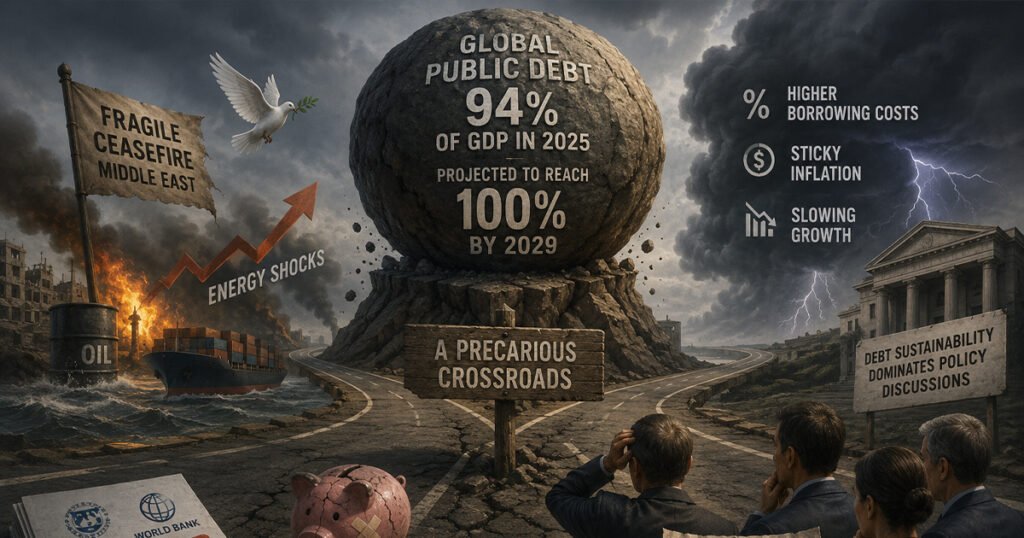
Central banks that had hoped to ease policy or hold rates steady found themselves confronting renewed inflationary pressure. The Federal Reserve and European Central Bank began raising key rates again. The Bank of England was expected to follow. Global borrowing costs rose to levels not seen in decades, complicating debt servicing for governments, corporations and households already carrying elevated leverage from earlier years.
The inflation shock arrives at a delicate moment. Many economies were still navigating the aftermath of previous energy and supply chain disruptions. The combination of higher input costs and tighter financial conditions raises the risk of slower growth or outright contraction in energy importing regions.

Regional Winners and Losers
Gulf Cooperation Council economies face a paradoxical outcome. Higher oil prices boost revenues for surviving export volumes, yet the World Bank projects an average contraction of 4.3 percent for the group this year, a sharp downward revision from earlier forecasts. Physical damage to infrastructure, higher insurance and shipping costs, and uncertainty over future flows have weighed heavily. Recovery is expected in 2027 if shipping normalizes, but that remains conditional.
Energy importing Asia faces particular strain. Higher import bills pressure current accounts and fiscal balances where fuel subsidies remain in place. Governments must choose between stretching budgets to shield consumers or allowing prices to rise and accepting the political and inflationary consequences. Credit rating agencies have flagged rising risks for some emerging markets as subsidy costs and import bills expand while remittances, tourism and investment flows face disruption.
Europe continues to feel the effects of both the Middle East shock and ongoing constraints on Russian energy. Diesel shortages have been especially acute. Industrial users and transport operators have absorbed higher costs or reduced activity. The experience of the earlier Russia related energy crisis left the continent more prepared in some respects, yet the cumulative pressure remains significant.
The United States has been relatively insulated on the crude supply side because of its domestic production. Nevertheless, refined product prices and the broader inflation impulse still affect American consumers and the Federal Reserve’s policy calculus. Political sensitivity around gasoline prices remains high ahead of midterm elections.
Demand Destruction and Adaptive Behavior
One of the more striking features of the current shock has been the speed of demand adjustment. Global oil demand has run several million barrels per day below year earlier levels. Part of that reduction reflects higher prices forcing conservation and substitution. Part reflects slower economic activity in some regions. China’s willingness to curb imports and draw inventories played a particularly large stabilizing role early in the crisis.
Airlines, shipping companies and manufacturers have adjusted routes, speeds and production schedules. Some industries have accelerated efficiency investments that were already under consideration. The energy transition underway for more than a decade has also reduced the oil intensity of GDP relative to previous decades, limiting the macroeconomic damage compared with the 1970s oil shocks.
Still, demand destruction is not costless. Lower consumption often accompanies weaker growth. Households cut discretionary spending when fuel and heating bills rise. Businesses delay investment. The net effect has been a meaningful drag on global activity even if the feared deep recession has so far been avoided.
Policy Responses and Their Limits
Governments and international institutions have deployed a range of tools. Coordinated stock releases, diplomatic efforts to reopen shipping lanes, and accelerated development of alternative export infrastructure have all featured. The International Monetary Fund has described the energy price shock as large but contained so far, while warning that high prices are likely to persist even if the conflict ends relatively soon.
Monetary authorities face a classic dilemma. Raising rates to combat inflation risks amplifies any growth slowdown. Holding rates steady risks allowing inflation expectations to become unanchored. Fiscal authorities in importing countries confront similar trade-offs between supporting households and preserving debt sustainability.
Producers outside the Middle East have responded by maximizing output where possible. United States shale and other flexible supply sources have helped fill part of the gap. Yet, the global spare capacity cushion remains limited and the logistics of moving oil around a disrupted Hormuz continue to impose costs and delays.
The Longer Shadow of Uncertainty
Perhaps the most lasting economic consequence is the elevation of geopolitical risk premiums. Markets now price the possibility of renewed disruption more heavily than before. Insurance rates for Gulf shipping have soared. Freight costs remain elevated. Companies are reconsidering supply chain configurations and inventory strategies with greater emphasis on resilience over pure efficiency.
The conflict has also highlighted the continued centrality of oil and gas to the world economy despite years of transition rhetoric. While renewables and efficiency-gains have reduced vulnerability, the absolute volumes of hydrocarbons required remain vast. A prolonged or intensified disruption would therefore still carry severe consequences.
Forecasts for the remainder of 2026 and into 2027 vary widely depending on assumptions about the duration of hostilities and the pace of Hormuz normalization. In scenarios of continued friction, prices could remain in an $80 to $120 range or higher. A durable settlement that restores full shipping freedom would allow a more rapid decline, though the physical and psychological scars on the market would fade only gradually.
A Test of Global Resilience
The Iran war oil shock has tested the resilience of the international economic system more severely than any energy event in decades. Adaptive responses, demand flexibility, inventory management and non-Middle East supply growth have prevented the worst outcomes. Growth has slowed but not collapsed. Inflation has risen but has not yet spiraled out of control in most major economies.
Yet the margins of safety have narrowed. Inventories are lower. Policy rates are higher. Political tolerance for further price increases is limited. Any significant new disruption would encounter a system with fewer buffers than existed in February 2026.
The shock that began in the waters of the Strait of Hormuz continues to reverberate through every major economy on the planet.