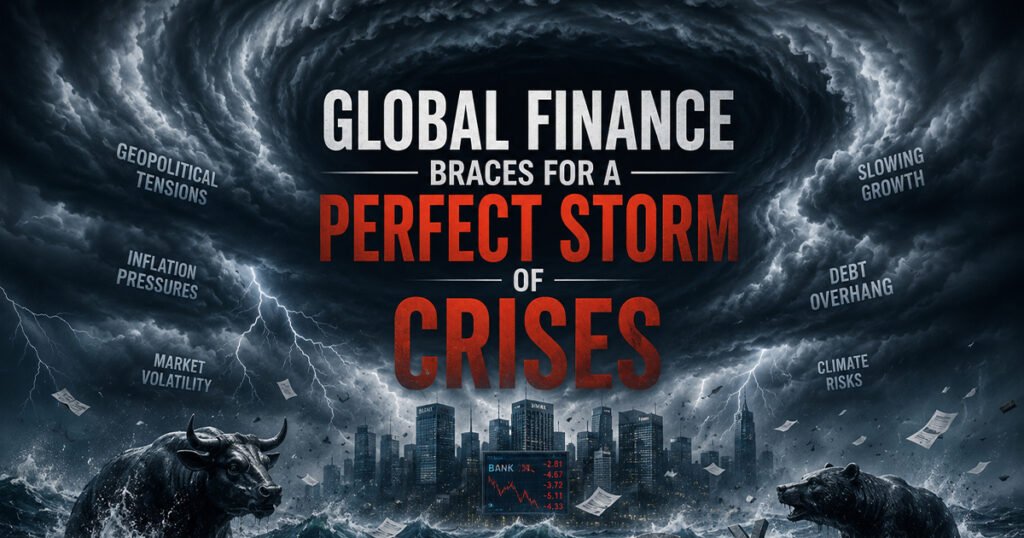

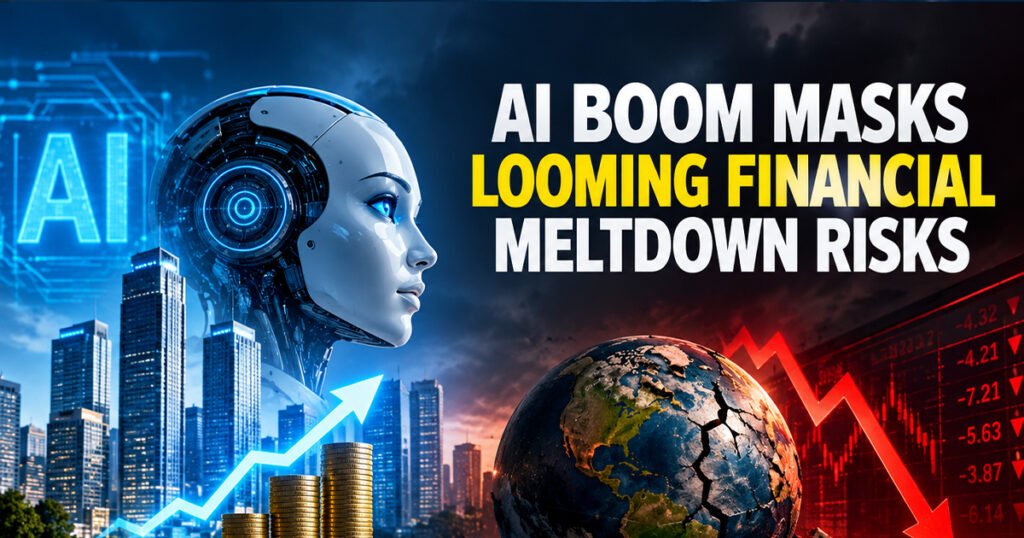
Global finance in late 2026 presents a striking contradiction. On the surface, markets are buoyed by enthusiasm for artificial intelligence (AI). Massive investments in data centres, semiconductors and software are driving earnings growth, lifting equity valuations and fuelling expectations that technological innovation could usher in a new era of productivity.
Beneath this optimism, however, financial vulnerabilities are accumulating. Elevated energy prices linked to the prolonged Middle East conflict, mounting public debt, rising borrowing costs and renewed inflation concerns are placing pressure on an already stretched global economy. So far, the AI boom has helped sustain investment and market confidence despite these headwinds. Yet its growing influence on asset prices raises a critical question: is the technology rally strengthening the global economy, or obscuring risks that could become more damaging if market sentiment reverses?
These competing forces have become increasingly important to investors and policymakers as they assess the outlook for international financial stability. Economic growth has proved more resilient than many anticipated following the latest energy disruptions, but resilience should not be confused with the absence of risk. Elevated valuations, concentrated market leadership and expensive borrowing could leave financial markets vulnerable to a sharp correction.
Understanding the relationship between the AI investment boom and these underlying pressures is therefore essential to assessing the direction of global finance.
Equity Markets Ride the Artificial Intelligence Wave
Equity markets have become the most visible expression of confidence in artificial intelligence. Major indices in the United States and parts of Asia have drawn substantial support from a relatively small group of companies whose earnings and capital expenditure plans are closely tied to AI development.
Semiconductor manufacturers, cloud-service providers and software companies continue to attract investor interest as demand for advanced computing infrastructure expands. Strong earnings, ambitious investment plans and expectations of future productivity gains have supported valuations, encouraging institutional investors and retail traders to increase their exposure to the sector.
The effects extend beyond share prices. Higher equity valuations can strengthen corporate balance sheets, improve access to capital and provide companies with more valuable shares to use in acquisitions. Rising asset prices can also support household wealth in economies where equity ownership is widespread, while benefiting pension funds and insurers through higher portfolio valuations.
In this sense, the AI boom has provided an important source of financial support during a period of geopolitical uncertainty, elevated energy costs and tighter monetary conditions.
Concentration risk, however, has grown acute. When a handful of firms account for a disproportionate share of index performance, any disappointment in guidance or any slowdown in capital spending can produce outsized declines. Leverage among hedge funds and other leveraged investors have risen in equity markets, amplifying the potential for forced selling if prices reverse. Cross border capital has poured into the leading AI jurisdictions, creating large and potentially reversible flows that could pressure currencies and emerging market assets if sentiment shifts.

Sovereign Debt Markets Flash Warning Signals
While equities celebrate, sovereign debt markets tell a more cautious story. Public debt ratios stand near the highest levels recorded since the middle of the twentieth century, and projections show the global aggregate continues to climb. The United States, several large European economies, and a range of emerging markets all face heavier interest burdens as yields rise. The ten year United States Treasury yield has moved into territory last seen more than twenty years ago, pulling global borrowing costs higher in its wake.
Higher yields tighten financial conditions for governments, corporations, and households simultaneously. Governments must devote a larger share of revenue to debt service, limiting fiscal flexibility. Corporations refinancing existing obligations or funding new projects confront steeper costs, particularly outside the strongest technology names. Mortgage markets have already responded, with United States borrowing rates climbing for consecutive weeks and similar pressure appearing in other jurisdictions.
European sovereign spreads have widened noticeably at times, reflecting investor differentiation between stronger and weaker fiscal positions. The French-German yield gap has reached levels that recall earlier periods of euro-area stress. These moves matter for global finance because European government bonds serve as important benchmarks and collateral in international funding markets. Any sustained deterioration in confidence could impair liquidity and raise risk premia across a wide range of assets.
Energy Prices Transmit Stress Through Financial Channels
The Middle East conflict has kept oil prices elevated and volatile, with Brent crude frequently trading above $100 a barrel. For financial markets the implications run deeper than the simple cost of fuel. Energy is both a major input cost and a financial asset class.
Import dependent economies face deteriorating current account positions and pressure on their currencies. Capital outflows from these markets can accelerate when energy bills rise and growth prospects dim. Exporters of energy experience the opposite inflow, creating large and sometimes destabilizing shifts in global liquidity. Banks with exposure to energy intensive industries or to countries heavily reliant on fuel imports must reassess credit risk. Derivatives markets that hedge oil and refined products see elevated volumes and occasional strains in margin requirements.

The persistence of high energy costs also complicates the work of central banks. Inflation that had been moderating has received a fresh upward impulse. Policymakers must weigh the risk of entrenching higher price expectations against the danger of tightening too far into a global economy already absorbing a supply shock. The financial system feels every incremental decision through higher short term rates, steeper yield curves, and adjustments in asset allocation.
Central Bank Policy and the Cost of Capital
Major central banks have responded to the renewed inflation threat with a more restrictive stance. The Federal Reserve has raised rates after an extended pause. The Bank of Japan has lifted its policy rate to the highest level in more than three decades. Other institutions have either delivered increases or clearly signaled readiness to do so. These actions raise the risk free rate that underpins valuation models across equities, credit, and real estate.
For global finance, the rise in the cost of capital is especially consequential in a period of heavy investment. AI related projects often require large upfront outlays with returns expected over multi-year horizons. Higher discount rates reduce the present value of those future cash flows and can prompt companies to delay or scale back spending.
Corporate bond issuance remains active, yet the terms have become less favorable for all but the strongest credits. Banks face higher funding costs that eventually pass through to loan pricing.

Credit Markets and Banking Sector Exposures
Credit markets reveal the uneven distribution of strength and vulnerability. Investment grade technology and AI related issuers continue to access capital markets on relatively favorable terms. Lower rated or more energy sensitive borrowers face wider spreads and reduced appetite from investors. Private credit, which expanded rapidly in recent years, now operates in an environment of higher base rates and greater uncertainty about collateral values in certain sectors.
Banks sit at the center of these dynamics. They intermediate the heavy capital expenditure of technology firms while simultaneously managing exposures to commercial real estate, energy, and sovereign debt. Higher interest rates improve net interest margins for many institutions in the short run, yet they also raise the risk of deteriorating asset quality if growth slows or if leveraged borrowers encounter difficulty refinancing.
Regulatory attention has increased around liquidity, leverage in non-bank intermediaries, and potential contagion channels between sovereign bond markets and the broader financial system.
Cross border banking flows remain sensitive to relative interest rates and risk perceptions. Any sudden rise in risk aversion could prompt a retrenchment of dollar funding or a reduction in emerging market lending, amplifying stress in already vulnerable jurisdictions.
Systemic Risks Amplified by Market Structure
Several structural features of today’s financial system heighten the potential for a rapid shift from calm to turmoil. Compressed risk premia in both equity and credit markets leave limited room for disappointment.
The growing role of non-bank financial institutions in sovereign bond markets and in the provision of leverage means that traditional banking safeguards do not cover all important actors. Algorithmic trading and rapid information diffusion can accelerate price moves once a catalyst appears.
The AI narrative itself has become a systemic factor. As long as earnings and capital spending remain strong, the positive feedback loop supports asset prices and risk appetite. Geopolitical risk adds another layer. Further disruption to energy supplies or an escalation that threatens additional shipping routes would immediately re-price inflation expectations, policy rate paths, and risk assets. Financial markets have shown an ability to recover quickly from earlier shocks, yet each recovery has left valuations higher and debt levels larger, reducing the margin of safety.
The Narrow Path for Global Finance
Global finance has navigated successive shocks in recent years with greater resilience than many expected. That resilience has depended in no small part on the capital spending and valuation support generated by artificial intelligence. Yet resilience is not the same as immunity. When one sector carries a disproportionate share of the burden of supporting asset prices and economic activity, the system becomes more vulnerable to a reversal in that sector’s fortunes.
The financial system remains exposed to a combination of high leverage in places, elevated valuations, large public debt stocks, and an unresolved energy supply disruption. The AI boom has masked the full force of these risks for a time. Whether it can continue to do so, or whether markets will be forced to confront them more directly, will determine the stability of global finance through the remainder of 2026 and beyond. The stakes for investors, banks, governments, and the wider economy could scarcely be higher.