

From a response to Ghana’s energy crisis to a strategic national gas infrastructure company, Ghana Gas is entering a new chapter, one defined by operational resilience, disciplined growth, infrastructure expansion, financial prudence and a renewed ambition to unlock greater value from Ghana’s natural gas resources.
There are few institutions whose operations are so closely connected to the everyday functioning of Ghana’s economy, yet remain largely invisible to the ordinary citizen.
When electricity reaches homes, factories keep their machines running and businesses remain productive, there is a complex chain of infrastructure and people working behind the scenes to make it possible. At a critical point in that chain sits the Ghana National Gas Limited Company popularly known as Ghana Gas.
From its operations at Atuabo in the Western Region, Ghana Gas processes indigenous natural gas and transports lean gas to power producers and industrial users. Its role places the company at the intersection of energy security, industrialisation, economic development and national infrastructure.
Today, however, Ghana Gas is no longer simply defined by what it was established to do.
Under a new management led by Chief Executive Officer, Judith Adjobah Blay, the company is increasingly positioning itself for the next phase of Ghana’s energy story, one in which reliability, investment, efficiency, commercial discipline, cost control and expansion are becoming just as important as production.
From Energy Crisis to Strategic National Asset
Ghana Gas was incorporated in 2011 against the backdrop of a national energy challenge. Its establishment was driven by the need to process Ghana’s indigenous natural gas and reduce the country’s dependence on imported liquid fuels for power generation.
Commercial operations began in 2015, following the commissioning of the Atuabo Gas Processing Plant. The company has since evolved into Ghana’s principal midstream gas infrastructure company, responsible for gathering, processing, transporting and marketing natural gas and natural gas liquids.
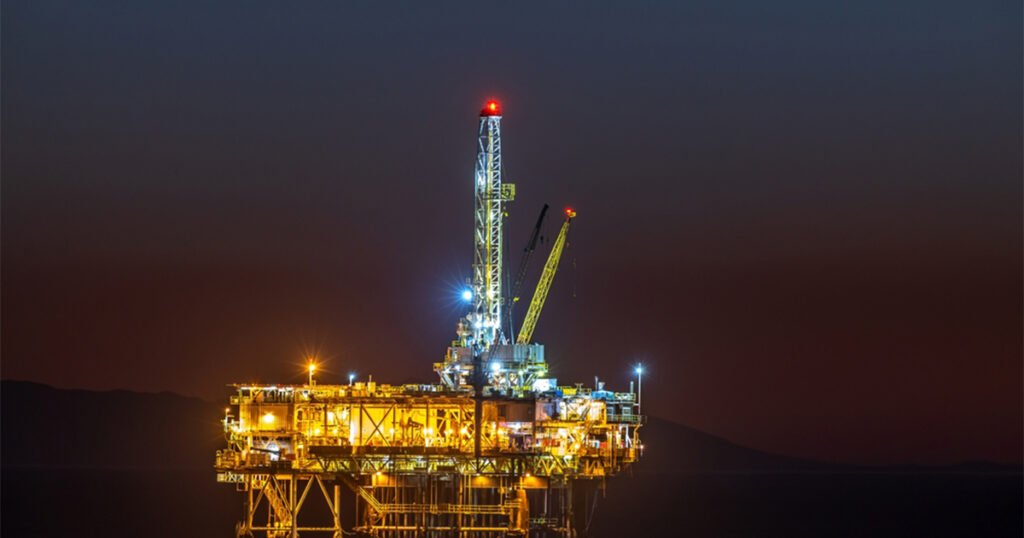
Its infrastructure includes a 58-kilometre offshore gas pipeline, the Atuabo Gas Processing Plant, transmission pipelines, compressor facilities, metering and regulating stations and LPG-loading infrastructure. The Atuabo plant has a design capacity of 150 million standard cubic feet per day, with normal operating capacity of about 120 million standard cubic feet per day.
At the processing plant, raw gas is transformed into pipeline-quality lean gas, while valuable natural gas liquids, including LPG, pentanes and stabilised condensates are recovered.
The significance is enormous.
The lean gas produced by Ghana Gas feeds the power generation chain, while the company’s infrastructure also supports industrial activity. In practical terms, the journey from Ghana Gas through power generation and transmission to electricity distribution connects the company’s operations to homes, businesses and industries across the country.
This makes Ghana Gas more than an energy company. It is a strategic component of Ghana’s economic infrastructure.
A New Chapter Under Judith Adjobah Blay
It is against this background that the leadership of Judith Adjobah Blay assumes particular significance.
Since taking the helm, the CEO has increasingly articulated a management philosophy centred on operational efficiency, financial prudence, cost reduction, infrastructure investment, partnerships and organisational transformation.
The emerging direction is perhaps best captured in the company’s shift from simply measuring performance through profitability to asking a broader question: How can today’s gains be protected, strengthened and converted into better infrastructure and greater reliability tomorrow?
That thinking is reflected not only in the company’s investment priorities, but also in the way management is approaching expenditure.
A Clear Focus on Financial Prudence and Cost Cutting
A defining feature of Blay’s approach is a stronger emphasis on financial discipline and prudent cost management.
For Ghana Gas, cost cutting is not being treated as a narrow exercise in reducing expenditure at all costs. Rather, it is being positioned as a way to eliminate waste, improve efficiency, strengthen accountability and ensure that available resources are directed towards the company’s most critical operational and strategic priorities.
This approach is particularly important for a national energy company operating in an environment affected by foreign-exchange movements, tariffs, commodity markets, maintenance demands and changing customer requirements.
By reviewing operating expenses, tightening expenditure controls and prioritising value for money, management is seeking to ensure that every cedi spent contributes meaningfully to production, reliability, safety, infrastructure or long-term growth.
The reduction in operating expenses recorded in the company’s recent financial performance reflects this direction. It suggests a management team that is paying closer attention to procurement, administrative costs, operational efficiency and the overall cost structure of the business.
The objective is not simply to report higher profits. It is to build a leaner, more resilient and more financially sustainable organisation.
This financial prudence also supports the company’s investment agenda. Savings generated through cost control can be redirected towards maintenance, equipment upgrades, redundancy, digital systems and expansion projects. In that sense, cost cutting becomes a means of protecting the future rather than merely reducing the present.
The approach can be summarised in three principles: spend carefully, invest strategically and eliminate inefficiencies that weaken operational performance.
That discipline is especially important as Ghana Gas prepares to finance major infrastructure requirements, including additional processing capacity and improved system redundancy.

Performance With Greater Financial Discipline
The company’s recent financial performance provides an important backdrop to this strategy.
Ghana Gas recorded a net profit of approximately GH¢248 million in 2025, representing a 97 percent increase, despite a decline in revenue. The company also recorded increased gas processing and LPG production during the period.
The financial statements reported revenue of approximately GH¢5.85 billion, compared with GH¢6.56 billion in 2024, while operating expenses fell by about eight percent. Capital expenditure stood at approximately GH¢426 million, with investments directed toward strategic infrastructure and reliability.
The figures are significant not simply because they demonstrate profitability, but because they point to an organisational emphasis on cost control and more disciplined expenditure.
The improvement in profit, despite lower revenue, highlights the importance of management’s cost-cutting efforts. It indicates that stronger financial performance can come not only from increasing sales or production, but also from improving internal efficiency and ensuring that expenditure is carefully managed.
For a national energy company, this is a critical lesson. Financial prudence creates room for reinvestment, reduces pressure on the balance sheet and strengthens the company’s ability to respond to operational challenges.
Management’s challenge now is to ensure that these gains are sustained without compromising safety, maintenance, staff capacity or the quality of service delivered to power producers and industrial users.
From Maintenance to Resilience
One of the clearest tests of any gas-processing organisation is how effectively it manages maintenance without compromising the wider energy system.
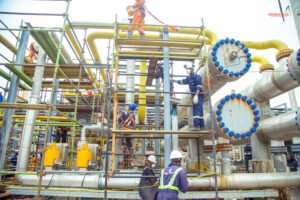
Ghana Gas has continued to undertake planned maintenance and reliability interventions at Atuabo. In April 2026, for example, the company and GRIDCo coordinated a temporary shutdown to replace a damaged Burner Management System, with safeguards put in place to minimise disruption to the power supply chain.
The broader maintenance agenda is even more significant as Ghana’s gas infrastructure expands.
The Energy Commission’s 2026 outlook includes planned activities at Atuabo involving offshore and onshore pigging, GPP II tie-in works and other infrastructure interventions.
The objective is not simply to keep existing equipment functioning. It is to build a system capable of absorbing operational shocks while maintaining the flow of gas to critical customers.
That is why redundancy has become an increasingly important part of the company’s strategic conversation.
Financial prudence supports this objective by ensuring that maintenance and reliability investments are prioritised, while non-essential or inefficient spending is reduced.
Building the Next Generation of Gas Infrastructure
The future of Ghana Gas will be closely connected to infrastructure expansion.
The proposed Second Gas Processing Plant (GPP II) represents one of the country’s most important gas infrastructure projects. Government established an implementation committee in 2025 to advance the project, which is intended to expand Ghana’s gas-processing capacity beyond the current capacity at Atuabo.
The rationale extends beyond increasing processing volumes.
More processing capacity means greater ability to utilise Ghana’s natural gas resources, recover valuable natural gas liquids, support power generation, serve industries and reduce the amount of potentially valuable gas that goes unprocessed.
The Finance Ministry has described GPP II as a transformative project with potential implications for energy security, industrial output, job creation and economic savings.
For Ghana Gas, therefore, the next phase is likely to involve a combination of capacity expansion, infrastructure redundancy, transmission development, commercialisation, technology and disciplined capital allocation.
The company’s cost-conscious approach will be important in this regard. Major projects require careful planning, transparent procurement, rigorous project controls and a clear assessment of expected returns. Financial prudence can help ensure that expansion does not create unnecessary financial pressure or divert resources from existing operational needs.

A Broader Commercial Horizon
Another defining feature of the company’s evolving direction is the effort to create greater commercial value from Ghana’s gas resources.
Ghana Gas is already involved in the production and marketing of lean gas, LPG, pentanes and condensates. Its infrastructure provides the foundation for connecting natural gas resources to power generation and industrial users.
Recent initiatives have also included the acquisition of the AKSA Energy 4-kilometre high-pressure gas pipeline in Tema and agreements involving new industrial gas connections and infrastructure.
Such developments point towards a future in which Ghana Gas increasingly operates not merely as a processor of gas, but as an integrated national gas infrastructure and commercial platform.
This has implications for industrialisation.
Reliable gas can support industries that require consistent energy inputs. It can enable new manufacturing opportunities, improve the competitiveness of existing businesses and create opportunities for domestic value addition.
The strategic question, therefore, is no longer simply how much gas Ghana can produce.
It is how much economic value Ghana can create from every unit of gas it produces—and how efficiently the company can convert its resources into that value.
People, Local Content and Institutional Capacity
Infrastructure alone cannot deliver this ambition.
Ghana Gas’s future will depend equally on the technical competence, professional capacity and institutional culture of its workforce.
The company has increasingly emphasised the development and utilisation of Ghanaian technical expertise, while strengthening local participation across its operations.
This is particularly important in an industry where specialised engineering and operational knowledge can be expensive to acquire internationally.
Building a strong Ghanaian technical workforce therefore serves two purposes: it strengthens institutional knowledge while retaining greater economic value within the country.
The emerging management direction also places emphasis on accountability, governance and disciplined decision-making. At board level, the Chairman, Hon Kofi Totobi Quakyi together with his team have strengthened internal controls and reporting frameworks have been identified as part of efforts to safeguard sustainability and organisational performance.
These controls are also central to financial prudence. Effective oversight has helped prevent waste, improved procurement outcomes, strengthened budget compliance and ensured that cost-cutting measures are implemented responsibly rather than arbitrarily.

The Future: From Reliability to Expansion
Ghana Gas will have to navigate increasing demand from power generation and industry, ageing infrastructure, maintenance requirements, financing pressures, evolving energy markets and the global transition toward lower-carbon energy systems.
Yet natural gas is likely to remain an important part of Ghana’s energy mix for the foreseeable future, particularly because of its role in supporting electricity generation and industrial activity.
The company’s future agenda therefore points towards several interconnected priorities:
greater processing capacity; stronger transmission infrastructure; improved operational redundancy; increased reliability; deeper industrial partnerships; commercialisation of gas liquids; stronger local technical capacity; digitalisation; cost efficiency; financial prudence; and disciplined investment.
The proposed GPP II, the planned third compressor, expansion of transmission infrastructure and efforts to strengthen the company’s commercial base all form part of this broader picture.
The ambition is clear: Ghana must move from simply possessing natural gas resources to extracting maximum economic and strategic value from them.
The CEO and management are focused on ensuring that Ghana Gas achieves these ambitions through disciplined financial investment and a high sense of commitment on the part of all staff.
More than a decade later, it has become part of the infrastructure through which Ghana’s energy security and industrial aspirations are pursued.
Under Judith Adjobah Blay’s leadership, the company is entering another stage of that journey: one that places greater emphasis on reinvestment, operational resilience, efficiency, financial prudence, cost cutting, infrastructure expansion and value creation.
The ultimate measure of this new chapter will not be found only in financial statements or production figures.
It will be seen in the reliability of gas supplied to power producers, the industries that can operate with greater certainty, the jobs and businesses enabled by dependable energy, the infrastructure Ghana builds and, ultimately, the economic value generated from the country’s own natural resources.
Ghana Gas has already demonstrated that indigenous gas can power a national economy.
The next challenge and opportunity is to ensure that the infrastructure, investment, innovation and financial discipline surrounding that gas are strong enough to power Ghana’s next era of industrial and economic transformation.