

In an era of geopolitical instability, climate volatility and disrupted supply chains, energy security has become central to national resilience and economic growth. For Ghana, which is both a hydrocarbon producer and a country working to secure reliable and affordable power, the energy sector presents significant opportunities alongside persistent vulnerabilities.
While Ghana has made progress in oil and gas, power generation, renewable energy and regional interconnectivity, the economy remains exposed to imported refined petroleum products, changing hydrological conditions, generation constraints and substantial infrastructure-financing needs. Strengthening the energy value chain therefore requires not only policy and infrastructure, but also long-term access to capital.
Fuelling Growth in Ghana’s Energy Industry
Financial institutions occupy a critical position in this effort. Energy projects—spanning upstream exploration and production, midstream infrastructure, downstream distribution, power generation and the transition towards cleaner energy—require substantial capital, sophisticated risk management and financing structures suited to their different cash-flow cycles.
It is within this critical space that GCB Bank PLC has positioned itself—firmly “in the energy room.”
As one of Ghana’s leading indigenous financial institutions, GCB Bank PLC supports initiatives across the energy sector aimed at strengthening supply security, facilitating industrial growth and addressing some of the vulnerabilities within the energy value chain. Its support has extended to major energy infrastructure, including the relocation of the Independent Power Producer (IPP) facility from Tema to Takoradi and the establishment of a bitumen plant in Tema. Through targeted financing, advisory capabilities and strategic partnerships, the bank connects Ghana’s energy ambitions with the capital required to translate them into tangible infrastructure and economic opportunities.
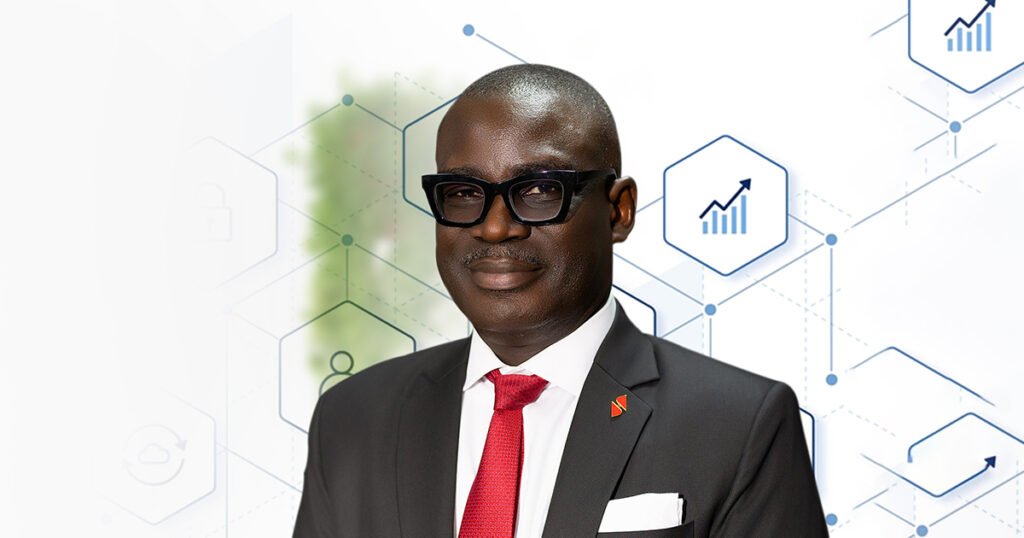
In an exclusive engagement with The Vaultz Africa, Mr Linus Kumi, Executive Head of Corporate Banking within the Wholesale & Investment Banking Division at GCB Bank PLC, outlined the bank’s growing role in Ghana’s energy sector and how it is positioning itself to fuel growth as “The Bank in the Energy Room.”
Energy at the Core of GCB’s Overall Strategy
Highlighting the importance of Ghana’s energy sector to GCB Bank’s broader corporate strategy, Mr Kumi noted that the sector occupies a significant position within the bank’s portfolio.
“It is roughly a fifth of our total corporate portfolio, and it is organised into segments that cover the whole value chain, from upstream exploration and production right through midstream logistics to downstream distribution. That scale is not accidental.”
According to Mr Kumi, the bank’s extensive exposure to the sector reflects its understanding of the fundamental role energy plays in Ghana’s economic development.
As Ghana’s leading indigenous bank, GCB Bank PLC recognises that a stable and well-financed energy sector provides the foundation for activity across virtually every other part of the economy—from manufacturing and agro-processing to transportation, commerce and government’s flagship 24-hour economy agenda under President Mahama’s administration.
“So, our approach, under the direction of our Managing Director, Farihan Alhassan, is to be a long-term partner to the sector rather than an opportunistic lender. We provide patient capital, structured facilities and advisory support so operators can plan with confidence, while keeping our own exposure within the prudential limits the Bank of Ghana sets for us.”

GCB Bank’s Approach to Energy Financing Since 2018
GCB Bank PLC’s growing role in Ghana’s energy sector has been underpinned by a deliberate and increasingly structured approach to energy financing. Reflecting on how the bank’s strategy has evolved , Mr Kumi explained that GCB formalised its engagement with the sector in 2018 with the establishment of a dedicated Energy Desk focused on both oil and gas and power.
From the outset, the bank adopted a value-chain approach, seeking to understand and finance opportunities across the upstream, midstream and downstream segments of the energy industry.
Particular attention, according to him, was given to Oil Marketing Companies (OMCs) and Bulk Distribution Companies (BDCs) licensed by the National Petroleum Authority, alongside dealers and transporters operating within the petroleum distribution ecosystem.
“Our first major transaction was a deal in excess of US$20 million with the Ghana National Petroleum Corporation in 2018, and that really set the tone for everything that followed.

“Since then, we have been deliberate about growing our exposure to Bulk Distribution Companies, using well-structured escrow arrangements to manage counterparty and cash flow risk with the key players in that space. That discipline mattered across the wider energy sector, where the power sub-sector alone carried billions of dollars in legacy arrears for years, a position the Government addressed through its US$1.47 billion legacy debt settlement, which also restored the World Bank’s Partial Risk Guarantee for the sector.”
Mr Kumi indicated that the bank successfully navigated the period of sector-wide stress because its approach remained firmly structure-led, with the strength of that strategy reflected in the bank’s portfolio performance.
“Our energy portfolio, assets and liabilities combined, now stands at over GHS 7 billion, which tells you how much trust we have built with our clients and how well our risk framework has held up.”
Managing Key Risks in Financing Ghana’s Power and Petroleum Sectors
While opportunities in Ghana’s power and petroleum sectors remain significant, financing businesses across the energy value chain comes with considerable risks. According to Mr Kumi, credit risk remains the foremost concern, with the potential diversion of funds representing a particular area of exposure. “In our experience, that risk shows up most with midstream players,” he explained.
Mr Kumi noted that there is a risk that trade facilities intended specifically for petroleum imports may be redirected into short-term activities outside their approved purpose. Such practices can create exposures that extend well beyond the purpose for which the financing was originally approved.
“We manage this mainly through structure: escrow-based collection and disbursement, tight end-use monitoring, and facilities where drawdowns are tied directly to a verifiable underlying transaction. That gives us visibility over the cash throughout the cycle and cuts down significantly on the risk of facilities being redeployed for something other than what they were approved for.”
Trade Finance, Foreign Exchange and Structured Solutions for Energy Clients
Given the working-capital intensity and transaction-driven nature of the energy sector, GCB Bank PLC provides clients with a range of trade finance and structured solutions tailored to their specific cash-flow and operational requirements.
Mr Kumi highlighted several of these instruments, including revolving trade lines, documentary letters of credit under UCP 600, standby facilities under ISP98, invoice discounting and borrowing-base facilities secured against stock and receivables.
Bespoke escrow structures also form part of the bank’s offering. According to him, these arrangements provide greater comfort and transaction security for the various parties involved, including off-takers, suppliers and lenders.
He explained that such structures are particularly suited to the working-capital cycles of energy businesses, allowing the bank to support clients across their trade, liquidity and transaction-financing requirements rather than relying solely on conventional term lending.
Foreign exchange and commodity-price volatility are additional considerations for energy-sector businesses, particularly given that petroleum imports and much of the equipment required across the sector are denominated in US dollars.
“So foreign exchange is a real consideration for our clients. We help them source the foreign currency they need through the interbank market, in line with Bank of Ghana guidelines, and we structure hedges, forward contracts mainly, so they can lock in rates and manage their exposure to currency and commodity swings.”
These solutions, he added, provide businesses with greater certainty when planning costs and margins in an environment where exchange rates and commodity prices can change rapidly.

Strengthening Local Participation Across the Energy Value Chain
Beyond financing individual transactions, GCB Bank sees an opportunity to deepen local participation across Ghana’s energy value chain by strengthening the financial and operational capacity of indigenous businesses.
Mr Kumi identified stock financing as one important area, particularly for local distributors and dealers operating under licences issued by the National Petroleum Authority. Access to appropriate financing enables these businesses to maintain adequate product inventories and respond more effectively to market demand.
The bank also provides trade lines that can enable indigenous companies to undertake direct imports rather than depend exclusively on intermediaries. Guarantees provide another avenue of support, helping local businesses lift petroleum products from depots and terminals, including through structures linked to the Unified Petroleum Price Fund.
“Strengthening the balance sheets and operational capacity of local players is, to my mind, one of the more important things we can do for a resilient, competitive domestic value chain.”
Building the Foundation for Green Financing
GCB Bank’s energy-sector strategy also extends beyond conventional oil and petroleum financing. The bank is drawing on its experience with the Sustainable Use of Natural Resources and Energy Finance (SUNREF) programme as it develops its broader green-financing capabilities.
Mr Kumi noted that the programme provided valuable practical experience in assessing and structuring renewable-energy and energy-efficiency projects, while also demonstrating strong demand among businesses seeking to reduce energy costs and improve their competitiveness.
Implemented with the Agence Française de Développement (AFD) and the European Union, the programme comprises a US$13.7 million credit line and a €1 million technical-assistance grant.
The impact is already visible. In one case, SUNREF financing supported a manufacturing company to install solar photovoltaic systems, reducing its energy costs by approximately 40 percent while lowering its carbon footprint.
The experience, according to him, has strengthened the bank’s understanding of how to structure, appraise and finance projects that deliver both commercial and environmental benefits.
“Going forward, we want green financing to stop being a specialised, programme-led offering and just become part of our normal conversation with corporate and commercial customers, increasingly through sustainability-linked structures rather than facilities that depend on grant funding.”
This experience could broaden access to sustainable financing while embedding green solutions more firmly within the bank’s corporate banking activities.
Financing Options for Businesses Investing in Solar and Clean Energy
As businesses increasingly seek to reduce energy costs, improve operational resilience and manage exposure to power-supply challenges, GCB Bank is expanding financing opportunities for investments in solar power, energy efficiency and other clean-energy solutions.
Mr Kumi explained that businesses can access financing for a range of investments, including solar power systems, energy-efficiency equipment and green buildings. The bank assesses projects based on their ability to deliver measurable improvements in energy consumption and structures financing around the expected financial and operational benefits of those investments.
“We typically structure these as term loans with tenors matched to the payback profile of the savings involved, and we price them competitively, because we are confident in the underlying economics and committed to supporting the transition.”
Financing Ghana’s Energy Transition
GCB Bank is also positioning its financing portfolio to support Ghana’s broader energy-transition and climate objectives. Mr Kumi noted that achieving the targets set out in Ghana’s Energy Transition and Investment Plan (ETIP), as well as the country’s Nationally Determined Contributions (NDCs) under the Paris Agreement, will require significant mobilisation of private-sector capital.
He pointed to Ghana’s ambition to increase the share of renewable energy in the country’s generation mix to around 10 percent by 2030 as one area where greater investment will be required.
“As the largest bank in the country, we accept that we have a real role to play in mobilising that. So, we are deliberately growing the share of our financing that goes to renewable energy, energy efficiency and other sustainable investments, in step with those national objectives.”
Managing Global Oil Price Shocks and Geopolitical Disruption
GCB Bank has strengthened its risk-management structures to help protect its exposure to Oil Marketing Companies (OMCs) and other energy-sector clients from external shocks, including fluctuations in Brent crude prices, cedi depreciation and geopolitical uncertainty.
Mr Kumi explained that the bank has developed robust transaction structures and enhanced monitoring mechanisms to manage these risks while maintaining support for clients during periods of market stress.
“Just as important, those same structures, backed by our correspondent banking relationships for trade settlement, let us keep supporting clients through periods of stress.”
The objective, he noted, is to ensure that businesses retain access to essential financing when market conditions become difficult, rather than having critical financial support withdrawn precisely when it is most needed.
Embedding ESG Considerations in Energy Financing
Environmental, social and climate considerations have also become an integral part of the bank’s credit-assessment process. Thus, he emphasised the importance the bank places on ensuring that its financing decisions incorporate appropriate environmental and social safeguards.
“We take this extremely seriously. We have set up a dedicated ESG office inside our Special Projects and Investor Relations Unit, and it ensures full Environmental and Social Management System coverage across every credit facility we extend, benchmarked against the Bank of Ghana’s Sustainable Banking Principles and IFC Performance Standards.”

Protecting the Portfolio Through Instability
The bank also uses financial buffers and flexible loan structures to strengthen the resilience of its energy portfolio. He noted that the bank incorporates appropriate safeguards, including debt-service reserve accounts, while matching loan tenors to the cash flows of the underlying business.
This combination of prudent buffers, transaction controls and appropriately structured tenors helps manage risk while giving clients greater flexibility to navigate periods of market disruption.
GCB’s Financing Opportunities Over the Next Decade
Looking ahead, GCB Bank sees significant opportunities across Ghana’s evolving energy landscape, with solar power expected to be a particularly important area of growth.
Mr Kumi identified both utility-scale solar projects and distributed commercial and industrial (C&I) solar systems as key opportunities, driven by Ghana’s solar potential, declining technology costs and growing demand from businesses seeking to reduce energy expenditure.
The expansion of solar investment also aligns with Ghana’s broader renewable-energy ambitions, including the national target of increasing the share of renewables in the generation mix to around 10 percent by 2030.
Beyond solar, the bank has already built financing products for emerging areas of the energy transition, including dedicated renewable energy financing and electric vehicle loans. Mr Kumi noted that the bank has incorporated electric vehicles into its own transport fleet and offers preferential loan terms to staff and retail customers seeking to purchase EVs.
“Beyond that, I would expect real growth in financing around domestic gas processing linked to fields like Sankofa, energy storage to firm up variable renewable output, and, over time, regional power trading through the West African Power Pool as Ghana’s interconnections with its neighbours deepen.”
Collaboration as a Catalyst for Energy Investment
Mr Kumi also emphasised the importance of collaboration among commercial banks, government, development finance institutions (DFIs) and private investors in mobilising the capital required for Ghana’s energy sector.
“Our work with AFD on SUNREF, and the role the World Bank’s Partial Risk Guarantee played in the sector’s recent debt resolution, show what is possible when commercial banks, DFIs and government blend concessional and commercial capital around a shared national objective.”
He noted that replicating and scaling such partnerships could help unlock additional sources of financing for critical energy infrastructure while reducing some of the risks that can constrain private-sector investment.
GCB’s Measurable Contribution Over the Next Five Years
GCB Bank has set an ambitious five-year objective to deepen its presence across Ghana’s energy sector by expanding both its financing activities and broader banking relationships within the industry.
The Executive Head of Corporate Banking was emphatic about the bank’s aspiration: “We want to be the leading bank in Ghana’s energy sector, in both assets and liabilities, with a target market share of 30 to 40 percent within five years.”
He explained that the ambition extends beyond balance-sheet growth. The target is also intended to measure the bank’s contribution to financing the infrastructure, businesses and energy-transition investments required to support Ghana’s broader economic development.
The objective therefore reflects the bank’s broader commitment to the sector.
As Ghana navigates the competing demands of energy security, affordability, investment and the transition towards cleaner sources, GCB Bank is positioning itself as a long-term financial partner to the sector.
Mr Kumi’s message, therefore, underscores the bank’s intention to support the country’s energy future alongside ongoing government reforms.
“Energy security is not just a sector issue; it is a national one. It touches every home, every business, every industry. Our commitment is to keep directing capital, expertise and smart structures toward the projects and companies that will give Ghana a more reliable, affordable and sustainable energy system, and I would invite policymakers, operators and investors alike to build that future with us.”
For GCB Bank, being “in the energy room” ultimately means playing a sustained role in financing the businesses, infrastructure and innovations that will shape Ghana’s energy future.